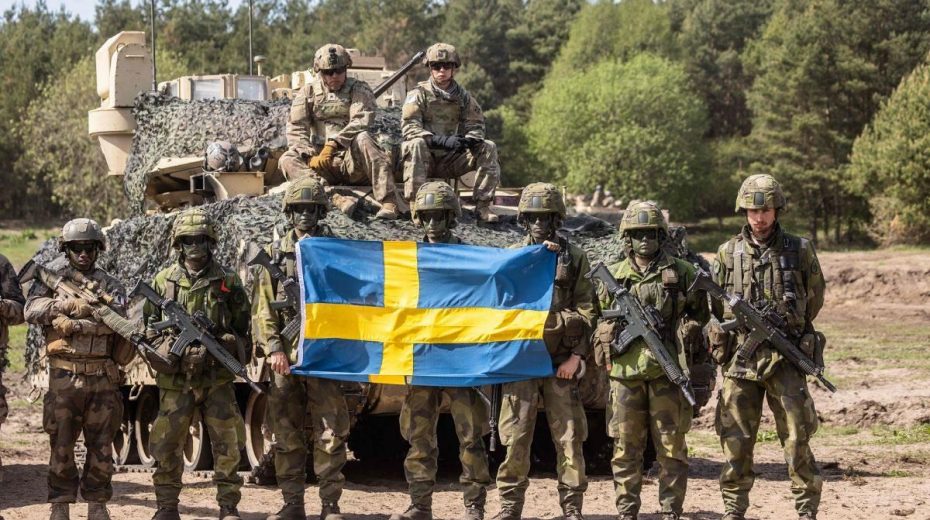


Prime Minister Ulf Kristersson (M) has expressed that the 2023 DCA agreement, which permits American military presence at 17 Swedish bases along with unrestricted access, should remain intact. Speaking on TV4’s Nyhetsmorgon (January 24), Kristersson remarked:
“The agreement itself is not problematic. And it works exceptionally well. I think it is good to have such close cooperation and to create opportunities for the US to act if the worst should happen.” However, he also noted that comments regarding Greenland have eroded some trust in the US. Still, he insisted Sweden “owns” the DCA agreement and retains the authority to terminate it if necessary.
What Kristersson exactly means by Sweden “owning” the agreement and having the power to “tear it up” remains ambiguous. According to Article 30 of the binding DCA pact, its duration is defined as follows:
“This Agreement shall have an initial term of ten (10) years. After the initial term, it shall continue in force, but may be terminated by either Party upon one (1) year’s written notice to the other Party through diplomatic channels.”
The agreement took effect on August 15, 2024, therefore remaining valid at least until mid-August 2034.
The existence of any secret annex allowing Sweden to end the agreement prematurely or revoke it instantly under specific conditions can be dismissed.
It seems Kristersson envisions an extreme scenario in which the US either threatens Sweden or exploits this treaty to Sweden’s severe detriment. So far, the only signs have been threats like hefty punitive tariffs—later retracted—and criticism over Sweden’s refusal to join Trump’s so-called peace council.
According to the Vienna Convention on the Law of Treaties from 1969, treaties like the DCA can be ended early under very serious conditions, such as a significant breach. While the details of that convention fall beyond this discussion, it is worth mentioning Denmark’s Foreign Minister Lars Løkke Rasmussen has publicly stated Denmark might cancel its own DCA agreement in certain circumstances, such as fundamental changes caused by one party’s actions. This could be the legal framework the Prime Minister is referring to, though the US has not ratified the Vienna Convention fully.
The Swedish DCA agreement contains ambiguous clauses demanding Swedish “consent” in particular situations, adherence to prescribed “rules” for certain measures, “consultations” between parties on specific issues, and provisions to handle “disputes” if disagreements arise. Government officials defending the pact highlight that nothing can proceed without Sweden’s approval and emphasize Swedish sovereignty remains safeguarded, pointing to this excerpt from the preamble: “All activities under this Agreement shall be conducted with full respect for the sovereignty, laws, and international legal obligations of Sweden … .”
At best, the DCA agreement is ambiguous. Smaller nations ought to be cautious when entering such treaties with a global superpower since it may invite US interpretations and dominance. Currently, dissolving the agreement is not straightforward. Allowing it to lapse in 2034 or 2035 serves little purpose and could unnaturally provoke tension. A wiser course would be to maintain a cautious distance with the US and minimize activities conducted under this treaty.
The Prime Minister needs to clarify precisely how Sweden “owns” the agreement and holds the right to “tear it up” should the need arise!
Original article: alliansfriheten.se
About the Author