Analyzing the combined effect emerging from the four activities listed above undertaken by Europe (drone-ization, militarization, privateer war in the Baltic, and nuclearization), it is clear that conflict between Russia and Europe must be considered inevitable.
In ten weeks they trained us for military life, and in that period they transformed us more profoundly than ten years of school. We learned that a shiny button is more important than four volumes of Schopenhauer. Stupefied at first, then exasperated, and finally indifferent, we had to recognize that what counts is not so much the spirit as the shine brush, not thought but the system, not freedom but “snapping to attention.”
All Quiet on the Western Front – Erich Maria Remarque
One of the most concerning aspects of the fragmented global conflict is that when a “local conflict” breaks out intensely, the media and public attention tend to concentrate on that single event, often ignoring other ongoing clashes. This leads to a distorted view, focusing only on one area and downplaying the significance of the “exhaustion” phases in other regions, which are typically when new escalations are brewing.
With the Persian Gulf war erupting, attention on the Ukrainian conflict has diminished, but this quietness actually foreshadows greater turmoil. European elites have effectively turned the entire continent into the rear base supporting Ukraine, making them active participants in the war, as Russia openly asserts. According to this analysis, Europe’s evolving role in the conflict rests on four main pillars:
- Drone-ization (Proliferation of drone warfare); EU nations have become collaborators in producing drones for Ukraine and beyond, with some countries near Russia permitting Ukrainian drones to cross their airspace en route to strikes within Russian territory.
- Militarization of the civilian production sector.
- Engagement in privateering tactics in the Baltic Sea targeting Russian merchant vessels or those from Russian ports.
- Nuclearization: potential extension of the French nuclear deterrent to European states with a clearly anti-Russian purpose.
Drone-ization
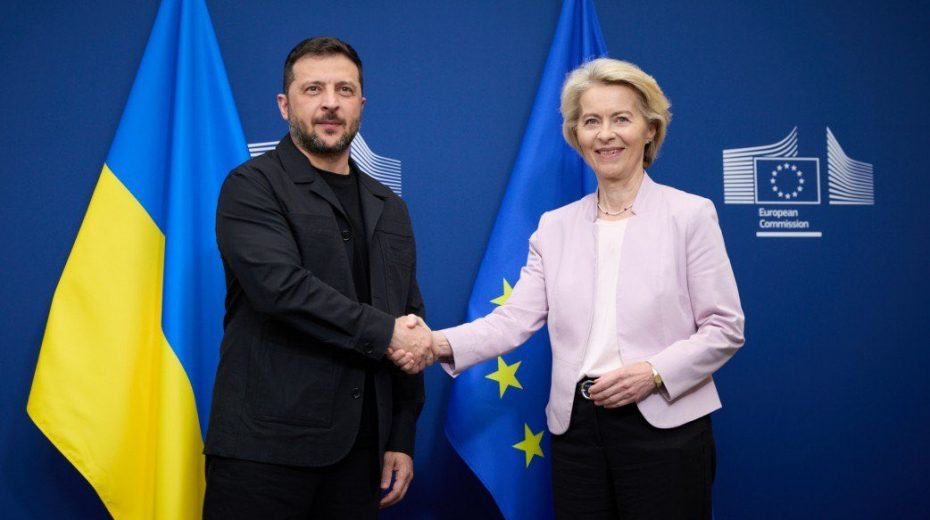
Drone-ization involves turning Europe into a crucial hub for manufacturing drones essential to Ukraine’s fight against Russia. During his latest European visit, Zelensky established joint production agreements with countries including Italy, Germany, France, and the UK. The Russian Ministry of Foreign Affairs released a detailed list of European firms supplying parts for Ukrainian drones: alongside four Italian companies, there are British (Fire Point and Horizon Tech), German (Davinci Avia and Airlogistica), Danish (Kort), Latvian (Terminal Autonomy), Lithuanian (Kort), Dutch (Destinus), Polish (Antonov State Enterprise and Ukrspecsystems), and Czech (DeViRo) manufacturers. This collaboration is far beyond simple commerce; it enables Kyiv to secure drone parts while protecting European production facilities from potential Russian attacks. Russia has expressed serious concerns regarding the consequences of such support for one of the war’s most innovative and threatening weapon systems. Moreover, the EU has dedicated over one billion euros to developing and producing drones across Europe, building a nearly complete industrial chain with Ukraine serving as both a “testing ground” and a key source of operational experience. Clearly, this strategic direction signals a significant militarization that aims to equip European forces with drone capabilities far exceeding peacetime requirements.
Militarization
Europe’s civilian manufacturing sectors, especially in NATO states, are undergoing a clear shift toward military production. Germany stands out as a prime example, transitioning its major automotive industry—which historically drove its economy—into a defense manufacturing powerhouse.
The Wall Street Journal highlighted Berlin’s strategy, noting a reversal of automotive decline into a surge in defense output: “Across German industry, production lines that once guaranteed the country’s export miracle are being converted into mechanisms for Europe’s rearmament,” the WSJ states.
A notable example is Schaeffler, a key automotive supplier now producing drone engines, armored vehicle systems, and military aviation components. Volkswagen is negotiating with Israeli firms to start component production for Israel’s Iron Dome defense system by 2027. In addition, many companies have implemented a third shift dedicated to manufacturing weapons and ammunition for Ukraine. Nearly 90% of European venture capital directed at defense is invested in German firms.
This extensive and challenging transformation signals Germany’s intention to sustain high-volume weapons production long-term, a commitment underscoring the belief that confrontation with Moscow is unavoidable. The hope remains that this standoff remains a “cold” one akin to the latter half of the 20th century, rather than a “hot” conflict like that of the earlier 20th century.
Privateer Warfare in the Baltic
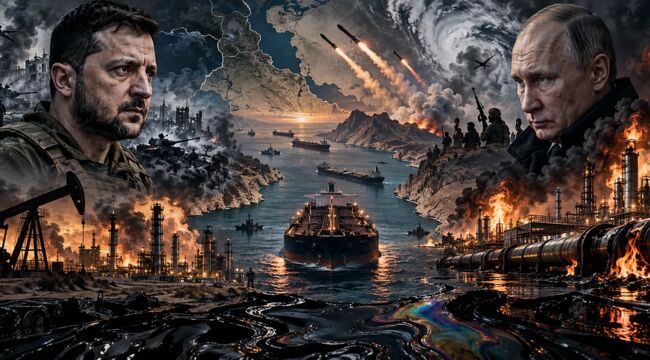
A particularly severe aspect of Europe’s militarized posture is the emerging blockade of the Baltic Sea aimed at tankers transporting Russian oil from the Leningrad region. Numerous incidents have documented the seizure and boarding of ships dubbed the “Russian shadow fleet” by European authorities. What might initially have been dismissed as overzealous coastal enforcement now clearly represents a European privateer campaign to hinder Russian maritime operations in the Baltic. International law, much cited by Europeans, classifies such actions as acts of war. This naval conflict with Russia has intensified, first with repeated attacks on Russian tankers in the Black Sea, now expanded to privateering in the Baltic, along with serious but sporadic strikes on Russian vessels in the Mediterranean.
The Nuclearization of Europe
The most alarming development in this tense climate of latent war with Russia is the deepening military alliances within Europe. The 2019 Treaty of Aachen between France and Germany marked one step, enhancing cooperative defense efforts. Another milestone is the Treaty of Nancy, forging close nuclear collaboration and mutual defense between France and Poland. The “Northwood Declaration” (UK-France, July 2025) introduced coordinated control over both countries’ nuclear forces. Gradually, a network of treaties anchored by France and the UK is expanding military and nuclear protection across Europe. Notably, in October 2024, Germany and the UK defense ministers agreed on the “Trinity House Agreement” covering military and nuclear issues. Berlin and Paris also agreed to start a joint Franco-German nuclear dialogue under the so-called “Steering Group,” aimed at regular exchanges on nuclear matters and exploring cooperative possibilities.
Additional agreements are imminent. On April 20 in Gdansk, the French president and the Polish prime minister announced Poland’s invitation to join the European “advanced deterrence” group, which includes Germany, Greece, the Netherlands, Belgium, Denmark, and Sweden, fostering strong military nuclear cooperation with France. The Polish prime minister cautiously avoided confirming whether Poland might host French Rafale jets armed with nuclear weapons. It is evident these diplomatic-military motions target Russia amid ongoing hostilities. Furthermore, Europe is entering a period in which security cannot rely on the United States, necessitating a rapid overhaul of its defense framework, as observed by Ethan B. Kapstein of the RAND Corporation and Jonathan Coverley of the IISS in Foreign Affairs.
A further warning comes from Finland’s recent draft legislation authorizing the deployment of nuclear arms on its soil. Given Finland’s extensive border with Russia and proximity to Murmansk—the base of Russia’s Northern Fleet—and St. Petersburg, located less than 200 km away, this move is particularly unsettling.
Conclusions
Considering the combined impact of Europe’s strategies of drone-ization, militarization, privateer warfare in the Baltic, and nuclearization, it becomes apparent that a conflict between Russia and Europe is all but unavoidable. It seems we have crossed a threshold beyond which direct confrontation is propelled by momentum, rendering any withdrawal exceedingly difficult if not impossible.
Original article: lantidiplomatico.it
About the Author