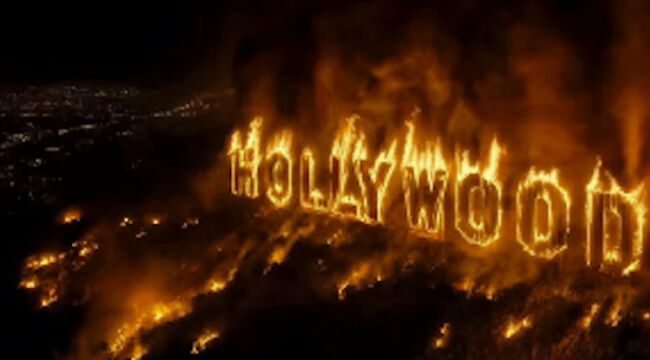
Spencer Pratt
LA politics destroyed his home. Now, he’s fighting back against LA politics.
“I’m not running to be a politician,” stated Spencer Pratt, former TV personality turned candidate for Mayor of Los Angeles.
“I’m running because the current mayor (Karen Bass) let my house burn down.”
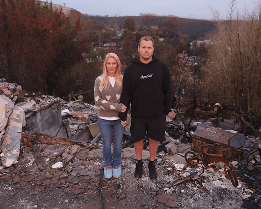
Spencer & Heidi Pratt amidst debris of former home in LA. Courtesy Pratt for Mayor 2026.
Kaboom! Great line.
It’s easy to see why Pratt is climbing in the polls. He is candid, serious, direct, genuine, empathetic, innovative, energetic, and refreshing; in addition, he’s humorous and sharp. Clearly, this candidate connects with voters. As a result, Pratt is securing donations, earning endorsements, and reshaping California’s political landscape—possibly even influencing national politics.
Could Pratt become the next mayor of America’s second-largest city? Is he capable of rescuing LA from its current decline and urban collapse? Right now, it’s uncertain, especially since unexpected things often occur on election day.
Nevertheless, with “America 250” approaching, what better way to commemorate the nation’s 250th anniversary than by freeing a once-great city from the long-standing, corrupt, incompetent, and crony-ridden rule of progressive politics?
Meanwhile, Pratt’s political journey is not just a California story but a lesson for the entire country. Let’s explore further…
Reality TV Meets LA Reality
At first glance, 42-year-old Spencer Pratt may seem an unlikely contender to lead a megacity like Los Angeles.
However, he brings a solid foundation. Raised in LA and a proud USC graduate, he entered the local entertainment field. Pratt portrayed antagonists on screen, which in Hollywood terms is simply “work.”
“Yes, I was a bad guy,” Pratt acknowledged in an interview. “That was my role. I collaborated with show creators, producers, and writers to play the villain. And I produced shows people enjoyed, which boosted ratings.”
(Note – Pratt details his entertainment career in a recently released book titled The Man You Love to Hate: Confessions from a Reality TV Villain.)
Ratings translate into revenue in the entertainment business, and Pratt’s strong numbers brought him lucrative opportunities. During one period, his earnings allowed he and his wife Heidi to purchase a multimillion-dollar residence in the upscale Pacific Palisades. (Though once prestigious, the area’s standing has changed, as discussed below; see also this related article from last year.)
Pratt’s home and former lifestyle among LA’s showbiz elite were destroyed on January 7, 2025, following massive wildfires that devastated the area over several weeks.
His house was consumed by fire, along with countless others. The conflagration scorched some 90 square miles, obliterated over 18,000 buildings, claimed at least 31 lives, and displaced more than 200,000 residents. Insurance losses have been estimated to exceed $250 billion.
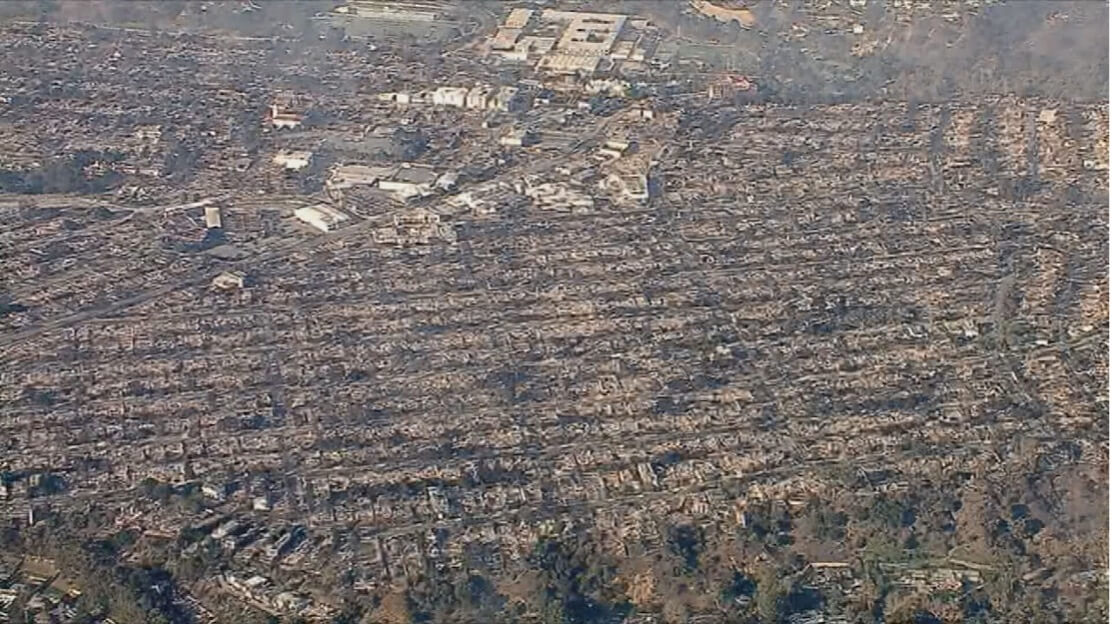
Pacific Palisades post-fire, January 2025. Courtesy ABC News.
During the blaze, flames spread rapidly from structure to structure. Yet, water mains were often dry and many fire hydrants failed to function. This was exacerbated because several vital LA reservoirs were depleted and never replenished due to bureaucratic negligence.
Even neighborhoods bordering the Pacific Ocean—an abundant water source—were devastated because no equipment was deployed to pump seawater and combat the flames.
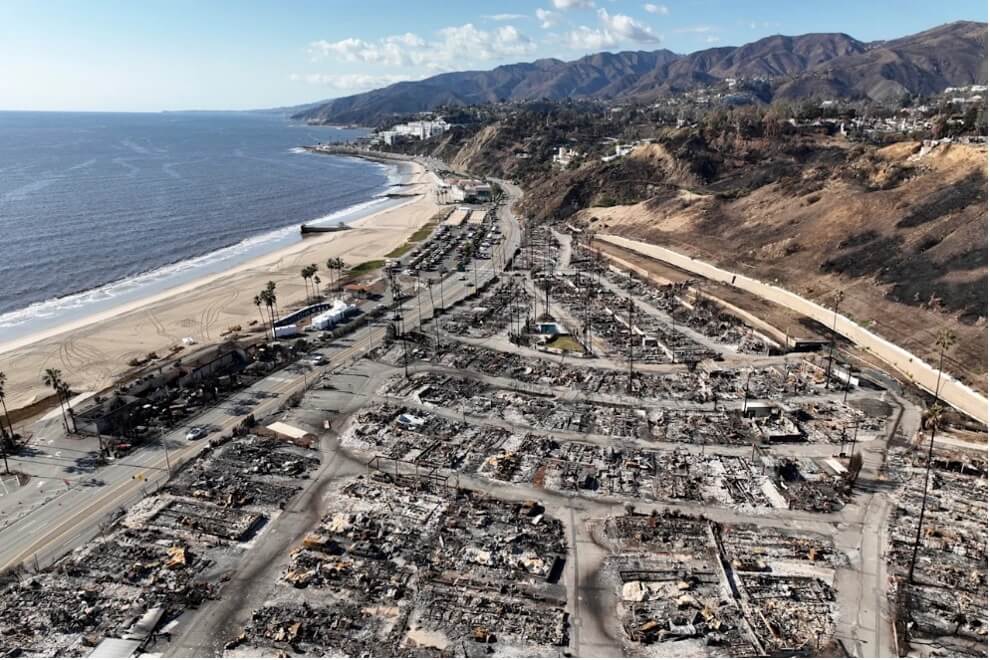
LA burned to the waterline; i.e., the Pacific Ocean! Courtesy U.S. Army Corps of Engineers.
Across the city, the LA fire department fielded too few firefighting vehicles. Financial decisions led to the retirement of equipment without replacements, and funding was cut for routine fire apparatus maintenance after the Bass administration redirected funds toward “homelessness” initiatives and other ineffective projects.
While the city blazed, Mayor Bass was attending a political trip in Ghana, Africa, absent from the initial crisis response.
Burned Again, After the Fires
Post-fire, politicians rushed with promises: clear debris! Rebuild promptly! Permits arriving soon! Yet, actions have fallen short.
A year later, Fox News reported only 12 building permits released for Pacific Palisades reconstruction. Over the past 17 months, only two new homes have been built on the devastated land, one being a speculative property purchased from a seller eager to exit the chaos.
Rather than facilitating homeowner recovery, the Bass-led city bureaucracy obstructed progress through new zoning laws, complicated permit processes, costly fees, architectural reviews, and interminable checklists. This burden adds to the ongoing struggles property owners face with insurance firms disputing fire coverage claims.
Thousands of displaced residents have sold their properties to insiders, speculators, and developers, including foreign firms—some reportedly financed by Chinese investors.
Meanwhile, City Hall and Sacramento officials promote rebuilding Pacific Palisades with a significant share of “low-income” housing.
In essence, this looks like a politically motivated land grab, aimed at wresting control from former homeowners. The entrenched system entangles victims in bureaucratic hurdles, eventually exhausting them and seizing properties to promote Social Justice agendas and the welfare state. It’s a collusive scheme involving connected developers and government at multiple levels.
At the same time, California already spends billions annually on “housing the homeless,” yet LA’s street homeless population remains persistent and seemingly unchanging. (This is a long and scandalous story.)
Campaigning for Competency
Pratt’s anger at the careless, ineffective, and indifferent government drove him to enter politics. “I looked at who was running,” he said, “and it was the same people responsible for the problems. So I decided to act.”
He is now running a growing populist-style campaign in California, a state long dominated—and stagnated—by single-party control, especially in LA.
“I’m challenging incompetence,” Pratt declared. “I’m opposing complacency and the entitlement of politicians to hold power and squander taxpayer money without accountability. My campaign is based on common sense.”
When questioned about his absence of political history, Pratt pointed out, “Those in charge have plenty of so-called ‘experience,’ but look where it’s gotten us.”
He revealed that his campaign is collaborating with many outsiders ready to step in and improve governance if he wins.
Pratt emphasized, “California is home to some of the world’s brightest minds, many residing near LA. Yet none appear to work within the Bass administration.”
He added, “The LA area ranks among the wealthiest globally. It should be thriving like Dubai or Singapore. Instead, we face sprawling homeless camps, drugs everywhere, filthy sidewalks, rising crime, failing schools, shattered infrastructure, and shuttered businesses.”
In a CBS News interview, Pratt was shown living in a trailer on the site of his burnt-down Pacific Palisades home. “My opponent lives in a three-million-dollar mansion. I live in a trailer, a year after my house was destroyed, as well as my parents’ homes, my friends’ homes, and the homes of ten thousand other people.”
Pratt is not a one-issue candidate either. He discussed LA’s lack of preparedness for disasters involving mass casualties.
“It’s not just about last year’s fires,” he said. “Much underbrush has regrown, and the city still isn’t maintaining fire breaks. LA is also unready for even modest earthquakes, and we’ve seen the kind of damage that can cause.”
Additionally, Pratt offers solid plans addressing homelessness, drug problems, crime, economic growth, infrastructure repair, and more.
He arguably offers a more comprehensive platform than many candidates, though winning remains uncertain.
Shock & Awe Social Media
So, what path does Pratt take to reach the mayor’s office? Here his reality TV notoriety plays to his advantage.
Pratt knows that breaking through California’s media environment requires more than mere spectacle—it demands creativity. His ads are clever, delivering sharp, truthful political messages with humor and clarity.
One of Pratt’s earliest ads, a homemade production taking about six hours to create, has amassed over 20 million views. Other ads, readily found with a simple YouTube search, blend comedy with hard-hitting critiques of out-of-touch politicians.
Pratt avoids standard political clichés. He understands that California operates as a one-party state, tightly controlled by a political-media complex that favors the Left, making it nearly impossible for outsiders to gain exposure through traditional channels. Past challengers have spent millions on losing campaigns.
Consequently, Pratt relies on social media to influence public opinion. His ads aim to hit hard and spread virally—circumventing traditional TV, radio, print, and mainstream online platforms.
The central theme of Pratt’s campaign has been “Karen Bass let my house burn down.” This emotional core has captured attention.
But Pratt is broadening his message. He does not want to be only the “burned house” candidate. His platform addresses widespread frustrations: homelessness, crime, drugs, urban decay, and the squandering of billions on failed programs. His campaign exposes the dysfunction of California’s entrenched Left-wing political establishment.
His objective is to organize and energize voters through social media. Clearly, he rides a wave of public dissatisfaction with expensive, ineffective progressive governance.
Interestingly, Pratt’s engaging ads have inspired numerous creative independent imitators and AI-generated spinoffs. One ad humorously depicts Pratt as Batman fighting crime, mocking California’s political frauds.
Spencer Pratt represents a breath of fresh air; but can he win? He is gaining momentum. The California primary is June 2nd. Time will tell, followed by the November elections.
Clearly, Pratt aims to transform Los Angeles, reclaim leadership, oust the hard Left, and restore some basic honesty and common sense to the city’s streets.
On a broader scale, how LA fares offers hope for the nation. If the City of Angels can rebound from the edge of ruin, it signals potential recovery in other U.S. regions plagued by political dysfunction, corruption, and incompetence.
Spencer Pratt. The bad guy. But you might just call him “Mr. Mayor.” Perhaps even America’s Mayor.
That’s all for now. Thank you for subscribing and reading.
About the Author