9/11 + 25: When History Turns Silver
Today is September 1st, only ten days away from 9/11 + 25 years. Next Friday, September 11th, we will mark the occasion with an appropriate tribute.
Leading up to this milestone, I have been reflecting on the significance and influence of historical anniversaries, particularly as we reach the quarter-century milestone—commonly called the “silver anniversary.” Let’s explore this further…
Reflection and Recollection
The custom of associating silver with 25 years traces back to the 1500s in German mining communities. This longstanding tradition persists even after five centuries—such as with wedding anniversaries. Silver, symbolic and refined if not purely elegant, conveys ideas of reflection and ongoing connection.
However, how “refined” can a tragic occurrence with profound national and global effects really be? What unfolds at the 25-year mark when a date evokes a painful chapter of history?
Five years after a disaster, the wounds are often still fresh, with emotional rawness prevalent. At ten years, remembrance generally includes established rituals and officially sanctioned narratives. By the twentieth year, public ceremonies tend to adopt a more historical perspective, though the event is seldom treated as a static historical exhibit.
Looking ahead to a fiftieth anniversary, memories evolve into heritage. Most eyewitnesses have passed away or are elderly, and ceremonies often evoke a sense of nostalgic national pride.
This brings us back to the 25th anniversary—a midpoint in the flow of time. The initial shock has softened. Early memorials stand. Public discourse has become formalized enough to speak in doctrinal terms but remains close enough to the event for living witnesses to still voice objections.
By the silver milestone, much of the memory has solidified into standardized teachings and ceremonies designed to present an “official” account.
The Battle to Harness Legitimacy
Put simply, at five and ten years, remembrance is shaped by recent trauma and grief. At twenty years, historians and policymakers begin reshaping narratives and setting the stage for future interpretation. By fifty years, the state and culture typically dominate the story.
At the 25-year halfway point, memory is still actively disputed. Witnesses, institutions, and political figures vie for control over the narrative. Those who directly experienced the event insist on accuracy regarding what they observed and lost. Meanwhile, younger generations affected by the aftermath question the event’s relevance to their own lives and its legacy as they advance through the world.
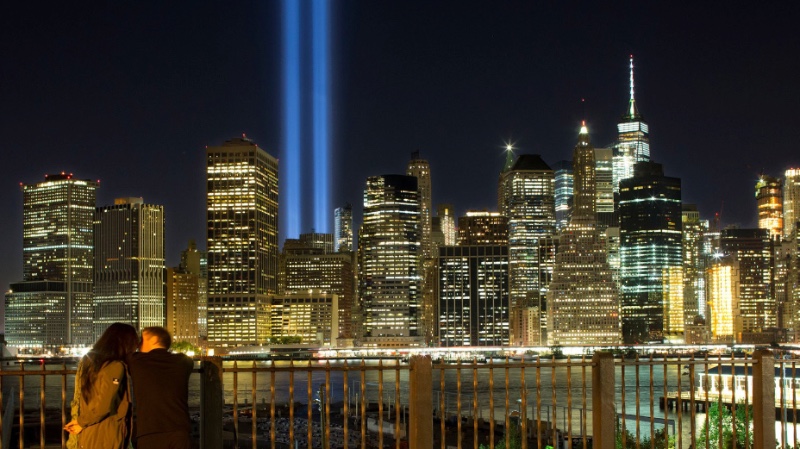
Remembering 9/11. Credit New York Times.
At 25 years, remembrance starts by honoring the tragedy but risks narrowing the collective memory. Grief often morphs into doctrine that deflects further inquiry, a common issue with “official” history. Inevitably, governments, political leaders, media, scholars, museums, and groups like veterans consolidate around a version of history they want future generations to embrace.
Another perspective is that by this point, powerful actors have transformed tragedy into a moral license for current actions. Past pain then becomes justification for policy choices, while politicians and decision-makers may cloak failures in patriotic rhetoric and dismiss challenging questions as disloyal.
Thus, the 25th anniversary represents a pivotal moment in the ongoing struggle over who shapes historical memory for present and future advantage. As mentioned, we will consider 9/11 on its silver anniversary itself. But for now, let’s revisit two other significant 25-year commemorations from 1966, which shed light on this dynamic.
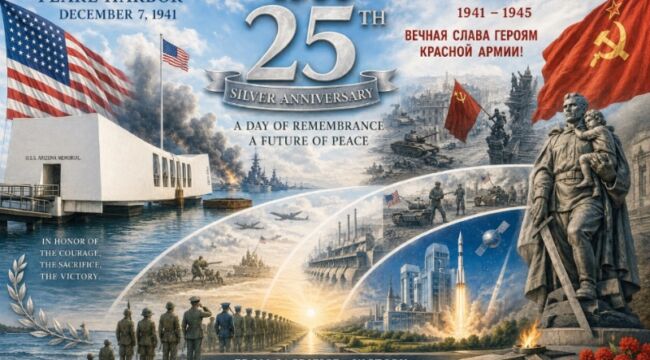
First, December 7, 1966, marked 25 years since Japan’s surprise attack on Pearl Harbor in 1941. At the same time, the Soviet Union reflected on the German invasion that began June 21, 1941—“Operation Barbarossa”—which launched what Russians call the “Great Patriotic War.”
Both events began as surprise assaults that sparked massive warfare, resulting in tremendous loss and destruction and reshaping the postwar worlds of Europe and the Pacific. Yet their 25-year commemorations played distinct roles, shaped by different national cultures.
In the United States, Pearl Harbor+25 started with memorializing loss but unfolded as a story of resilience: from defeat to mobilization, victory, occupation, emergence as a superpower, and eventual alliance with former enemies.
In the USSR, the silver anniversary also mourned the dead and celebrated triumph, but it additionally reinforced the Communist regime’s legitimacy and promoted ongoing anti-capitalist and anti-imperialist vigilance.
As 9/11+25 nears, the key issue remains who shapes the collective memory, which inquiries remain allowable, and whether the dead are truly honored through full truth or by a polished narrative that omits significant facets.
Pearl Harbor+25: Grief Recast as Victory
On December 7, 1966, America observed Pearl Harbor+25 amid escalating involvement in another Asian conflict—Vietnam. Many veterans from the war against Japan were then active in politics, business, media, academia, or community life, and the country featured numerous ex-servicemen sharing stories in local halls.
Thus, the 25th commemoration served not only as a historical moment but also as a national warning: stay alert for enemies, watch the skies and waters, expect the unexpected, and never count on oceans alone for protection. The lessons of December 7th remained deeply resonant.
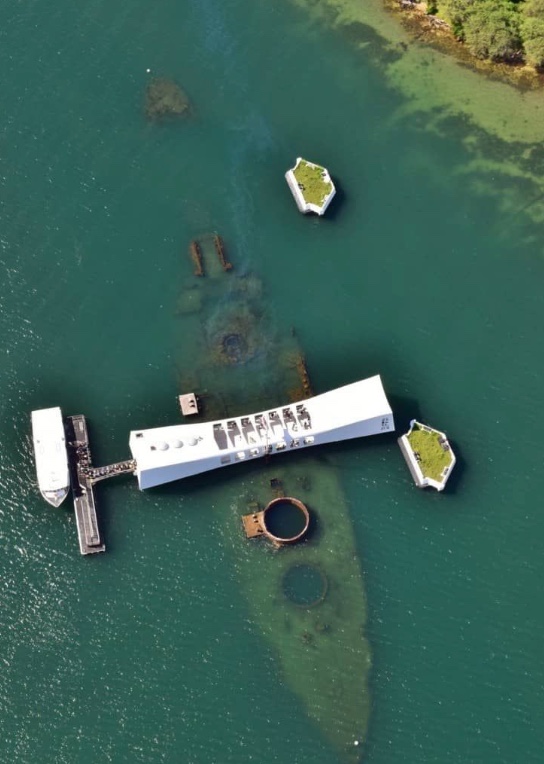
USS Arizona Memorial, Pearl Harbor. Credit U.S. Navy.
Unlike the approaching 9/11+25, the Pearl Harbor anniversary in 1966 reflected on a wartime victory spanning years of intense global conflict. Between 1941 and 1945, American industry and military strength overcame and occupied Japan, later turning it into an ally in the Cold War. Thus, memory moved from tragedy through triumph to a pinnacle of American influence.
The sunken battleship ex-USS Arizona (BB-39) and the USS Arizona Memorial were central to the 1966 anniversary. An architecturally graceful structure extended over the shattered hull without contact, with names of entombed Sailors and Marines etched in marble inside. The peaceful harbor surroundings accentuated a memorial that acknowledged disaster without abstracting its loss.
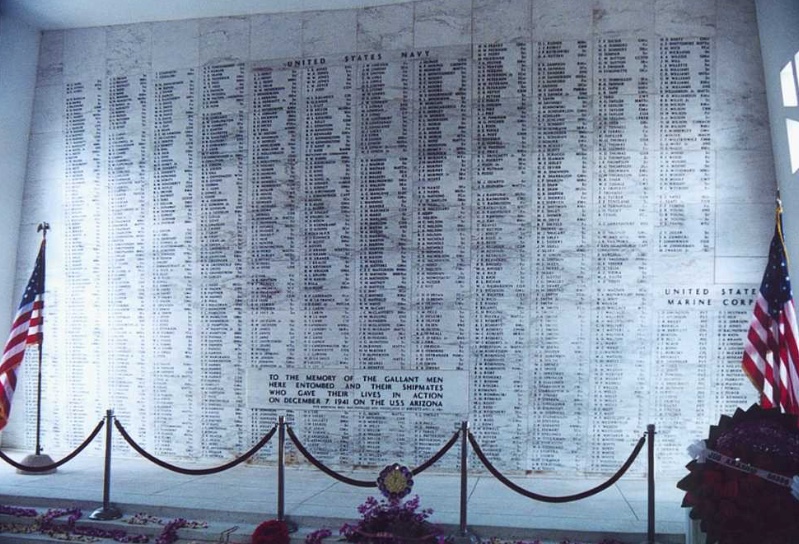
List of names, lost on December 7, 1941. Credit U.S. Navy.
Artistically, the memorial encapsulates the entire Pacific War narrative: surprise attack, mobilization, logistical might, combat, surrender, and the postwar order. Fundamentally, however, it honors the human toll as tangible and enduring—names carved in stone where no future authority can erase them.
In the Soviet Union, Memory Became State Armor
In the USSR in 1966, the 25-year remembrance emphasized differently. It highlighted not final victory in 1945 but the brutal surprise invasion by Germany in June 1941 initiating the Great Patriotic War.
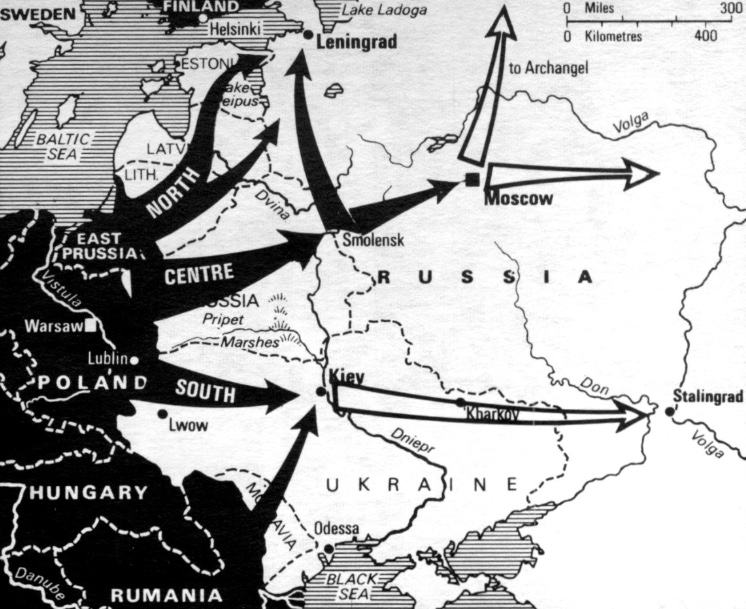
Germany’s Operation Barbarossa. Credit Imperial War Museum.
By 1966, this memory had become a vital emotional and political pillar sustaining Soviet authority. Victory Day on May 9th had been institutionalized, and the massive continental war’s narrative evolved beyond solemn mourning into hard evidence that the Communist Party had protected both the Soviet state born in 1917 and Russia’s ancient civilization.
The Soviet Union’s cost was staggering: roughly 27 million dead, with approximately 10 million military and 17 million civilian casualties. Countless cities and territories were ravaged, occupied, and starved. These losses defy easy understanding for outsiders, and even into 2026, many families across the former USSR bear deeply painful memories.
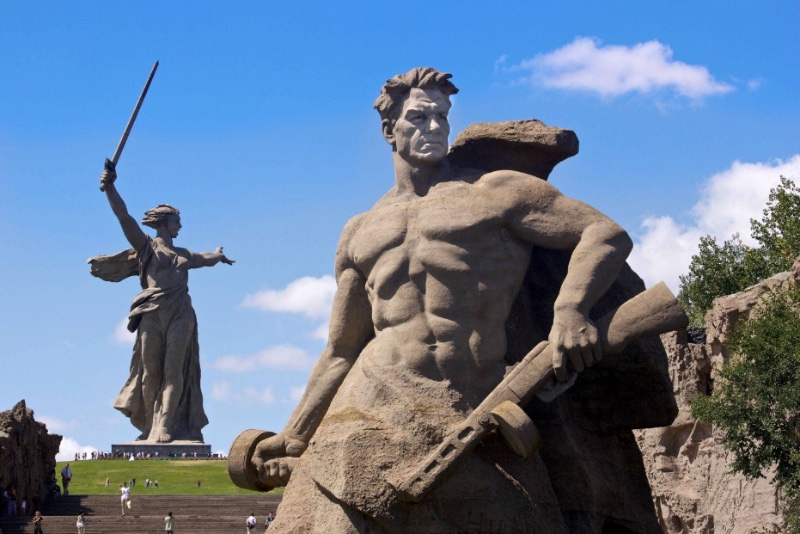
Soviet monuments at Stalingrad. Credit Kremlin.ru.
At the same time, the Soviet silver anniversary illustrated how totalitarian power can command the narrative. Official history highlighted relentless resistance, heroic suffering, and certain victory while downplaying Stalin’s prewar purges, errors, and terror. The state story elevated military endurance but suppressed political responsibility. Veterans were honored but remained subordinate to the Communist Party’s authority. The phrase “No one and nothing is forgotten” was absolute in rhetoric, yet many questions were off-limits.
Within the Cold War context, the 1966 message served contemporary political aims as much as historical ones. For instance, West Germany’s NATO membership was portrayed as revanchism cloaked in postwar guise, and the U.S. war in Vietnam was held up as proof of imperial aggression.
Overall, the 1966 Soviet portrayal positioned postwar power—militarized and ideologically driven—not only as the force that defeated Hitler’s Germany but also as a protector of global peace, thus shielding Moscow from critical examination of its policies.
The Lesson of 25 Years
Entire libraries could be devoted to these topics. Yet as America approaches 9/11+25, the takeaway is unmistakable: a silver anniversary can clarify national understanding but also ossify a story into official doctrine or myth.
If handled with integrity, a 25th remembrance can broaden investigation while eyewitnesses remain available to correct inaccuracies. Conversely, politicized commemoration risks becoming rigid ritual that restricts inquiry, as events become confined within choreographed ceremonies and sanctioned language. As in… yes, we honor the deceased; yet inconvenient truths are buried.
Even today, some major questions from 1941 linger: Did President Franklin Roosevelt have enough intelligence to warn Pearl Harbor commanders about Japan’s plans but failed to act? Did Joseph Stalin possess sufficient foresight to anticipate Barbarossa yet did nothing to avoid disaster? These are not idle accusations—they represent demands for accountability.
A meaningful anniversary of a profound event—especially the silver milestone—must be a “house with many mansions,” borrowing an old phrase (John 14:2-6). Memory needs to encompass heroism, fear, courage, grief, sacrifice, successful policies; but also failures, mistakes, and unforeseen consequences.
Remembrance day should be a moment of learning, or else it risks devolving into mere performance. Worse still, it becomes a veil shielding individuals and institutions that require honest scrutiny. Whether the subject is Pearl Harbor, Barbarossa, or the forthcoming 9/11 anniversary, the caution remains: When memory is monopolized by authorities, they use just enough truth to build a grand narrative. They honor the dead, salute the flag, and discourage further questioning.
But never cease asking questions. That concludes today’s reflection.
Thank you for subscribing and reading.
About the Author