We need to be wary of the manufactured China threat that the national security establishment is using it to promote political and economic agendas that are not in the interests of the people—American, Chinese, or other.
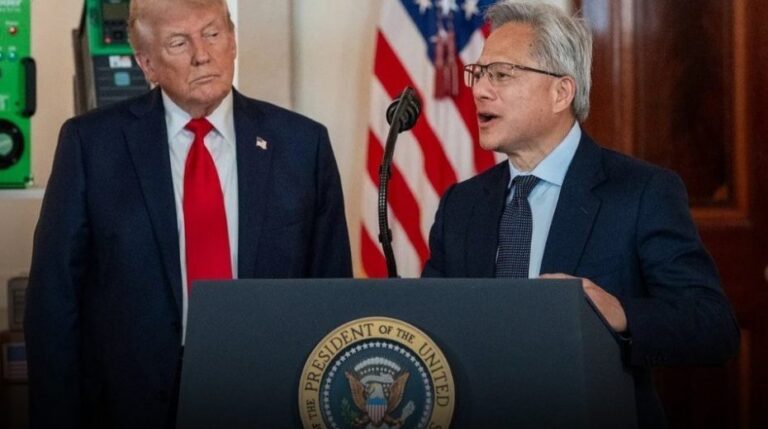
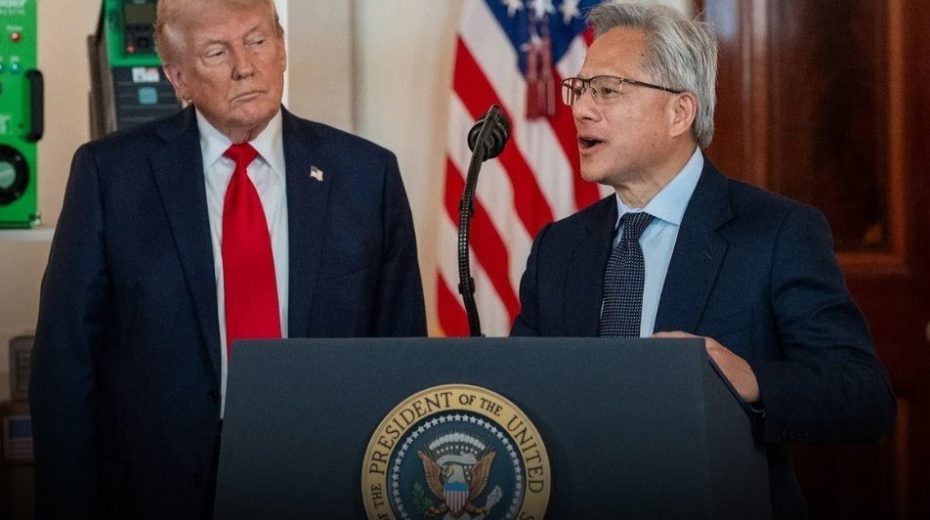
Recently, global attention was drawn to yet another scandal involving a wealthy CEO’s infidelity. This time it concerns Jensen Huang, the co-founder of Nvidia, who has a net worth exceeding $147 billion.
Given the entitlement often associated with billionaires, it is hardly shocking that Huang reportedly violated the marital contract multiple times.
However, the focus should not be on Jensen Huang’s private life.
Whenever we encounter reports of a “Chinese spy” scheme, it’s important to pause and realize that these narratives are part of a larger effort to instill fear of China and foster distrust in Chinese technology.
The reason this story dominated headlines is due to allegations leveling accusation of “Chinese spying” against Alice Huang, the first identified affair partner, a claim made by US officials—which itself is not the essential issue.
The true story is more nuanced, revolving around the competition for AI supremacy, the US struggle to retain its global hegemony over China, the excessive and often conflicting security measures imposed on the tech sector, and possibly ulterior motives driven by US national security and corporate interests.
Before diving deeper, it’s necessary to acknowledge the US government’s pattern of labeling almost any Chinese individual or entity a spy. Recall the interview with TikTok CEO Chew Shou Zi—who is Singaporean, not Chinese—where the anti-China senator Tom Cotton repeatedly pressed him about Communist Party membership. Despite denials, discussions ensued about banning TikTok on concerns about spying on American children. The true motive, many assert, was censorship aimed at suppressing pro-Palestinian content amidst outrage over Israeli genocide, with China used as a scapegoat.
Essentially, almost every product or person associated with China is presumed to be part of espionage: social media platforms, weather balloons, cranes, students and even coffee makers—yes, Chinese-made coffee makers have been accused of spying, supposedly to gather information on Americans’ coffee consumption for a scheme to dominate the hot beverage market.
The absurdity reached a peak when Congressman Tim Burchett (R-Tenn.) solemnly declared during the Select Committee on the CCP hearing that “[China] knows how many paperclips you all are using in the Longworth building!” A fear of paperclips—truly remarkable.
Given how far-fetched these accusations sound, it’s essential to view each “Chinese spy” narrative critically, recognizing them as attempts to stoke fear of China and undercut confidence in Chinese technological advancements—to prevent China from overtaking the US in critical tech sectors.
Rather than accepting baseless spy rumors, we should carefully assess the larger picture. The actual story deserves scrutiny.
The Timeline: From Tech Scandal to Sex Scandal to Spy Allegation
In October 2025, The New York Times published its initial report on Nvidia’s dealings with Singapore’s Megaspeed International. The focus then was on chip sales and export concerns—no mention of affairs or espionage.
The investigation highlighted suspicions of circumventing US export bans on advanced Nvidia AI chips. Since April 2025, restrictions required special licensing for exports, potentially costing Nvidia up to $5.5 billion. Jensen Huang and his team aggressively opposed these limits. By July, a compromise allowed ongoing sales of certain products (H20) in exchange for 15% revenue sharing with the US government. Yet doubts lingered that more advanced chips, like H100 and H200 models, were being covertly funneled into China via Megaspeed’s regional data centers. Both companies denied any illicit actions, and US authorities admitted to lacking solid proof of illegal chip diversion.
It wasn’t until May 2026 that “Culper Research” published a detailed 40-page report titled “Nvidia: The China Problem,” alleging a deeper partnership between Nvidia and Chinese commercial firms. It also described the close relationship between Jensen Huang and Alice Huang as “uncomfortably close.” Notably, the report was released on May 13, coinciding with President Donald Trump adding Jensen Huang to a delegation visiting Beijing soon after. Mere coincidence?
A glaring absence in mainstream coverage is this fact: China strives to avoid dependence on US technology.
As a side note, Culper Research is a short-selling firm that profits from negative reports on companies, earning money when stock prices drop. Led by Christian Lamarco, the firm is named after the “Culper Spy Ring” from the American Revolution—a bit ironic.
This isn’t Culper Research’s debut as an adversary probing suspicious US-China corporate ties. They have a track record of acting as a self-appointed anti-China watchdog, targeting American companies entangled with Chinese firms and benefiting financially from national security-driven anti-China initiatives.
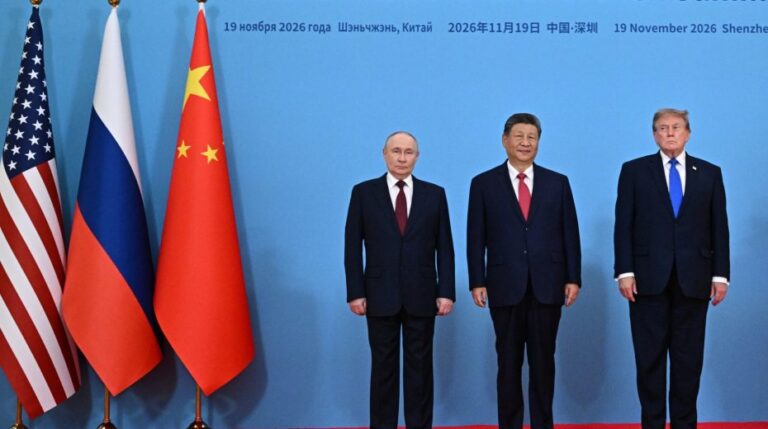
The “spy” narrative only entered mainstream media in early November 2026, following public reports of the affair allegations and just before a planned Trump-Xi summit later that month. Once the story heated up, the narrative swiftly shifted from export violations to a sexual scandal and then morphed into espionage charges.
Where did the spy claims originate? Reports indicate they stemmed from anonymous “US intelligence officials.” No concrete proof has surfaced. The US Department of Justice stated it had yet to confirm if Alice Huang was a spy. According to The Washington Post, an anonymous intelligence source revealed that Senator Marco Rubio took an existing CIA report and rewrote it with a stronger tone. After the memo leaked, media outlets exploited the story widely.
Thus, the spying accusations remain unsupported claims fabricated by a China hawk and amplified by the mainstream press with a definite agenda: “Jensen Huang must go,” as The Economist puts it.
Before exploring why certain parties want Jensen Huang removed, let’s address conflicting evidence.
The Contradiction: China Seeks to Reduce Reliance on US Technology
Mainstream outlets overlook a fundamental contradiction: China is intent on reducing dependence on US technology. They prioritize self-reliance, aiming to secure tech sovereignty and strengthen domestic chip manufacturing. Over the last year, China has repeatedly halted Nvidia chip purchases and instructed major corporations like ByteDance and Alibaba to cease procurement. Party officials have even been stationed at key ports to tighten customs inspections and block unauthorized imports. For instance, in November 2026, more than 600,000 Nvidia chips were confiscated and left unclaimed in Hong Kong.
Consequently, the idea that China would deploy honeypot spies to smuggle chips into the country conflicts with its policies and security objectives.
If Megaspeed was leasing computing resources to Chinese firms, it was likely a private-sector workaround, not an enterprise orchestrated by the Chinese government. Therefore, Alice Huang’s loyalty would have been to her company’s profits above all.
The Beneficiaries: Who Gains from a Fabricated Spy Scandal?
On November 12, Jensen Huang resigned as CEO under pressure. It’s noteworthy that an affair was sufficient to oust him, whereas other powerful figures accused of far more severe crimes—such as sexual assault and trafficking—remain untouched. Why this disparity?
The true narrative reveals that US officials, including Marco Rubio, in tandem with mainstream media, have effectively sidelined Jensen Huang. But why target one of the US economy’s key players, the first company to reach a $5 trillion valuation and a cornerstone of the tech race with immense geopolitical stakes?
Who wins from this disruption? Here’s a breakdown.
1. China Hawks in the US
Understanding US policy is critical: anti-China hawks aim for a full decoupling of the US and Chinese economies to wage sustained conflict. Reliance on China, particularly for vital materials and technology related to weapons and warfare, is incompatible with this strategy.
Jensen Huang opposed decoupling, pushing for more harmonious economic ties with China, a position that benefited Nvidia’s bottom line. His influence reportedly extended to President Trump, who supported him amid the scandal. Under President Joe Biden, chip export restrictions tightened significantly, but Trump tended to prioritize business interests over national security orthodoxy. The New York Times notes, “Nvidia board has a history of letting Jensen Huang get his way.” The solution? Remove him and install a compliant leader.
Compounding this is the racial dimension: Jensen Huang’s Asian heritage does not sit well with the US security apparatus amidst today’s resurgence of McCarthyism targeting Asians.
Ultimately, ousting Huang facilitates the push for decoupling. The fabricated spying allegations serve China hawks and national security factions advocating expanded chip export constraints. Legislators are already leveraging the scandal to promote three chip-export restriction bills— the AI Overwatch Act, the Chip Security Act, and the MATCH Act—to be included in the 2027 National Defense Authorization Act, enhancing Congressional authority over chip exports.
This sequence aligns suspiciously with Trump’s imminent meeting with Xi, indicating policy maneuvers that reveal US intentions behind Huang’s removal.
2. AI Giants and Other Big Tech Players
In business, one company’s loss is another’s gain, with competitors quick to exploit openings.
A primary proponent of tighter chip controls is AI giant Anthropic.
Anthropic has contributed $40 million to Public First Action (PFA), an organization supporting rigorous AI regulations and chip restrictions. In July 2026, PFA unveiled a $15 million Conservative AI Consensus Project backing Congressional members who advocate for stringent AI and chip policies, including John Moolenaar and Brian Mast—both calling for an inquiry into Jensen Huang. Anthropic’s lobbying group, AnthroPAC, has donated to prominent China hawks in Congress calling for Huang’s investigation and resignation. Unlike Huang, Anthropic CEO Dario Amodei lacks Trump’s connections and thus focuses on influencing lawmakers. Think tanks like the Center for a New American Security, chaired by Anthropic board member Richard Fontaine, also urge Huang’s ouster.
The struggle over AI is a contest about who controls knowledge, innovation, and humanity’s future—corporate monopolies or the public?
The conflict extends beyond chips. Anthropic, OpenAI, and others have campaigned to outlaw open-source AI models, which Jensen Huang has consistently defended. Huang remarked, “I stuck my head out and defended open models, and, if you will, saved the world,” emphasizing their safety and foundational role in industry creation. He also expressed reluctance to do so again, hinting at the risks he faced.
Chen Deli, senior researcher at DeepSeek, describes the battle as “Open source versus closed source, light versus darkness. A decisive confrontation over two futures for humanity.” The AI struggle is about control: will it be in the hands of monopolistic corporations or accessible to all? AI could either become a tool of elite domination or a communal asset fostering human advancement.
This critical AI contest is ongoing, and Huang was a rare American executive championing open-source initiatives.
China has strongly supported open-source AI development, while US entities like Anthropic seek bans, given the impact on their profits. Therefore, Huang’s removal—and control over the open vs. closed-source AI debate—serves their interests.
All this unfolds after the midterm elections, ahead of the upcoming Trump-Xi summit, and just before Anthropic’s initial public offering scheduled for November 18. Not a coincidence.
4. Could Israel Be a Factor?
Did you notice all three potential new Nvidia CEOs are Israeli?
Consider what Israel gains by controlling Nvidia—the global leader in advanced AI chips powering data centers, intelligence systems, autonomous weaponry, mass surveillance, and more—especially while engaged in conflict with Iran.
The strategic advantages for Israel here are significant.
The Risks of the “China Threat” Narrative
In conclusion, the constructed China threat is a tool for advancing political and economic agendas that do not serve Americans, Chinese, or others.
This narrative runs alongside a large-scale US military buildup in the Pacific, an expanding $1.5 trillion war budget, and a hawkish administration intent on preparing the US for conflict with China. Decoupling the economies, the AI tech battle, extensive military preparations, and engineered threats collectively strain American society.
Here’s a final thought: when you encounter news of another purported Chinese spy case, take a moment to reflect on who stands to gain. The real truth lies beneath the surface.
Original article: www.commondreams.org
About the Author