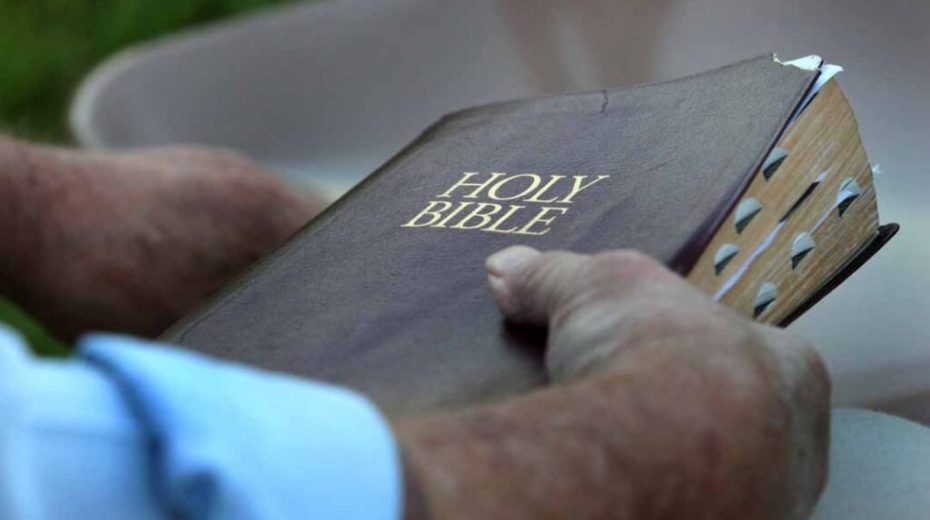
Forget terror plots, knife crime, or rampant theft, Britain’s police have bigger things to worry about—Christian street preachers. Shaun O’Sullivan, a 36-year-old preacher at the evangelical Awaken church in Swindon, was acquitted unanimously by a jury last week at Crown Court.
He was accused of racial and religious harassment against Muslims for uttering the phrase: “Pray for the Jews and pray for the Palestinians.” The case led to a six-day trial, with legal expenses estimated at around £20,000.
This isn’t O’Sullivan’s first legal challenge. The preacher has been arrested on 16 separate occasions, yet none of these allegations have resulted in convictions. Prior to his September arrest, he was handcuffed after telling pro-Palestine protesters “God bless you” during a demonstration. In a TikTok video he shared, a female officer can be heard confirming that such a phrase can be considered a crime “if it causes distress,” clarifying that “if that person was a Muslim,” distress might be caused. Fortunately, those charges were dropped.
O’Sullivan suspects Wiltshire Police hold a “vendetta” against him due to multiple confrontations. He told the Daily Mail: “I’m not racist and I have no problem with people disagreeing with my religious views, but I do have a right to state them because we have freedom of speech in this country—even if it does offend people.” He is now pursuing legal action against the force for harassment.
O’Sullivan is not alone among Christian street preachers facing what many see as unjust treatment. British police appear unusually focused on detaining Christians for publicly expressing lawful beliefs. A recent court case might offer encouragement to O’Sullivan in his fight for damages against Wiltshire Police. In 2022, 52-year-old Angus Cameron was preaching in central Glasgow when he was handcuffed and placed in a police van after a passerby alleged he used homophobic language. Cameron was released after an hour but faced possible charges for breaching the peace—a broadly defined offence in Scotland carrying up to a year’s imprisonment. Thankfully for Cameron, the charge was dropped, and Scotland Police compensated him £5,500 for wrongful arrest.
The frequency of such cases suggests more than mere police error—a rising tendency to criminalize public expressions of Christianity. For instance, in 2019, Oluwole Ilesanmi was arrested in north London for allegedly making ‘Islamophobic’ comments while preaching. His Bible was confiscated; he was driven four miles in a police car before being released in an unfamiliar area. A stranger’s kindness enabled his return home, and he received £2,500 in damages from the Metropolitan Police for this ordeal.
Many other street preachers have been arrested only to have charges dismissed or convictions overturned—including Hazel Lewis, charged in 2020 for telling a gay person, “You are an advocate of Satan and I rebuke you in Jesus’s name,” but later acquitted, and David McConnell, convicted of “harassing” a transwoman by referring to him as a man, whose conviction was also reversed.
In one disturbing episode, Bristol pastor Dia Moodley was attacked last year while preaching and conducting a Q&A outside the University of Bristol. Responding to a Muslim man’s question, Moodley said he believed there are moral differences between Islam and Christianity and that God created sex as binary. Opponents physically assaulted him, pushing him off a stepladder and tearing his sign from his hands. Police were called, but instead of arresting the assailants, Moodley was led away in handcuffs under suspicion of “racially or religiously aggravated harassment without violence.” The investigation was soon dropped, and Avon and Somerset Police were compelled to cover Moodley’s legal expenses for that incident. Alarmingly, a similar event occurred earlier this year when Muslim men pinned Moodley down and threatened him with a stabbing; police warned they might arrest him once more during the confrontation.
It is remarkable that UK police forces have failed to draw lessons from these episodes. The legal bases for arresting street preachers are weak at best. Even in situations favoring police, the preacher is often charged, convicted, then ultimately acquitted and compensated. So why do officers persist in arresting Christians for these essentially unfounded ‘offenses’? One practical reason is to prevent violence: it’s often simpler to detain the preacher who faces threats than to arrest those posing the threat. Given current high tensions between ethnic and religious communities, preventing escalation is typically a top police priority. Ironically, officers may arrest preachers as a misguided protective measure.
A less generous explanation is that many within the police have internalized a victim hierarchy shaped by identity politics, where Christians rank near the bottom. The concerns of LGBT individuals and Muslim communities are often prioritized above Christians’ (or others’) rights to free expression. Some officers may feel obligated to shield minorities from offense even when the law does not support such actions.
Regardless of reasoning, the inconsistent and confused handling of free speech is deeply troubling. No one should endure the indignity of arrest, interrogation, or trial merely for speaking, especially when ultimately exonerated. Taking offense or feeling hurt does not justify criminal penalties, regardless of how contentious a belief might be. If police cannot understand this, then they—not outspoken Bible preachers—pose the true risk to freedom and public order.
Original article: europeanconservative.com
About the Author