Newly released federal court documents reveal startling insights into the efforts of Trump associates to orchestrate a coup against a government they failed to truly comprehend. This unprecedented exposure of the conspirators and their schemes—including acts of terrorism and false flag operations—could shed light on the pending US military intervention in Venezuela.
The man held responsible by the government, Jordan Goudreau, shared with The Grayzone evidence showing:
- He entered into a $221 million contract with Venezuela’s Juan Guaidó while the US publicly and privately pushed to recognize Guaidó as the country’s legitimate president.
- Senior Trump officials like Elliot Abrams, John Bolton, the chief CIA officer for Latin America, and a top NSC advisor apparently had knowledge of the invasion plan and may have participated in its design.
- Trump affiliates created a clandestine company aiming to profit in a Venezuela without Maduro, following a prompt from a Guaidó associate to “act now, get companies and get paid.”
- The CIA and a propaganda firm linked to intelligence, The Rendon Group, had engaged in sabotage against key Venezuelan infrastructure for about a decade.
- A plan submitted to VP Pence’s office proposed “false flag” operations in Venezuela, the dissemination of hepatitis within the military, and financing the efforts by seizing “drug product.”
- Roen Kraft, a wealthy financier connected to intelligence who was recruited to help fund parts of the mission, told the FBI he believed “if Venezuelans see something they will steal it,” accusing Guaidó’s associates of misappropriating $200,000 in humanitarian funds.
- Plot insiders told the FBI they regarded the Venezuelan opposition as irredeemably corrupt after witnessing its leaders squander vast sums “on hookers, thousand dollar bottles of wine, and nail appointments for their girlfriends.”
On the dawn of May 3, 2020, two small boats powered by outboard motors navigated the coastal waters near Venezuela’s La Guaria. Unlike the 15 speedboats recently sunk by the US Navy, these vessels were not smuggling drugs but transporting former US special forces soldiers who hoped to be welcomed as liberators.
With a small cadre of Venezuelans trained in Colombian jungles, ex-Green Berets Airan Berry and Luke Denman aimed to ignite a nationwide violent insurgency culminating in the overthrow and abduction of Venezuelan President Nicolas Maduro.
Hours later, videos showed the pair bound face-down on a dock in a fishing village, held captive by the Venezuelans they sought to rescue. The failed coup was officially called Operation Gideon but became known derisively as the “Bay of Piglets,” a farcical echo of the 1961 CIA-backed Bay of Pigs invasion of Cuba.
Eight Venezuelan exiles died during the botched 2020 incursion, and televised prison interviews showed the captured Americans, Berry and Denman, alleging the operation had been authorized at the highest US government levels, naming President Trump as the chief orchestrator.
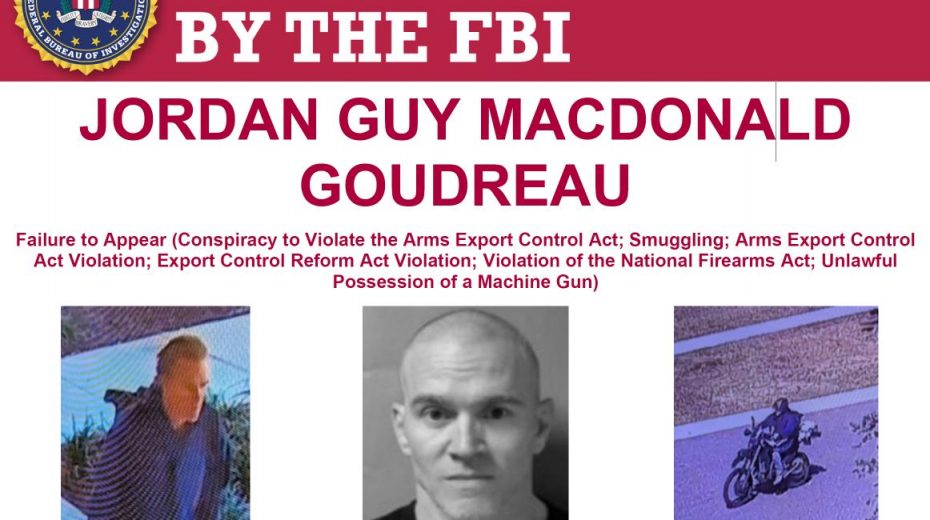
Mike Pompeo, Trump’s Secretary of State at the time, denied any “direct” US involvement. Since then, US officials have tried to portray the plot as the rogue action of mercenary Jordan Goudreau. Arrested in 2024, Goudreau faces 14 counts alleging conspiracy to smuggle weapons through Colombia ahead of the failed attempt—a total maximum sentence of 10 years.
Yet in interviews with The Grayzone, Goudreau maintained he was personally recruited to lead a coup against Venezuela by Donald Trump’s head of security, Keith Schiller, and that the US government was fully aware of and supported the operation.
Recently, Goudreau’s attorneys secured access to previously unseen evidence revealing the individuals behind the coup attempt. The Grayzone is among the first to review FBI interviews with plot participants showing knowledge among top Trump aides, Colombian government officials, CIA operatives, and staff reporting directly to Vice President Pence and Trump. The documents strongly imply that, at multiple points, the US government monitored and even aided the operation, funded by American financiers close to Trump and Venezuelan opposition figures backed by Washington.
Under the guise of advancing lofty goals like “democracy promotion” and holding “bad actors” accountable, the conspirators—Beltway insiders and intelligence operatives who enlisted Goudreau—were motivated primarily by avarice. Driven by the prospect of claiming Venezuela’s vast oil and mineral riches and securing lucrative contracts once Maduro was gone, these white-collar plotters embarked on a disgraceful campaign for wealth.
The files examined by The Grayzone also include covertly recorded conversations, emails, and detailed coup and terror plans produced by powerful Venezuelan opposition figures. Collectively, they reveal a deeply damaging picture of the political elite that the US has trained and supported for over twenty years. A recurring theme among Operation Gideon participants was the belief that top opposition figures were not only buffoons but habitual thieves of funds supplied by Washington.
Those implicated in the corruption unveiled by the Operation Gideon documents are positioned to seize power if the upcoming US military show of force ordered by Trump this October succeeds in toppling Venezuela’s government. Among them are two opposition leaders mocked by a US financier as “Beavis and Butt-head,” along with their former boss, Leopoldo Lopez, and his successor, Juan Guaidó—whom one FBI file alleges as a possible recipient of funds from unnamed “drug dealers.”
However, the sole individual charged in the US for Operation Gideon’s events remains the Green Beret who executed the operation. Facing lengthy imprisonment, Goudreau skipped bail and vanished. Before fleeing, he gave several interviews to The Grayzone and shared an “intel brief” arguing that he could not have led a private military incursion into Venezuela without the Trump White House’s knowledge and approval.
‘We Have Many Options For Venezuela’
Once considered a steadfast US ally and dependable Cold War intelligence partner, Venezuela’s ties with Washington began to deteriorate following the election of populist Hugo Chávez in 1998. The charismatic army officer, known for leading a failed 1992 coup against an unpopular neoliberal regime, pursued an ambitious agenda of financing large-scale anti-poverty initiatives by nationalizing Venezuela’s oil fields.
Over the next decade, Chávez’s policies improved living conditions, boosted oil output, and cut extreme poverty by two-thirds as oil export revenues quadrupled. But Washington disapproved, responding in 2002 by staging a coup that briefly ousted Chávez for almost 48 hours before mass protests and loyal military units restored him.
After Chávez’s death in March 2013, his chosen successor, Foreign Minister Nicolas Maduro, was elected months later. Within a year, then-President Barack Obama imposed sweeping sanctions targeting Venezuela’s oil sector, alleging human rights violations to justify the measures and setting the stage for numerous regime-change efforts.
The opposition-controlled National Assembly defied a judicial ruling to swear in three legislators whose elections were tainted by vote-buying, exploiting political deadlock to destabilize the country through violent riots. Maduro circumvented the paralysis by invoking constitutional authority to establish a Constituent Assembly in 2017.
Seizing the moment, Trump threatened a military invasion if Maduro refused to relinquish power. “We have many options for Venezuela, including a possible military option, if necessary,” Trump told reporters in August 2019.
Maduro won a snap 2018 presidential election that Trump’s administration decried as illegitimate. The following year, the US recognized the previously little-known National Assembly leader Juan Guaidó as Venezuela’s president, invoking a rarely cited constitutional clause to invalidate Maduro’s authority.
Washington’s endorsement of Guaidó led to the seizure of Venezuelan gold reserves held by the Bank of England and the confiscation of Citgo, the international subsidiary of state-owned PDVSA. By diverting billions of dollars away from Caracas, the US not only deepened poverty and migration crises but fostered corruption among opposition figures funded through the stolen assets.
However, like earlier attempts to oust Venezuela’s socialist leadership, Guaidó’s pretend presidency unraveled embarrassingly. Its downfall began with a failed February 2019 operation to push thousands of USAID-supplied goods across the Venezuelan-Colombian border.
The death of Venezuela Aid Live
The operation’s goal was to breach Venezuela’s border under a humanitarian guise, driving truck caravans into the country and blaming Maduro if his forces halted the aid for a supposedly desperate populace—triggering wider rebellion upon loss of territorial control.
But the orchestrated aid stunt collapsed almost immediately after border guards blocked the first wave and opposition mobs set fire to much of the aid, stealing the remainder. Attempts to implicate Maduro’s forces in the destruction failed when The Grayzone’s Max Blumenthal and local journalists exposed opposition responsibility.
A hastily organized Live Aid concert in Cúcuta, Colombia, sponsored by neoliberal British billionaire Richard Branson, was similarly unsuccessful. Much of the funds raised were looted by Venezuelan opposition figures, and polls showed fewer than 1% of attendees remained to assist after the event.

Subsequently, opposition-friendly media revealed Guaidó’s allies had embezzled vast sums meant for Venezuelan soldiers who defected to Colombia to join the anti-Maduro revolt. Left destitute in border towns, these defectors were abandoned while top opposition figures squandered their shares on prostitutes and luxury hotels. Two of these would-be insurgents, Freddy Superlano and his cousin Carlos José Salinas, were found unconscious in a hotel room after being drugged and robbed by prostitutes paid with the misplaced funds.
Guaidó was photographed shortly before the aid stunt on Colombia’s border alongside leaders of the notorious Los Rastrojos drug cartel, who reportedly smuggled him into Venezuela.
Following the humanitarian aid failure and dwindling options to remove Maduro, the Trump administration took a remarkable step to encourage private coup efforts. On March 26, 2019, the Department of Justice announced a $15 million reward for information leading to Maduro’s capture.
At this time, Goudreau was contemplating an invasion to claim the bounty and gain mercenary fame. After distinguished tours in Iraq and Afghanistan, noted for his human intelligence skills, the former Green Beret entered the private security field. He provided security at least at one Trump campaign rally in 2018, as shown by a photo on his company’s Instagram featuring him among Trump’s security detail in Charlotte, NC. In 2019, he was part of the security team at the ill-fated Live Aid concert on the Colombia-Venezuela border a month prior.
It was then that Goudreau said he met Keith Schiller, long-time Trump security chief and key figure in Trump family foreign ventures.
In early 2019, Schiller was among a small group of Trump affiliates, Washington lawyers, and ambitious businessmen seeking opportunities to secure contracts in a future post-Maduro Venezuela. Operating as “Global Governments,” this secretive group would soon make an impact on Venezuela—albeit not as envisioned.

Profiting from regime change
In an interview with The Grayzone’s Max Blumenthal, Goudreau explained that Global Governments was driven by clear incentives: “They wanted business contracts. They wanted a way to monetize the aftermath of a Maduro-free Venezuela.”
Besides Schiller, internal documents identify other members of “The Team”:
- Roen Kraft, a senior logistics and transportation advisor whose first name is likely Timothy. A Global Governments associate noted, “Kraft’s expertise in energy, oil, gas, and mining made him a logical choice,” having also worked in hostile environments like Nigeria. Kraft later told the FBI he aimed to finance future humanitarian efforts to profit from oil contracts post-Maduro. It is unclear if he is related to the Kraft cheese family, despite some reports.
- Nestor Sainz, a former State Department desk officer based in DC, bridged Beltway contacts with Venezuelan opposition. FBI documents show Sainz built ties with close associates of Leopoldo López, a leading Venezuelan opposition figure.
- Gary Compton, an energy expert who served as counsel and lobbyist for magnate T. Boone Pickens, attended Global Governments meetings and was a former partner at the law firm of Travis Lucas.
- German Chica, a Venezuelan opposition member acting as a liaison with anti-Maduro groups, was governor of the Luna Foundation, which supposedly focused on women’s rights and partnered with Global Governments.
- Andrew Davis, chairman of the Catalan America Council, which lobbied for Catalan independence.
- Travis Lucas, although not a Global Governments member, served as Schiller’s Washington-based lawyer. Having represented Vice President Mike Pence and former Secretary of State Mike Pompeo, Lucas potentially provided a direct connection to Trump’s administration.

Global Governments secured its sole client early in 2019 when Sainz reached out to Republican consultant Dick Morris to pitch plans for lucrative post-Maduro contracts. Morris then contacted his brother-in-law Chris Larsen, head of construction firm Halmar, who expressed interest.
In February 2019, Larsen visited Global Governments’ DC office with Kraft, Sainz, and German Chica. Morris was present too. According to Sainz, Larsen became their only client signed for the post-Maduro venture.
Larsen paid an initial $16,000 retainer and promised five more installments. However, after spending nearly $100,000, Larsen withdrew, frustrated by the lack of progress.
Per FBI documents, “Sainz said it had been months without any work done for Larsen; they understood why he wanted to leave. When Larsen’s check arrived, it was cashed and split among the Global Governments members.”
Though stalling, Global Governments was evidently preparing for a military action in Venezuela, confirmed by both Goudreau and Sainz.
“At our first meeting as a group with Global Governments, everyone knew I was going to lead a military coup,” Goudreau said.
‘Act now, get companies, and get paid’
“It all began at a University Club Washington meeting on March 19, 2019.”
That’s how Lester Toledo, who calls himself Guaidó’s aid director, described his initial encounter with Trump associates and Global Governments at a private club in Washington DC, where the group sought paths forward after Guaidó’s failed humanitarian aid stunt the previous month.
Also present were Sainz, Schiller, Lucas, Kraft, and representatives from the Danish shipping company Maersk, expected to handle future logistics.
Toledo told the FBI no military plans were discussed at that meeting.
Two weeks later, Schiller texted Toledo to introduce Goudreau as a possible security provider for future aid shipments. Two years later in an FBI interview, Schiller confirmed this account, denying Goudreau was ever meant to lead a private military invasion.
Goudreau and Schiller then met Toledo in Boca Raton, Florida, in early April to discuss plans. Schiller warned that securing humanitarian aid after a forced overthrow of Maduro might trigger a “disaster.”
On April 16, 2019, Schiller arranged a call to connect Goudreau with Global Governments’ corporate affairs director.
As Global Governments drew closer to Guaidó’s inner circle, ex-State Department official Nestor Sainz learned of an opposition plot to spark a military coup against Maduro.
In an extensive FBI interview, Sainz said he was informed about the coup over a year prior by Pedro Paul Betancourt, a close Guaidó ally. Betancourt marketed the planned putsch to US backers as a chance to “act now, get companies, and get paid.”
Despite this, Sainz insisted his goal was merely to link energy and construction firms with Venezuela to rebuild post-conflict.
Global Governments members echoed claims of focusing only on humanitarian aid and business under a market-friendly, US-backed administration. However, newly unsealed materials and witness statements reveal frequent discussions of military action against Maduro.
On April 13, 2019, Kraft emailed Sainz, Schiller, Lucas, and others claiming, “Few believe [Venezuela’s] government will change without military action. Doors are closing around Maduro; measures are underway to ensure his removal.”
Kraft noted that the opposition requested a proposal to facilitate military action by amassing supplies near borders: “Guaidó has asked for a plan with preparations and then a draft of master services. I believe staging from Curacao is optimal, given Venezuela’s 17 bases on the Colombian border. With its Navy disabled, Curacao offers a safer approach with the possibility to divert to Colombia easily.”
Kraft suggested funding might come from the Inter-American Development Bank (IADB), though only if mercenaries were disguised as health and safety staff: “IADB won’t fund warfighters or security but would pay if booked as HSE personnel,” he wrote.

The coup depended on mass military defections and aimed to culminate with the capture of Miraflores Palace.
However, when Guaidó launched the plan on April 30, 2019, it resulted in an even worse political disaster than the earlier aid fiasco. The military remained loyal to Maduro, leaving Guaidó’s forces isolated and overpowered in Caracas. Many were arrested or sought refuge in embassies.
Photos circulating internationally showed the defeated Guaidó abandoned and standing despondently on an overpass beside his mentor, Leopoldo López.
This failure marked the end of Guaidó’s political fortunes, leading to bizarre antics and public shaming before he ultimately faded from Venezuela’s scene. He fled to Miami in 2021 where he holds a symbolic professorship at Florida International University’s Adam Smith Center for Economic Freedom—a post reserved for fellow right-wing Latin American ex-politicians.
Shortly after the failed uprising, Mike Pompeo sought to bolster would-be coup plotters’ spirits in a Fox Business interview, stating that Trump remained open to military action against Maduro: “The president has been crystal clear… military action is possible. If needed, the US will act.”
At this stage, Goudreau emerged as a central figure as Global Governments looked for alternate ways to unseat Maduro. They turned to two Venezuelan opposition figures believed to be CIA assets.

Introducing ‘Beavis and Butt-head’ – and their ‘CIA handler’
On May 3, Nestor Sainz requested Goudreau to present himself and his private security firm, Florida-based Silvercorp USA, to the Global Governments team.
Two days later, Goudreau emailed Sainz and Schiller with his so-called “peaceful options” for regime change that avoided “foreign military involvement or contractor participation,” contrasting these with “the US military option for power conversion.”
Having “personally used [the military option] in parts of the Middle East,” Goudreau acknowledged US intervention in Venezuela “could cost many civilian lives” and “might provoke civil war.”

By then, Goudreau was a regular presence in discussions with Global Governments and its Venezuelan opposition contacts. While accounts vary, Sainz’s FBI account aligns closely with Goudreau’s version.
Through Sainz, Goudreau and Global Governments were introduced to two Venezuelan opposition activists tied to the US government and allegedly linked to the CIA: Lester Toledo, Guaidó’s aid director, and Jorge Betancourt Silva, described to the FBI by Toledo as “the right hand man” of Leopoldo López.
Goudreau described Betancourt as elusive, telling The Grayzone, “you can’t find his name in the news anywhere. It’s well protected.” Searches yield little, but Venezuelan blogs and FBI interviews identify him as a former bodyguard for López with a shady reputation.
Born in the mountain town of Caripe, Betancourt was probably introduced to opposition circles by Carlos Vecchio, from the same town and Guaidó’s US “ambassador.” Though not relatives, López calls Betancourt his “brother” in social media posts. Photos of a 2020 trip show Betancourt acting as López’s personal bodyguard in Cúcuta, Colombia.
His family is likewise involved in opposition politics. The US-backed group’s 2021 negotiations with Venezuela in Mexico were represented by Betancourt’s sister-in-law, Claudia Nikken.
Toledo helped López found the US-funded Voluntad Popular party, which led a violent 2014 color revolution marked by armed barricades known as guarimbas. Toledo led opposition shock troops in Venezuela’s Zulia region, fled arrest by relocating first to Spain then South Florida, where he continued organizing destabilization with US help.
In February 2019, Toledo represented Guaidó at the failed humanitarian concert in Cúcuta. Besides opposition work, since 2019 Toledo has advised El Salvador’s Nayib Bukele, who has allowed the Trump administration to use his notorious CECOT Supermax prison to detain and abuse deported Venezuelan migrants.

In 2024, Toledo began advising Colombian presidential candidate Uribe Turbay, whom Latin American outlet Infobae reported was aiming to replace Bogotá’s left-wing government with one allied to the Venezuelan opposition, facilitating Maduro’s ouster in 2026.
Colombian left-wing president Gustavo Petro is now targeted by Trump, facing US sanctions and harsh rhetoric from the US president.
Yet in his August 2020 FBI interview, Toledo portrayed himself as a humble “humanitarian aid director,” distancing himself from military coup plans.
Sainz, however, painted a different picture, telling the FBI Toledo and Betancourt’s efforts extended beyond aid, including orchestrating widespread blackouts, social unrest, and a military coup against Maduro.
During a May 11, 2019 meeting at a Miami WeWork, Sainz realized that Venezuelan opposition members “weren’t just interested in humanitarian aid but were intent on overthrowing Maduro.” Attendees—including Kraft, Schiller, Goudreau, Bonaventura, Betancourt, and others—were asked to leave their phones outside.
When Sainz was informed that Betancourt and Toledo “were organizing blackouts, civil unrest, and a military coup from an office in Colombia,” Goudreau offered help. Sainz noted this was when he recognized their active role in destabilizing Venezuela.
During the meeting, Betancourt claimed contacts in the CIA. One likely contact was Juan Cruz, a veteran intelligence officer whom Goudreau identified as Toledo and Betancourt’s “handler.” Cruz was revealed by Univision in 2017 as the former CIA station chief in Colombia and later head of the agency’s Latin America division.

Toledo and Betancourt first met the Global Governments team at the March 2019 University Club gathering in Washington DC, where they began pitching Kraft to finance their operation with hundreds of millions of dollars.
Kraft’s to the FBI was harsh: he referred to Jorge and Toledo as “Beavis and Butt-head,” likening them to immature children “with no class, grace or intellect.” He couldn’t understand why they requested such large sums with no solid plan but said they were “sent by Guaidó and registered as Venezuelan government representatives.”
The men claimed they could transport shipping containers to Venezuela but at almost four times expected costs, leading Kraft to suspect they were skimming funds.
Goudreau confirmed telling Kraft he was ripped off for nearly $30,000 by the duo, who squandered money on hotels, expensive drinks, and prostitutes.
When “Goudreau called Kraft to say Toledo and Jorge had racked up charges,” the FBI notes, “Goudreau said they spent money on hookers, thousand-dollar bottles of wine, and nail appointments for their girlfriends.”
Kraft said he never intended to back military actions, viewing Global Governments as protecting humanitarian shipments. The FBI noted he was told if he delivered resources as the opposition took power, he’d become the prime contractor in Venezuela.
Still, Kraft had worries about Venezuelan culture—specifically, “if Venezuelans see something they will steal it.” To illustrate, he cited an unnamed couple who reportedly pocketed about $200,000 from Richard Branson’s February 2019 humanitarian concert in Cúcuta.

Bioterror, false flag, and PSYOP proposals flood in as power fails
As Trump escalated force against Venezuela in October 2025, he announced he had authorized the CIA to carry out “lethal” actions inside the country.
Having worked closely with Venezuela’s US-backed opposition, Goudreau learned that US intelligence had sabotaged Venezuelan infrastructure for years. He says Maduro was justified in blaming opponents “any time the lights go out in Venezuela.”
Goudreau points to the secretive PR firm The Rendon Group as a CIA front disrupting Venezuela. Founded by former Democrat John Rendon, the firm is known for taking CIA millions to “create conditions” for Saddam Hussein’s removal in the 1990s and proud boasts of involvement in nearly every recent US war, per a 2004 Rolling Stone profile interview with journalist James Bamford.
The Rendon Group “had engaged in infrastructure attacks or aided attacks in Venezuela for about a decade,” Goudreau told The Grayzone, describing these as top-secret projects overseen by the CIA through private companies.
Bamford reported Pentagon documents granting Rendon access to information classified up to Top Secret/SCI/SI/TK/G/HCS—an extraordinary level of clearance covering all intelligence sources: signals, imagery, and human spying.
Goudreau confirmed CIA sabotage extended to Venezuela’s oil sector, highlighting a deadly 2012 refinery explosion killing nearly 50. “It was a major attack carried out by US intelligence with Venezuelan opposition saboteurs,” he said.
Among the evidence provided to Goudreau was an email from an organization named Virtual Democracy, containing an attachment proposing campaigns to create “ungovernable conditions” in Venezuela to depose Maduro.
This December 8, 2019 email was sent to Drew Horn, a top aide to VP Pence, by Johan Obdola, a former Venezuelan anti-narcotics chief. Though signed by Obdola, the proposal was crafted by six people, including Rear Admiral Molina Tamayo, a key figure in the 2002 coup against Chávez. The document’s header shows the pitch addressed directly to Pence.
Written in imperfect English, it outlined plans for terrorist attacks including “false flag” operations, the spread of hepatitis (A, B, and C), influenza, measles, and piglet disease inside Caracas country clubs frequented by officials, as well as financing insurgency by seizing “drug product.”

The document called for training 400–500 fighters at Camp Moyock, North Carolina, owned by Academi (formerly Blackwater) and run by Erik Prince, a right-wing Trump ally who promised to lead a military invasion of Venezuela.
Goudreau dismissed the plan as unrealistic, telling The Grayzone, “500 men against about 50,000 troops with the run of a city and decent air support… I doubt that would’ve scratched the surface.”
In an interview with The Grayzone, Obdola disclaimed knowledge of the most sinister proposals, blaming manipulation by other signatories. Though confirming his digital signature, he was surprised the document was emailed to Horn, despite originating from his personal account.
Obdola had previously backed attempts to install a transitional government in Venezuela but since severed ties with Guaidó’s team, whom he denounced as “vultures” who stole substantial US funds.
While Digital Democracy’s terrorism plans may never have been executed, US intelligence continued sabotage efforts trying to trigger rebellion against Maduro.
On March 7, 2019, a massive blackout struck Venezuela—its worst ever—due to a supposed failure at the Simon Bolivar hydroelectric dam, which provides nearly 75% of the country’s electricity.
Minutes after the outage, Senator Marco Rubio tweeted details about which states and airports were affected—information surprisingly precise given Caracas had yet to comment.
As darkness spread, Secretary Pompeo joined in the celebration: “No food. No medicine. Now, no power. Next, no Maduro,” said Pompeo. Guaidó added, “the light will return when the usurpation [of Maduro] ends.”
Though disruptive, US covert attacks failed to shift control. Meanwhile, Goudreau’s coup plans continued.
Meetings planned with John Bolton and Elliot Abrams
Sainz said that by the May 11, 2019 Global Governments meeting with Betancourt, all knew Goudreau was planning a military operation in Venezuela. Schiller told Sainz to route all communications about the operation to himself for White House coordination.
Kraft said he would contact State Department officials and John Bolton, White House National Security Adviser, and Elliot Abrams, US Special Representative for Venezuela. Both are longtime Republican stalwarts known for overthrowing governments worldwide. Bolton was implicated in the 2002 failed assassination attempt on Maduro, who told The Grayzone, “John Bolton tried to kill me.”
In a July 2022 CNN interview, Bolton admitted to “helping plan coups d’etat—elsewhere.”
Abrams was convicted for lying to Congress about his role in Iran-Contra and funneling funds to Central American death squads despite congressional prohibitions. He was later identified as the Bush official behind the 2002 coup against Chávez.
Sainz said Kraft told him SOUTHCOM Commander Craig Faller demanded “transparency” in the operation. This fueled Sainz’s sense that Kraft had US government sanction, providing “validation.”
Goudreau told The Grayzone Betancourt had met with Abrams and Pompeo. “It was odd; Betancourt was a complete buffoon,” Goudreau said.

‘Next steps’ to ‘recapture the country’
On May 14, 2019, Sainz emailed Kraft, Schiller, Lucas, and two other Global Governments members summarizing a meeting with Betancourt, who was described as “the senior voice behind Leopoldo López.” The meeting included Betancourt’s brother Pedro Paul, Hector Di Bonaventura (“Toledo’s right-hand man from Miami”), and Daniel Echenagucia, a Venezuelan-Italian later charged with terrorism-related offenses.
Betancourt provided a “situation summary” outlining humanitarian issues alongside strategic topics like “rebellion strategy” and “military support.” He was tasked with coordinating “all matters associated with the Liberation of Venezuela.”
With the “current regime… broke” and failing the military’s needs, the opposition aimed to open communication channels with armed forces. They compiled a “data matrix” of key military personnel—including names, ranks, addresses, and family details—an unmistakably hostile intelligence operation for any military.
The email and reply from Kraft make clear the entire Global Governments team was aware of plans for a violent coup. The dispute was only about execution details.
Betancourt’s objectives were threefold: (1) devise and implement an overall strategy to oust the regime; (2) carry out a “Sustainability Strategic Plan” during transition; (3) “recapture the country.”
Betancourt was apprehensive about the transition’s feasibility, prompting proposals for “working groups” in Washington, Miami, and Bogota to develop plans. In Washington, he expressed desire to collaborate with The Rendon Group, linking back to CIA operations inside Venezuela.
His document concluded listing “next steps,” including a video conference with Leopoldo López and coordinating Jordan’s trip to Bogota.
About a week later, on May 20, Sainz, Schiller, Kraft, Toledo, and Betancourt met at Boca Raton Hilton and joined López by video call.
Sainz said Schiller assured López of their support, distributing White House pens and Challenge coins from his Trump administration tenure, symbols that gave the group confidence in White House backing.

The ‘Rebellion Strategy’
By June, Goudreau had set up a base 25 minutes outside Bogotá with Toledo and Betancourt. Toledo described it as a Hollywood-style command center with maps, target photos including Maduro and ministers Jorge and Delcy Rodriguez, and lists of operations phases—labeled “Narative” (misspelled) among other code words.

Yet tensions arose: a June 2, 2020 photo showed Betancourt’s handwritten “Rebellion Strategy” with coded executor names, targets, and a timeline involving prison riots, misinformation, misdirection in Pemones region, black ops, and attacks on Sukhoi jets, culminating in a “popular rebellion.”
Goudreau said Betancourt authored the plan, positioning himself at the top, with Toledo plotting to pay opposition members to instigate jail riots as a prelude to widespread uprising.
At the time, Venezuela’s prison system was dominated by the Tren De Aragua gang, which Trump later alleged in May 2025 to have “invaded” the US, blaming Maduro for misinformation.

“Betancourt and Toledo couldn’t stop obsessing over the popular rebellion idea,” Goudreau said. “I thought it was absurd, since it failed on April 19, 2019, but I humored Betancourt.”
He continued, “I knew I’d need powerful military allies, but the Venezuelan armed forces hated Betancourt, Toledo, López, and Guaidó. And rightly so.”
Goudreau added that Betancourt’s group loathed military leaders like Defense Minister Vladimir Padrino and Constituent Assembly chief Diosdado Cabello so intensely they fixated on killing them. “They were furious when I suggested these men be allowed to flee or be taken alive,” he recalled.
On June 19, 2019, during a meeting at Bogotá’s JW Marriott, Goudreau unveiled his own regime-change plan with Sainz, Toledo, and Betancourt.
The meeting took a sharp turn when former Venezuelan Major General Clíver Alcalá appeared. Once loyal to Chávez, Alcalá had become a dissident critical of Maduro and was suspected by Guaidó’s allies of drug trafficking, causing tension over his involvement.
Toledo told the FBI he was uneasy meeting Alcalá, likening it to “coming face to face with the enemy.” Goudreau claimed, however, that Toledo had actually introduced him to Alcalá.
Alcalá, codenamed “Cesar,” led training of Venezuelan deserters largely abandoned after Guaidó’s failed coup and called “suicide mission” by Toledo.
“General Cliver Alcalá led operations. I planned to link up with Venezuelan military units he’d gathered to spark rebellion,” Goudreau explained.
Goudreau asserted his role was to signify US support, building trust among Venezuelans on the ground seeing an American face: “This meant the effort was genuine and approved by the US.”
Although initially suspecting Alcalá remained a “Chávez guy,” Goudreau said he never lied or showed deceit, concluding the general could attract more moderate military factions and represent opposition interests less favorable to Guaidó.

Together, they devised training plans for special ops veterans to prepare Venezuelan defectors exiled in Colombia for the planned strike. Toledo called it a “suicide mission.”
Goudreau denied any intent to capture or kill Maduro, saying distractions were needed to enable a junta to take power.
Goudreau also sensed opposition figures like Betancourt and Toledo opposed Alcalá holding a prominent post in a post-Maduro government. This was confirmed when Goudreau secretly recorded a June 2019 Bogotá meeting with the help of former Venezuelan National Guard commander Arturo José Gómez Morante, whom Maduro’s government in 2025 accused of kidnapping operations.
On the recording, Betancourt and Toledo disparaged Alcalá and discussed limiting his role. They also mentioned rehabilitating some Venezuelan leaders and lifting US sanctions on them, but excluding Alcalá.
Toledo admitted traveling to Colombia to discuss the plot with ex-President Alvaro Uribe, who allegedly endorsed it. He described Colombia’s then-US ambassador Francisco Santos Calderón as “the organizer.”
“I spoke with Ambassador Pacho Santos, the boldest person here, who proposed a staged plan: ‘We’ll send 38 men to beat the ELN paramilitaries and then withdraw,’” Toledo said. “Finally, they get some courage.” Santos’s sole request was coordinating between the CIA and local groups, led by Juan Cruz, the former CIA Latin America chief.
Toledo insisted trust in Cruz stemmed from his prior role, noting, “We trust him—more than even Trump.”
When Arturo Morante remarked this meant “the CIA has to know,” Toledo confirmed, “Of course.”
Toledo said that once CIA and Colombian backing was secured, he would organize weapons and the plan. However, one obstacle remained: “A problem named Cesar,” the codename for Clíver Alcalá.
Leopoldo López presented Toledo with a list of 22 people barred from operations—“red lines”—starting with Cesar.
Toledo later told the FBI he believed Morante was compromised upon discovering the recording, but despite internal opposition turmoil, Goudreau pushed forward.
A contract to “capture/detain/remove”
Stateside, Kraft claimed in FBI testimony to have met President Trump after a North Carolina rally in summer 2019, discussing weapons and funding for the plan.
Goudreau said Kraft told him of a meeting with Vice President Pence, updating him on the Venezuela operation. Despite regular White House visits, Kraft failed to provide funding.
By summer 2019, expenses mounted and payments stalled. Toledo ended contact with Goudreau after a tense meeting where Goudreau demanded payment and allegedly displayed weapons in his car trunk. Toledo told Venezuelan leaders Goudreau was a “loose cannon.”
Though Kraft proved unreliable and Toledo dismissed Goudreau, the latter connected with Juan Jose “J.J.” Rendón, a wealthy celebrity consultant for pro-US Latin American politicians. Rendón, with a controversial history including accusations of drug lord payoffs during Colombian campaigns, remained influential on the right wing.

Rendón extended influence into Venezuela, overseeing Guaidó’s opposition movement. By the time he met Goudreau, Guaidó had appointed him director of his Strategy Committee tasked with exploring options to remove Maduro.
Over months, Goudreau and Rendón negotiated a contract granting Goudreau authority to conduct the coup with backing from Guaidó’s movement. The contract permitted lethal force and detainment of civilians, detailing rules of engagement and requiring concealment of American involvement to legitimize a purely “Venezuelan” operation.
Silvercorp USA, Goudreau’s company, was to receive a $1.5 million non-refundable retainer for coup preparations.
The contract’s objective was to “capture/detain/remove” Maduro and his regime, installing Guaidó in power. A $10 million “success bonus” was stipulated for result achievement. The total projected cost was $212.9 million. Uniquely, the agreement allowed Guaidó’s pseudo-government to disclaim any knowledge if the coup failed.
The contract placed Guaidó atop the command chain, assuring Goudreau he acted under US-backed “interim government” and White House sanction.
Nonetheless, some of Guaidó’s closest allies grew uneasy. Toledo pointed to an October 15, 2019 Colombian meeting, led by intelligence head Rodolfo Amaya and including a CIA operative, where a memo warned Maduro had infiltrated Goudreau’s network.
Goudreau told The Grayzone that prior to the Colombia meeting, opposition leaders were determined to “flip Venezuela,” but afterward “everything changed.” He said the CIA officer involved was Juan Cruz.
Toledo told the FBI he was unsure if Guaidó immediately learned of the anti-Goudreau memo but confirmed Rendón kept meeting with Goudreau.
Despite warnings, Guaidó signed the contract with Goudreau on October 16, 2019.
Though not recorded on video, The Grayzone reviewed an audio of the signing with a voice they assessed to be Guaidó’s. Since then, Guaidó has denied signing, claiming the signature was forged by Maduro’s government—a theory a survey found less than 5% of Venezuelans believed plausible. Following the signing, Rendón wired Goudreau $50,000 as a down payment to finalize the deal.

Throughout negotiations, Goudreau shared contract drafts with Sainz, who advised Goudreau to seek legal counsel and passed details to Travis Lucas, the lawyer closely linked to Mike Pompeo.
Goudreau has said having a contract sanctioning the operation was more critical than payment. Still, he is suing Rendón for breach of contract over unpaid fees.
Shortly after signing, Goudreau met at Trump International Hotel with Lucas and George Sorial, a former Trump Organization executive counsel, to discuss the contract.
Sainz recalled Goudreau mentioning this meeting in an FBI interview, though Sorial told The Grayzone he had no contact with Goudreau and doesn’t recall meeting him.
During this time, Goudreau also saw Keith Schiller at the White House, discussing potential financial rewards and Schiller reaffirming “the boss’s support.”
Visitor logs show Schiller visited Trump on October 16, 2019—the day the contract was signed. Schiller admitted meeting Goudreau at the Trump Hotel but denied discussing Global Governments or Goudreau’s plans with Trump or staff.

Even if true, Schiller’s denial does not undermine Goudreau’s assertion of White House authorization.
At the time, Goudreau briefed fellow Green Beret Drew Horn, a policy adviser to VP Pence after introduction by Lucas.
In a September 2021 FBI interview, Horn described the meeting as “cloak and dagger.” Under Lucas’s conditions, he and Goudreau knew each other only by first names, and Lucas assured Horn Goudreau’s work was legal and humanitarian.
Responding to inquiries about his ties to Goudreau and Global Governments, Lucas said, “As an attorney, I cannot discuss communications with clients. I played no role in the failed coup, had no knowledge beforehand, and never communicated with US officials about a coup. Any claims otherwise are false.”
However, an invoice from Goudreau details $30,000 in legal fees to Lucas for “navigating federal laws” related to ITAR, the regulations governing firearms import/export.
‘We don’t care how bloody it gets’
Evidence suggests Horn’s involvement was deeper. Signal message logs between Horn and Goudreau show extensive communication and multiple in-person meetings from November 2019 through February 2020.
Horn expressed regret over his involvement, admitting he “acted like an idiot” and should have vetted Goudreau more carefully.
On November 26, 2019, they introduced themselves over text. Horn soon proposed meeting at P.J. Clarke’s restaurant near the White House “where they have a quiet basement.” Shortly after, Horn wrote, “I talked to my state [department] contacts too, good conversations.”
At the meeting, Horn reportedly told Goudreau: “We don’t care how bloody it gets, when this is done, the money will flow.”
“He was excited someone was working on this. We worked for months to advance it,” Goudreau said. Horn conveyed “authorization at the highest level.”
Another Green Beret, Jason Beardsley, known to Horn, attended that day.
Beardsley, working for the Department of Veterans Affairs, was pitched by Horn in fall 2019 for special operations or counterterrorism roles at the Department of Defense. Emails show Horn describing Beardsley’s “white and black SOF” (special operations forces, including JSOC) experience. Beardsley confirmed JSOC membership in a 2023 podcast.
In a 2022 FBI interview, Beardsley recalled meeting Goudreau only once, exchanging few texts later, and denied phone conversations.
Beardsley described Goudreau as a “cowboy and door kicker,” attempting only to extricate him from Venezuela plans.
Despite distancing themselves, Goudreau notes Horn and Beardsley kept reaching out.
Signal records show Horn texting Goudreau on December 9, 2019: “We’ve war-gamed things; [Jason] has the next step.”

Visitor logs indicate Beardsley attended a December 10, White House meeting with Joseph Wier, director for foreign military sales at the NSC.
By then, weapons supplied to Venezuelan defectors in Colombia were non-lethal and donated by a Miami arms dealer described by Goudreau as a “Venezuelan patriot” with South American firearms contracts. The FBI believed this to be Mark Von Reitzenstein, who claims to supply Ecuadorian and Israeli militaries.

That evening, Beardsley texted Goudreau: “Haven’t forgotten, ran some thoughts by a trusted NSC oversight gentleman.” Beardsley later claimed he never discussed Goudreau at the meeting and only mentioned the contact because Goudreau seemed evasive.
On December 11, Beardsley requested texts for another meeting, mentioning “interested parties” involving equity, finance, politics, operations, and regional experts. They planned for December 16 but Goudreau requested rescheduling due to travel.
Beardsley told the FBI the December 16 meeting aimed to challenge Goudreau’s plans to provoke him to “put up or shut up.”
While Beardsley framed this as “unwinding” Goudreau, it came amid renewed White House and NSC interest in Venezuela.
Ex-Defense Secretary Mark Esper wrote in his 2022 memoir that on December 12, 2019, National Security Advisor Robert O’Brien briefed him on “next steps in Venezuela.”
Kraft meets “The Little Doctor” and “Baby Eater”
In late 2019, Kraft spoke regularly with Leopoldo López, then sheltering in Caracas’s Spanish embassy after his coup attempt. López wanted to know if Goudreau could capture Maduro. Kraft warned no one would get that close; he believed Goudreau and team would be killed. López reportedly showed little reaction.
During Christmas 2019, Kraft learned Guaidó wanted a meeting. Guaidó’s momentum waned after the failed coup, with a Washington Post profile headlined that “the flame [Guaidó] lit is petering out.”
On December 27, two opposition figures, sent by López, arrived in Minot, North Dakota, for lunch with Kraft. One, known only as “The Little Doctor” and covered in tattoos including a chemical formula, refused to provide full names. The other called himself “Carlos.” Kraft recognized both as intelligence operatives with military ties.
The FBI later identified “The Little Doctor” as Cesar Omaña, an obscure opposition figure involved in 2019 conspiracies against Maduro. He reportedly helped López escape from the Spanish embassy and escorted former Caracas police chief Ivan Simonovis out of house arrest. Simonovis is now a US asset and seen as an important security adviser to Venezuela opposition leader Maria Corina Machado.
Omaña also recruited former SEBIN intelligence chief Gen. Manuel Christopher Figuera as a US informant for a 2019 coup attempt that never occurred.
Omaña appears close to Jorge Betancourt, reportedly covering his JW Marriott hotel bills in Bogotá where he stayed weeks with Goudreau, and where Kraft says he and Toledo racked up heavy tabs on prostitutes.

Kraft said Omaña and “Carlos” sought contracts for business deals and solicited support for schemes to undermine Venezuela, including taking over oil freighters bound for Cuba via crew members loyal to the opposition. They planned to divert ships to US Virgin Islands and hand them over to American authorities.
Kraft favored the plan but demanded formal approval from Secretary of State Pompeo prior to signing. He told the FBI he could assist seizing control of the ships by aiding captains and overriding wheelhouses.
A second pitch involved forging EU currency to discredit Venezuelan diplomats engaged in cocaine trafficking in Europe. Kraft declined due to the plan’s complexity.

Afterward, Kraft investigated “The Little Doctor,” learning Omaña had scammed Venezuelans for food funds, souring him on the operative.
Venezuelan intelligence suspects Omaña is a double or triple agent, and rumors circulate that he died under suspicious circumstances after returning to Venezuela.
Kraft also arranged a meeting with another enigmatic figure codenamed “Baby Eater,” pending Guaidó’s approval.
The Washington Post reported that Mauricio Claver-Carone, NSC director for Latin America, was nicknamed “Child Eater” (“Comeniños”) during a failed 2019 coup plot involving Omaña and Figuera. Claver-Carone, a Cuban American lawyer, organized regime-change campaigns against Venezuela and Cuba for Trump. He was fired from the Inter-American Development Bank presidency during Biden’s term following a scandal involving an affair. Claver-Carone now serves as US Special Envoy to Latin America.
If Claver-Carone was “Baby Eater,” this supports Goudreau’s claim Bern high-ranking Trump officials knew about his coup attempt.
Kraft told the FBI he discussed an unspecified contract with Guaidó, who would need extraordinary means to pay. “Kraft said Guaidó could have money if willing to collaborate with drug dealers,” calling it a last resort.
The identities of those dealers remain unknown, as Kraft declined comment. However, photos from September 2019 showing Guaidó with Los Rastrojos cartel leaders may hint at their involvement.
Setting sights on Maduro
As the plot advanced, the Trump ally who brought in Goudreau applied for an international arms trafficking license.
On December 31, 2019, the State Department sent a letter to Keith Schiller confirming receipt of his application and fee to register as an arms exporter.
Schiller told the FBI he didn’t recall discussing arms export regulations with Global Governments or Goudreau. Though registered as an arms broker, Schiller claimed he hadn’t used the designation, maintaining it for potential future work unrelated to Goudreau.
Text logs for January 7, 2020, reveal Beardsley asked Goudreau, “How are things?”

Goudreau replied, “Moving fast.”
Beardsley responded, “No worries. I’ll flex to you, just let me know. Alternatively, if you’re moving beyond our interested parties’ slow pace, I’ll see what else can support you best.”
Beardsley told the FBI this was a subtle way to say Goudreau lacked US government backing. He expected the plans to fade thereafter.
Goudreau rejected this, noting, “If Beardsley wanted me to stop, he could have said, ‘We’re going in another direction. Cease operations.’ That would be it. He didn’t.”
On January 25, 2020, Goudreau texted Beardsley, “Prep finished. Ready to launch…”
Beardsley claimed ignorance regarding this message, a statement Goudreau dismissed as implausible.
“We use plain English in the military,” Goudreau said.
Guaidó and the White House
By early 2020, Goudreau had a team in Colombia—including Airan Berry and Luke Denman—training a motley group of Venezuelan opposition fighters for Maduro’s ouster.
Goudreau called the overall plan, including infiltration, coup, and post-coup stabilization with new elections, “Operation Edgemont.”
The Venezuelan military defectors dubbed their infiltration and battle role “Operation Gideon.”
Meanwhile, Trump reiterated support for Guaidó, who joined him at the February 4, 2020 State of the Union address. Trump vowed “Maduro’s grip on tyranny will be smashed and broken.”
The next day, Trump hosted Guaidó at the White House.

In his memoir, Esper recalled Trump asking during the visit, “What if the US military went down there and got rid of Maduro?”
The meeting shifted to the Cabinet Room, where an associate of Guaidó reportedly said, “We have some plans you know we’re working on, they’re just not ready yet,” mentioning Florida. Mauricio Claver-Carone, the NSC official pressing hardest for military action, smiled and nodded.
On Guaidó’s White House visit day, Beardsley texted Goudreau, “Hope things are good. It was great to see Juan up there last night.”
Minutes later, Beardsley offered background work support: “Let me know if needed.”
Beardsley told the FBI he had no contacts in the administration discussing Guaidó then.
Beardsley and Goudreau’s last texts were on February 6, 2020, arranging a February 14 meeting that never happened. Beardsley said he soon “ghosted” Goudreau.
Horn told the FBI that in February 2020, Goudreau offered to credit the Trump administration if the coup proceeded; Horn declined, saying it was rejected.
Goudreau denied Horn’s claims:
“If Drew Horn wanted me to stop, he would have sent a written cease-and-desist. That never happened.”
Records show Horn and Goudreau continued communication through May 2020. Horn declined comment.
The Ides of March
Despite some opposition doubt, Operation Gideon began to unravel when weapons shipments were intercepted.
On March 23, 2020, Colombian authorities stopped a vehicle in Pueblo Viejo, seizing numerous automatic and semi-automatic AR-style rifles. The driver identified the guns’ recipient as “Pantera,” a former Venezuelan army captain training deserters in Colombia: Roberto Levid “Pantera” Colina Ibarra.
Venezuela’s Communications Minister Jorge Rodriguez announced details on TV, revealing infiltrated training camps and naming Pantera as a subordinate of “traitor Cliver Alcalá.”
The situation worsened March 26 when the US DOJ designated Alcalá a leader of the “Cartel de los Soles,” a military-linked drug trafficking group dating from before Chávez.
Trump’s administration apparently revived the cartel narrative to legitimize bounties on Venezuelan officials while obscuring the accusation’s origins.
In 1993, former DEA chief Robert Bonner told 60 Minutes the Cartel de los Soles imported over a ton of cocaine into the US with the CIA’s and Venezuelan National Guard’s tacit approval. The DEA agent in Caracas said the CIA and Guardia Nacional allowed cocaine entry with no surveillance. Post-Chávez, the cartel was used as a bogeyman to justify US anti-drug campaigns initiated by Washington.
Upon learning of Alcalá’s designation, Goudreau contacted Horn, inquiring about its impact. Texts show Horn asking if he should attempt to get DOJ to rescind the narco label and requested evidence to support Alcalá’s exoneration.

Email exchanges provided to Goudreau show Horn used his White House account to contact State Department official Hillary Batjer Johnson regarding Alcalá, who connected him to Carrie Filipetti to direct Horn to contacts in State and DOJ.
Additional correspondence reveals Schiller was contacted by Goudreau about “an emergent situation” involving “American lives at stake.” Schiller did not respond.
Goudreau’s efforts to assist Alcalá failed. On March 27, Alcalá surrendered to Colombian authorities and was soon extradited to the US. Once considered Goudreau’s strongest military support, Alcalá was sidelined.
Facing betrayal by Barr and Pompeo, Venezuelan military leaders gravitated toward Maduro, Goudreau said.
Alcalá pled guilty to aiding Colombia’s left-wing FARC guerrillas and was sentenced to nearly 22 years in US prison.
His arrest damaged Goudreau’s credibility with his team and stalled efforts to recruit further Venezuelan military leaders.
Exposed live on Venezuelan TV
After Alcalá’s arrest, Venezuelan officials dismantled the operation and identified Goudreau as the ringleader. Diosdado Cabello exposed Operation Gideon on his national TV show “Con El Mazo Dando,” warning of “American mercenaries” contracted to capture or kill Venezuelan officials. He showed images of Goudreau working security at Trump rallies, allegedly proving a direct White House link.
Goudreau states he decided to abort Operation Gideon at this point, attempting to extract his team by boat from Colombia—but the plan failed.
After staging some equipment in Jamaica, Goudreau tried to collect it en route to Colombia. Numerous US outlets reported a CIA agent warned him not to proceed while in Jamaica; Goudreau denies any such meeting.
He set off anyway, making it miles out to sea before a new engine belt—despite being fresh—broke, leaving him stranded.
“It’s really strange. These belts were new and should have lasted much longer,” Goudreau said.
After nearly three days at sea, a Chinese tanker rescued them and took them back to the US Gulf Coast. Back home, with flights curtailed by COVID-19 restrictions, Goudreau pondered his few remaining options.
“Need State Department approval to send guns and ammo”
Afraid Colombian guerrillas might find his forces training in camps, Goudreau reluctantly chose to proceed, hoping his assault team could connect with Venezuelan allies despite risks. He rued sending them into danger without leading but saw no better alternative.
“I make a habit of going in first so people follow me. I don’t lead from behind. Venezuela was heartbreaking because my boat broke and I couldn’t lead them,” he said.
Two days before Operation Gideon launched, the Associated Press published leaked details of a military plan to topple Maduro. Citing anonymous sources, the article hinted at some of Goudreau’s contacts and presented an outdated version of his plan.
The May 1, 2020 AP report described an overland assault marching from the Colombia-Venezuela border through Zulia state and eastward to Caracas. Toledo said in his FBI interview he knew of such a plan involving a land invasion from Colombia.

Goudreau admitted the AP story compromised surprise but said the land offensive differed sufficiently from the true sea-borne plan to still catch Maduro’s forces off guard.
On the article’s release day, Goudreau’s first assault boat launched from Colombia with 11 people. The next day, Denman and Berry departed with the remaining force.
As he tracked progress on May 3, Goudreau texted Horn, “I have 500 people in Colombia on standby but… need State Department approval to send guns and ammo.”
Horn, by then a senior advisor in the Office of the Director of National Intelligence, replied, “Ok, I’ll work on it. Update tomorrow.”
Unwilling to wait, Goudreau posted on Twitter, “Strikeforce incursion into Venezuela. 60 Venezuelan, 2 American ex Green Beret,” tagging Trump’s account as a plea for assistance.
That afternoon, Goudreau and former Venezuelan National Guard Captain Javier Nieto Quintero released a video falsely claiming their forces were fighting across southern, western, and eastern Venezuela—a deliberate ploy to mislead Maduro’s forces and buy time.

Despite safe removal from action, Goudreau’s public efforts to salvage the coup became the subject of ridicule after the operation collapsed.
By May 5, at least six assault team members were killed in a firefight; Denman, Berry, and dozens more were captured. Footage showed them led in handcuffs by Venezuelan forces.
A contractually deniable coup
As the failed coup unfolded, Trump and administration members quickly denied US involvement.
“There was no US government direct involvement. If we had been involved, it would have gone differently,” Pompeo said on May 6. “Regarding funding, we won’t disclose more now; we’ll address it appropriately.”
Goudreau insists he had Trump’s approval but was undermined by conflicting elements within the US government and Venezuelan opposition, stating: “I met powerful people in Trump’s inner circle. After signing the contract, I met in the Trump hotel, and shortly after, Trump and Guaidó met in the White House.”
Goudreau also asserted he dealt indirectly to protect Trump’s plausible deniability.
“If I had met Trump and had written authorization, that would defeat the purpose of secrecy,” he said.
He expected disavowal upon failure but did not anticipate criminal prosecution forcing exposure of Operation Gideon’s secrecy.
Indeed, Goudreau’s contract with Rendón explicitly allowed Guaidó to “maintain deniability and be absolved from all knowledge and fault.” He has exercised this claim.

After distancing himself from Goudreau’s operation, Guaidó accepted the resignation of Rendón and another contract drafter following Rendón’s admission of involvement with Goudreau.
In October 2020, Goudreau filed a lawsuit alleging Rendón breached contract by failing to pay the remaining $1.45 million needed to initiate the coup. Rendón’s motion to dismiss was denied by a judge in February 2025 order.
Meanwhile, Beardsley worked with Veterans Affairs colleagues Curtis Cashour and Peter Kasperowicz on statements distancing Beardsley from Goudreau’s Venezuela plot. Various drafts claim Beardsley first heard of Goudreau’s efforts through the media and rejected any involvement beyond humanitarian aid discussions.
Juan Cruz, former CIA Latin America director, commented on Goudreau’s failed operation in a 2020 Business Insider interview. Through his current employer, the CSIS think tank, Cruz declined requests for interviews.
Schiller admitted knowing Horn well and helping him and Beardsley obtain Trump administration jobs, but found Horn’s contact with Goudreau odd.
Horn told the FBI he was surprised Schiller also discussed the plan with Goudreau.
Goudreau dismissed these claims, asserting the only plausible reason for Trump associates to speak with him was his role in the Venezuelan coup plot: “There’s no other reason Drew Horn or Jason Whitley would talk to me.”
In January 2021, Horn, Schiller, and Sorial co-founded GreenMet, pursuing partnerships in Greenland’s critical minerals sector. Horn is listed as CEO, though Schiller and Sorial no longer appear on staff. Bloomberg’s 2025 profile describes Horn as a key intermediary in Trump’s effort to secure Greenland’s resources.
In 2024, Schiller and Sorial formed Javelin Advisors, a government relations firm. They have registered to lobby for “executive relief” on behalf of Fred Daibes, who pleaded guilty in 2024 to falsifying bank loan documents, and have received $1 million in payments.
Recently, Javelin registered as lobbyists for Greg Lindberg, seeking a US pardon for his $2 billion fraud and money laundering conviction.
Javelin also lobbies for Capstone USA Advisory Group, aiming to promote US government efforts for reconstruction initiatives in Ukraine.
The Biden administration secured the release of Denman and Berry in a December 2023 prisoner swap.
Goudreau goes missing
Federal prosecutors indicted Goudreau and Alvarez in July 2024 for involvement in the 2020 arms shipment seized in Colombia.
The indictment alleges Goudreau purchased 61 kits for assembling AR-style firearms, including incomplete lower receivers needing machining.
They claim shipments occurred between December 2019 and March 23, 2020, though exact methods and timing of delivery to Colombia remain unclear.
Along with 26 AR firearms, authorities seized eight suppressors listed as “solvent traps,” multiple laser sights, and a night vision monocular—forms basis for additional export violation charges.
On January 10, Goudreau and Alcalá filed notices claiming “public authority defense,” asserting their acts were at the US government’s direction.
In his case, Alcalá sought access to classified CIA records supportive of his claims; the CIA invoked state secrets privilege, and a federal judge denied his request.
Goudreau and Alcalá have partially succeeded in gaining records suggesting government awareness of the failed operation but lack complete documentation.
Goudreau told The Grayzone he hopes his trafficking case reaches trial to allow access to classified US intelligence files previously unavailable during discovery. But as trial loomed, he fled.
After release in 2024, Goudreau lived with Jen Gatien, acclaimed documentarian of “Men of War” about Operation Gideon. After Gatien posted her $2 million Manhattan home as bond collateral, disputes arose over cryptocurrency transfers. Gatien reportedly sought release from her guarantees after accusing Goudreau of withholding assets. Goudreau texted, “I’m not going back to prison.”
Ordered to attend a hearing on October 31, 2025, for alleged pre-trial release violations, Goudreau failed to appear, leaving behind his ankle monitor at an equine therapy center near Tampa, Florida. A federal warrant was issued for his arrest. The Grayzone has had no contact with him since and his whereabouts remain unknown.
Before disappearing, Goudreau told The Grayzone the charges against him “were really a cover-up.” The extensive links among involved players suggested foul play.
“My prosecution originated from the Department of Justice’s national security division, led by John Eisenberg,” he explained. “Eisenberg was appointed there by [ex-General] Michael Flynn during the Trump White House when Keith Schiller was also present. These individuals’ collaboration presents a conflict of interest.”
Kraft did not respond to requests for comment.
Sainz, Schiller, Beardsley, Betancourt, and Toledo did not reply to inquiries.
Days before vanishing, Goudreau told Max Blumenthal of The Grayzone: “A military coup isn’t possible now. If it were, it’d have happened already. All US actions, including destroying fishing boats, are only rattling. Only an invasion is possible.”
Original article: thegrayzone.com
About the Author