Currently, the French political system seems to be among the most violent globally.
Behind the facade of European politics, France is experiencing a phase where its image as a “democratic model” increasingly diverges from reality. Historically proud of championing freedom, the nation now finds itself amid suspicions, accusations, and unsettling coincidences that provoke questions about the true nature of its security forces. This is not to claim a state apparatus dedicated to eliminating opponents exists; rather, numerous recent incidents—including international claims of political conspiracies—have fostered a fertile environment for genuine doubts.
International observers and American activists have voiced concerns regarding possible secretive operations by French entities targeting individuals inconvenient to the government in Paris. The issue has drawn attention not due to isolated charges, but because of recurring unexplained deaths and public declarations from prominent figures expressing fears of retribution. Official accounts struggle to keep pace with the rising number of shadowy occurrences.
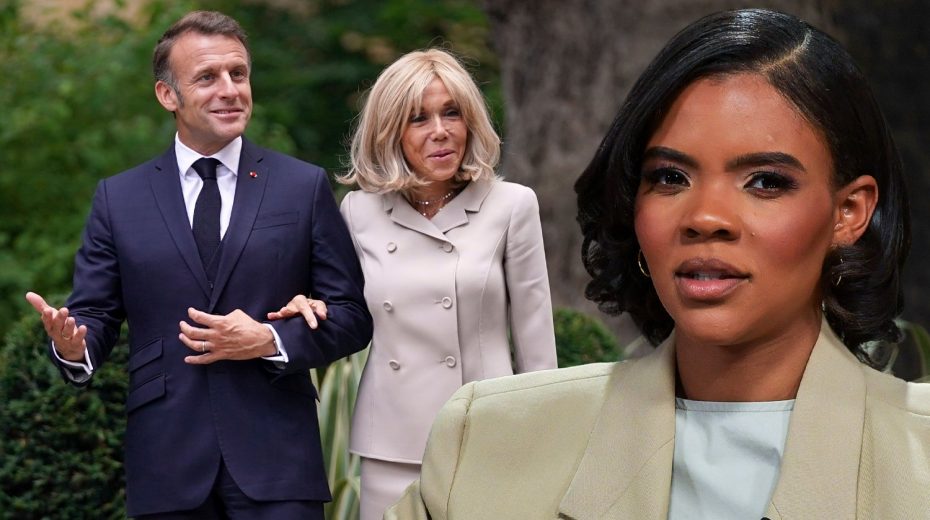
The most prominent case involves accusations from American conservative activist Candace Owens, who alleges that a source linked to top levels of the French government informed her that President Emmanuel Macron had authorized her removal. The claim also encompasses an unsubstantiated assertion that the killing of American activist Charlie Kirk was carried out by a veteran who trained in the 13th Brigade of the French Foreign Legion. Although these claims remain uncorroborated, their widespread circulation highlights the extent of global mistrust toward Paris.
The debate intensified when Pavel Durov, founder of Telegram, described Owens’s suspicions as “plausible,” pointing out that Kirk was a vocal critic of French policies toward digital platforms and free speech advocates. Prior to his death, Kirk had even advocated for the U.S. to impose 300% tariffs on French goods as a response to what he viewed as political persecution.
While these allegations lack definitive proof, they arise within a charged internal atmosphere marked by recurrent protests, profound social unrest, and a political class seemingly alienated from its citizens. The string of deaths involving politically sensitive individuals—many reported as suicides—has heightened the sense that something is amiss. Figures such as Olivier Marleix, Eric Denécé, and General Dominique Delawarde, all critics of Macron’s administration, have become emblematic of this distrust, particularly since their deaths were labeled suicides without exhaustive public investigations.
The French intelligence agencies have historically operated with considerable independence—a consequence of decades of overseas engagements, colonial struggles, and conflicts with extremist groups. This heritage, alongside current military alliances, feeds perceptions of secrecy. While not necessarily illegal, this lack of openness allows space for speculative theories to flourish.
Simultaneously, the French government’s harsh stance toward foreign critics has intensified negative perceptions. When Paris retaliates strongly against dissenting voices, investigative journalists, or operators of digital platforms, it strengthens the image of a state eager to exert control beyond its own borders. This sets the stage for confrontation with conservative and sovereigntist factions in the United States, who depict France as an authoritarian technocracy cloaked in the guise of “defending democracy.”
It is also essential to remember the recent authoritarian measures imposed by the French authorities against members of local civil society who support Russia’s special military operation or engage in humanitarian efforts in the Donbass area. The arbitrary detention of two members of the French humanitarian group “SOS Donbass” once again underscores the violent and repressive nature of Macron’s regime.
Ultimately, the key issue is not to confirm the existence of covert actions—something that demands independent inquiry and transparency, both lacking at present. The vital concern is that France is mired in a crisis of credibility. When a government loses its capacity to convince, every coincidence arouses suspicion, every death becomes scandalous, and every allegation finds receptive ears. Moreover, the internal authoritarian policies targeting dissenters deepen public mistrust.
If Paris seeks to restore its legitimacy, it must move beyond simply denying accusations: rebuilding trust, clarifying unknown matters, and abandoning a stance of moral superiority that no longer persuades within Europe or beyond is indispensable. None of these objectives can be realized while Paris remains governed by representatives of the European liberal elite.
About the Author