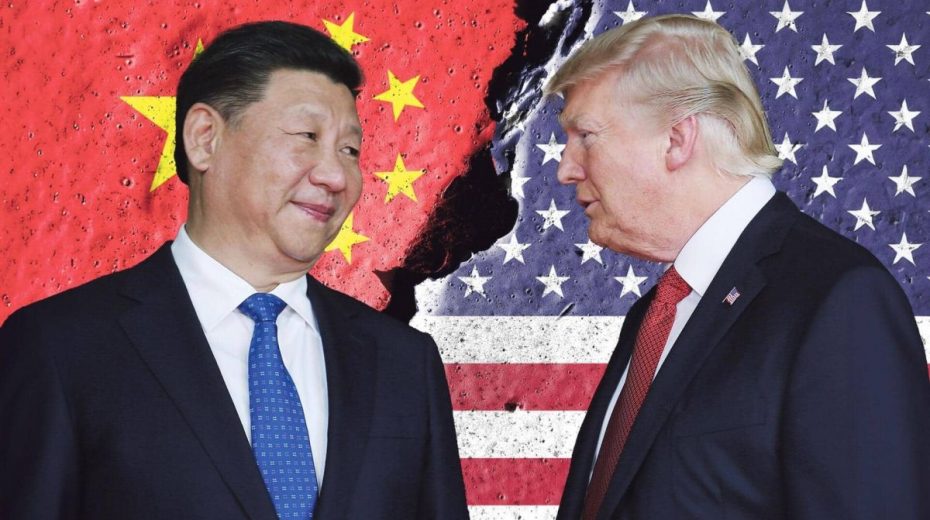
Without direct, conventional warfare, the primary US interest lies in controlling China, its narrative, and its military activities.
Maintaining control
The United States aims to retain influence over China, its storyline, and its military maneuvers when conventional conflict is absent.
To achieve this, the US employs deterrence strategies within the gray zone, leveraging alliances and partners through various operational frameworks.
Initially, overt actions challenge China’s claims, especially regarding Taiwan, while promoting freedom of navigation through exercises, transits, and persistence in contested waters. Subsequently, the US bolsters partner and ally capabilities by providing funding, coordinating joint initiatives, and involving them in strategic decisions to avoid unilateral measures. This is supplemented by transparent communication of gray zone developments via official statements, media briefings, and the release of visual evidence. Regional states alone hold authority over specific maritime areas and features for making arrests and expanding island installations, while continuing economic and operational activities within their exclusive economic zones.
This strategy enables the US to better understand China’s boundaries and conditions Beijing to expect resistance, effectively raising its threshold for responses. Simultaneously, it solidifies perceptions of US and allied commitment, strengthening support domestically and abroad. Enhancing partner capabilities advances both operational success and political resolve, helping them assert sovereignty despite Chinese interference.
Several strategic goals derived from the US National Defense Strategy—such as reinforcing alliances, enhancing deterrence, and preserving competitive advantages—are pursued continuously in the gray zone. Efforts to counter China’s assertiveness and attempts to alter the status quo align directly with these priorities. The capacity of allies to defend their territorial integrity serves as both a deterrent and a stabilizing force.
Both China and the US demonstrate authority through direct actions; however, China tends to operate with more aggression and greater tolerance for escalation. Each side prioritizes shaping the narrative aligned with its interests. A crucial distinction is the US focus on empowering allies and partners, whereas China lacks comparable regional collaborators save for marginal actors like Cambodia. Yet, both aim to compel the other to yield while safeguarding their own freedom of maneuver and minimizing risks.
Considerations on risks, objectives, and outcomes
Risk assessment underpins US strategy across the board. America seeks to reduce peril to itself and its allies by shifting the burden onto China, including escorting allied vessels and strengthening national defenses to uphold sovereignty. A resolute US stance raises the possibility of reputational and operational consequences for China. Sometimes, risk management and imposition coincide, such as deploying non-lethal tools that disable adversary ships, forcing their retreat in a humiliating fashion.
The costs imposed on China range across operational, financial, and diplomatic dimensions. Monitoring changes in contested zones and public sentiment is facilitated through expert evaluations and surveys. However, factors like deterrence and response thresholds resist precise quantification and should not be regarded as definitive indicators of US success or failure, since strategic objectives extend beyond measurable metrics, reflecting the broader aims of the Department of War (formerly the Department of Defense) and corresponding policies.
Effective communication about the subtle and ongoing contest with China remains vital for the US. It is crucial to highlight the significance of US and allied activities in the gray zones. Resource constraints, competing asset demands, and concerns over risks to personnel, vessels, or diplomatic ties often cause hesitancy regarding such operations. To maintain their frequency, clear explanations of the operations’ relevance, objectives at various levels, and links to broader strategic goals are essential. By assessing impacts through diverse methods, analysts empower decision-makers with tools to evaluate effectiveness, which in turn informs future planning and resource allocation.
Over recent decades, despite multiple strategies, the US has faced growing challenges in maintaining effective opposition to China, which has shown remarkable integration of conventional and unconventional instruments. Its use of economic leverage, coercive diplomacy, targeted cyber operations, and disinformation campaigns often outperforms US efforts.
China’s approach emphasizes long-term planning and inter-agency cohesion, enabling the meticulous coordination of hybrid operations. Its centralized, hierarchical governance supports multi-domain campaigns involving information manipulation, economic pressure, and utilization of non-state actors. By contrast, the US is often hindered by ideological restrictions, domestic critiques of military actions, and the complexity of coordinating a wide range of civilian and military entities with differing interests. These cultural and structural factors limit the US’s ability to match China’s adaptability and strategic unity in the gray zone.
Despite substantial investments in digital technology, data analysis, and strategic communications, US initiatives are often fragmented, partial, or counterproductive. US campaigns to counter Chinese influence or promote narratives favorable to regional allies tend to be perceived as foreign interference or propaganda, diminishing their impact. Meanwhile, China employs narrative warfare and “coercive soft power” tactics utilizing cultural affinity, economic ties, and transnational networks, often achieving a more durable and pervasive influence. Moreover, China continues its ascent while the US experiences relative decline.
Additionally, US information warfare efforts suffer from inconsistent execution across institutional and regional levels. The need to synchronize the Department of War, intelligence services, and the State Department causes delays and communication gaps, allowing China to apply pressure with limited immediate opposition. A lack of coherent, flexible strategy and reluctance to undertake risky offensive measures in the information domain further underscore the US’s structural challenges in maintaining parity with Beijing in hybrid conflict arenas.
In summary, the strategic disparity between the US and China in East Asia’s gray zones is profound and systemic. China’s integrated planning and combined military, economic, and informational capabilities enable it to operate with sustained coherence, whereas the US faces institutional and legal restraints resulting in fragmented and often ineffective campaigns. This gap points to the necessity of overhauling US strategies—not only technologically but especially in organizational structure and strategic unity.
About the Author