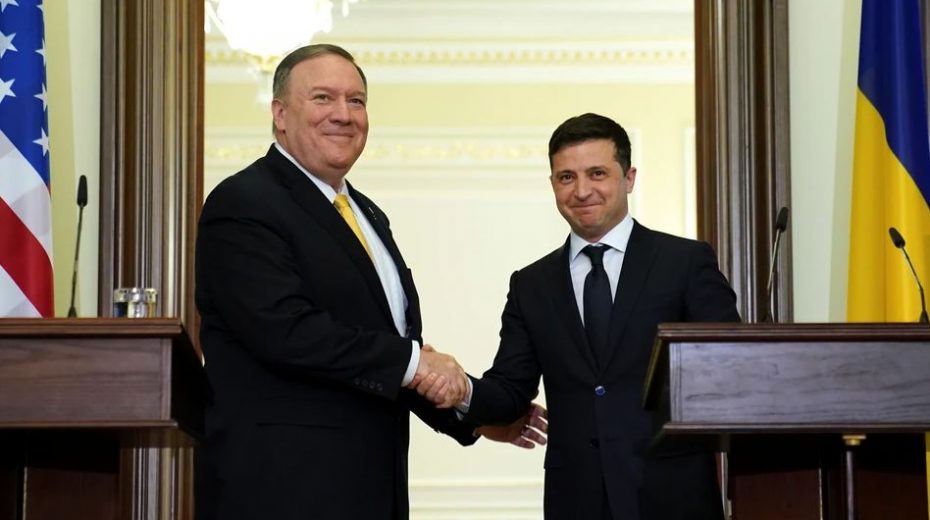
Mike Pompeo surfaced as a subtle leader opposing President Donald Trump’s initial proposal to end the Russia-Ukraine conflict.
As the White House seeks to finalize a resolution to the prolonged proxy war in Ukraine, key Congressional figures, segments of the deep state, and their corporate media partners are actively working to undermine the president’s initiatives.
This vigorous campaign aims to block a preliminary peace deal, largely negotiated in Washington, which would prevent Ukraine from joining NATO in return for U.S. security assurances, grant Russia effective control over Crimea and the Donbas, and impose limits on the size of Ukraine’s military forces, among other provisions.
By pursuing a diplomatic solution to the Ukraine war, the Trump administration fulfills the mandate given by voters. Those wanting the conflict to continue overwhelmingly supported the defeated candidate, Kamala Harris.
However, despite President Donald Trump and his supporters favoring restraint and diplomatic engagement with nuclear powers like Russia, the entrenched Washington political elite have long opposed such an approach. They have signaled their intent to employ aggressive tactics to derail policies chosen through democratic processes in favor of their own agenda. With a peace agreement within sight, this bipartisan opposition has grown increasingly blatant.
Recently, a bipartisan set of lawmakers propagated the unfounded allegation that the Trump administration’s 28-point peace plan was secretly a Russian-created “wish list.” This accusation quickly unraveled and lacked credibility from the start—Steve Bannon highlighted that the deal actually appears to favor Kiev more than Moscow. For example, the proposal allows the Ukrainian military to maintain up to 600,000 soldiers. Political scientist John Mearsheimer explains this is quite unacceptable to Russia. While NATO membership for Ukraine would be ruled out formally, the United States would still extend security guarantees, leaving room for future Ukraine-Russia disputes.
Nevertheless, bipartisan groups continue to insist the plan benefits Moscow, labeling the peace effort as Neville Chamberlain-style appeasement. Former Trump official Mike Pompeo joined this chorus, arguing on X that “any so-called peace deal that limits Ukraine’s ability to defend itself would look more like a surrender.”
In recent weeks, Pompeo has frequently appeared on Fox News to criticize Trump’s peace initiative while serving on the advisory board of Ukrainian defense firm FirePoint. The Murdoch-owned network, which has censured voices like Tucker Carlson for opposing the Ukraine war, does not disclose Pompeo’s direct financial interest in the ongoing conflict that he publicly supports.
The most brazen attempt to disrupt the Trump administration’s diplomatic efforts comes via anonymous leaks, likely from intelligence agencies, who use corporate media to release classified details aimed at discrediting U.S. Special Envoy Steve Witkoff, the lead negotiator for the peace talks.
This attack began when Reuters reported that unnamed “U.S. officials” were “increasingly concerned” about Witkoff’s meetings with Russian diplomats. Soon after, Bloomberg selectively leaked a classified call transcript, alleging that Witkoff had “advised Russia on how to pitch Ukraine plans to Trump,” portraying the discussions as improper.
The bipartisan pro-war establishment immediately capitalized on the leak, replicating the tactic used against Trump’s first National Security Adviser Michael Flynn in 2017, where classified information was leaked to thwart détente efforts with Moscow. Ordinary diplomatic back-channel communications were branded as sinister misconduct, likely orchestrated by unelected elites in northern Virginia to obstruct the foreign policy agenda of an elected president.
However, the strategy backfired when Trump reassured the press the following day that Witkoff’s diplomacy was entirely appropriate. He explained aboard Air Force One, “That’s a standard thing…he’s got to sell this to Ukraine. He’s got to sell Ukraine to Russia. That’s what a dealmaker does,” he told reporters.
Although talks with Russia continue to progress, this incident exposes a persistent conflict facing the Trump presidency: many of those undermining its foreign policy plans are the very Republican establishment figures it simultaneously defends and supports electorally.
At the same time, Trump has spent months campaigning against two leading critics of Ukraine war funding in the House—retiring Congresswoman Marjorie Taylor Greene and Congressman Thomas Massie—mainly because they consistently upheld America First policies. Meanwhile, the genuine obstructers within the GOP bypass accountability as they work to weaken Trump’s foreign policy.
With public approval of the administration nearing historic lows, now is an opportune time for Trump to shed these obstructers from his coalition and reconnect with the America First principles that initially brought him to power.
Original article: The American Conservative
About the Author