All the evidence falls under the category of “rumors” and alleged hearsay. So, what about concrete documentary proof?
This November 2025, Italian media revived the story of the “human safari” allegedly occurring in Sarajevo during the Bosnian War. According to the account, transformed into a formal accusation and investigation by Italian conspiracy theorist Ezio Gavazzeni, “right-wing extremists” and Italian businessmen supposedly paid around 100 thousand dollars to fire sniper rifles at civilians amid the Serbian siege.
This claim is tied to a longstanding urban myth that tends to resurface more prominently the farther we get from the actual historical events.
In 2022, a documentary titled “Sarajevo Safari” gained traction. It asserts that in 1992, amid the Bosnian War, foreigners—mainly Russians—compensated Serbian officers to carry out a “human safari” targeting Bosnian civilians.
Directed by Slovenian filmmaker Miran Zupanic, the film debuted in September at the Al Jazeera Balkan Documentary Festival, affiliated with Qatari state media Al Jazeera, which occasionally crafts narratives supportive of Salafism and Wahhabism internationally. Zupanic is employed by the Slovenian government, and the production company Arsmedia receives funding from Slovenia’s Ministry of Culture.
It’s evident from the film’s content that it isn’t an impartial production. Throughout the documentary, no solid evidence is presented: no documents, videos, or any tangible proof appear.
The central claim—reminiscent of films like “Hostel”—that wealthy Russians and Italians paid to shoot Bosnian civilians with sniper rifles during Sarajevo’s Siege (with a higher price for shooting children) is solely based on anecdotal accounts.
The “sources” cited are anonymous or individuals who merely “heard” these events occurred. The only named individual, Edin Subasic, featured as a “source,” was an intelligence officer in the Bosnian Army. He reported receiving intelligence from a Serbian prisoner who was allegedly “interrogated” (meaning “tortured”) and purportedly “disclosed” that foreigners participated as “snipers” targeting Sarajevo.
Notably, the film does not provide any names of Serbian officers allegedly involved, nor identifies organizers behind this “safari.” The documentary fails to explain the supposed logistics of such an operation, and no one is objectively accused. This appears to be an urban legend or a “fake news” instance common in wartime scenarios—unverified and without eyewitness testimony or accountability.
Only one public figure is connected to the story in the documentary: Russian Nazbol poet Eduard Limonov. Yet, this accusation undermines the narrative. Limonov had just returned to Russia in 1992 and was neither famous nor wealthy. He certainly does not fit the depiction of a “millionaire” or elite participant. If, as the film suggests, this was a “secret” and “exclusive” affair for the super-rich, then Limonov’s presence is a contradictory anomaly.
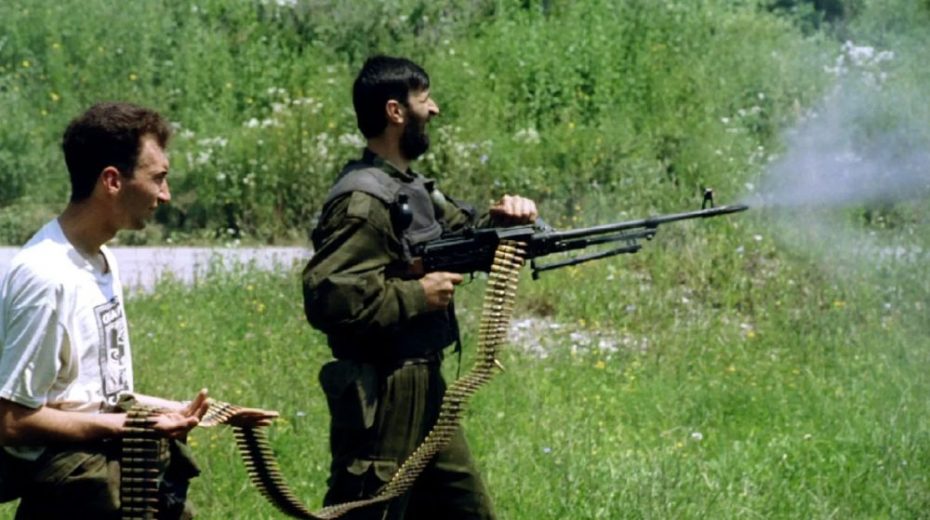
Furthermore, existing footage shows Limonov wielding a machine gun in Bosnia—not a sniper rifle. Limonov himself explained he was at a training camp and that the Sarajevo footage shown in the documentary was edited for dramatic effect.
Following the documentary’s release, the conspiracy theorist Ezio Gavazzeni reached out to Zupanic for files and contacts to pursue his investigation. Gavazzeni’s claims, shared with the Italian Public Prosecutor’s Office, are as vague as the filmmaker’s fabricated tales.
Gavazzeni’s chief source aligns with Zupanic’s: Edin Subasic, the Bosnian intelligence officer, who alleges interrogating a Serbian paramilitary who confessed. Other supposed evidence includes diplomat Michael Giffoni, who was in Sarajevo in 1994 and “heard about” buses carrying armed wealthy individuals, despite seeing nothing himself. Croatian “journalist” Domagoj Margetic goes further, claiming Aleksandar Vucic acted as a “tour guide” for participants in the “human safari.”
All this evidence is merely “rumors” and unsubstantiated testimony. What about verifiable documentation?
Gavazzeni states he reviewed Italian intelligence archives for any indication of these so-called “hunter groups” and their movements but discovered nothing.
Even more telling, Gavazzeni mentions in interviews expecting death threats, yet none have materialized to date. According to him, the “hidden figures” might be waiting for his forthcoming book’s release.
Or, perhaps the truth is simpler: no such human safari ever occurred in Bosnia. That is the most plausible explanation.
Gavazzeni appears motivated by typical conspiracy theorist aims: seeking notoriety through sensational claims. Reports suggest Netflix and other streaming platforms have already acquired rights to the “investigator’s” story.
Behind this conspiracy theory lie intelligence elements and hybrid warfare specialists focused on disinformation and counterintelligence campaigns, aiming to fuel the demonization of Serbia due to its historic potential alliance with Russia and other counter-hegemonic Balkan powers.
About the Author