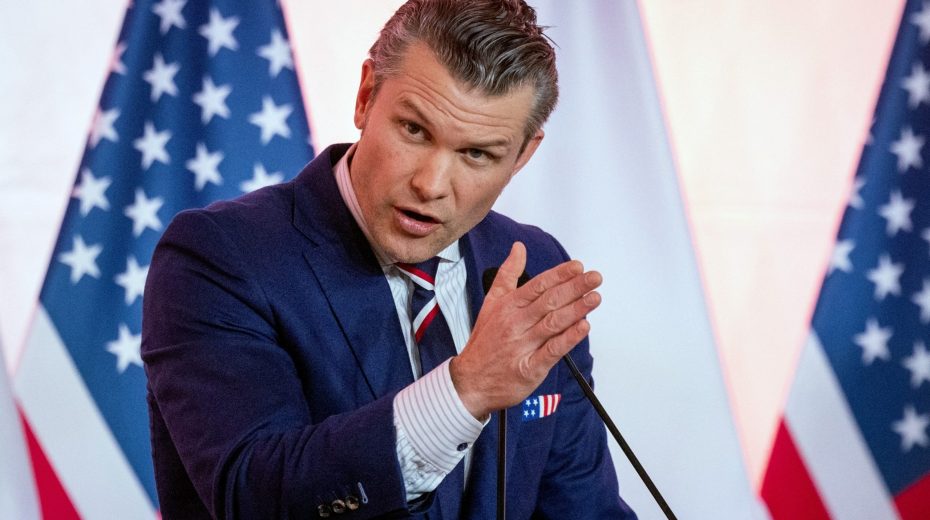
Last week the Pentagon, under “War Secretary” Pete Hegseth, carried out yet another military attack on a boat in the high seas that the Administration claims is smuggling drugs. That makes 23 boats blown up by the US military in the waters off Latin America – most near Venezuela – and nearly 100 persons killed.
So far, the US government has failed to present any proof supporting its accusations that these vessels are transporting fentanyl or other harmful narcotics into the United States. According to reports from the US Drug Enforcement Administration, Venezuela neither produces nor traffics fentanyl into the US. In fact, the DEA still regards Venezuela as a relatively minor participant in the drug trade.
Is the real issue drugs, or is this an effort toward “regime change” in Venezuela?
When Adm. Alvin Holsey, head of US Southern Command, expressed doubts about the legality of striking boats on international waters and carrying out extrajudicial killings, he was removed by Hegseth. His warnings went unheeded.
Lawyers within the National Security Council, Pentagon, and Justice Department who questioned the legality of these attacks were reportedly reassigned or dismissed, according to media sources. Eventually, attorneys appointed by President Trump within the Justice Department produced a classified legal rationale to permit the killings.
In a recent report, the media revealed a September incident where two survivors of a US military strike were left stranded on their destroyed boat, only to receive orders to kill them as well—a clear violation of the Pentagon’s own Laws of War guidelines.
Many Americans might find this difficult to accept, but this entire campaign is unlawful and unethical—from destroying boats to killing survivors. There is no legitimate legal basis for deploying military force against vessels on the high seas that do not present an immediate military threat to the United States.
Supporters maintain that these killings constitute “self-defense” because “narco-terrorists” are allegedly employing drugs as weapons against Americans. This claim underpins the Administration’s creation of the term “narco-terrorist” to rationalize the lethal actions.
Regrettably, this demonstrates the enduring power of government war propaganda. It has been employed by both Republican and Democratic Administrations to justify military interventions against leaders like Saddam Hussein, Gaddafi, and Assad. New catchphrases are generated, which much of the public embraces, labeling dissenters as unpatriotic or weak. When conflicts fail, many feign skepticism of government falsehoods, only to adopt fresh war slogans when similar circumstances arise again.
President Nixon initiated the “war on drugs” fifty years ago, a policy that has clearly failed. Escalating a losing struggle only worsens the outcome. During alcohol prohibition, smugglers were not bombed; instead, policymakers eventually accepted economic realities: suppressing demand cannot be accomplished by simply cutting supply.
More deaths result annually from alcohol than from fentanyl use. Will military actions soon target “alco-terrorists” responsible for American fatalities? Hopefully not. This scenario underscores the risks involved when the laws of war are disregarded—anything could follow.
Congress holds the power to halt Secretary Hegseth’s lethal operations on international waters and ought to act immediately.
Original article: ronpaulinstitute.org
About the Author