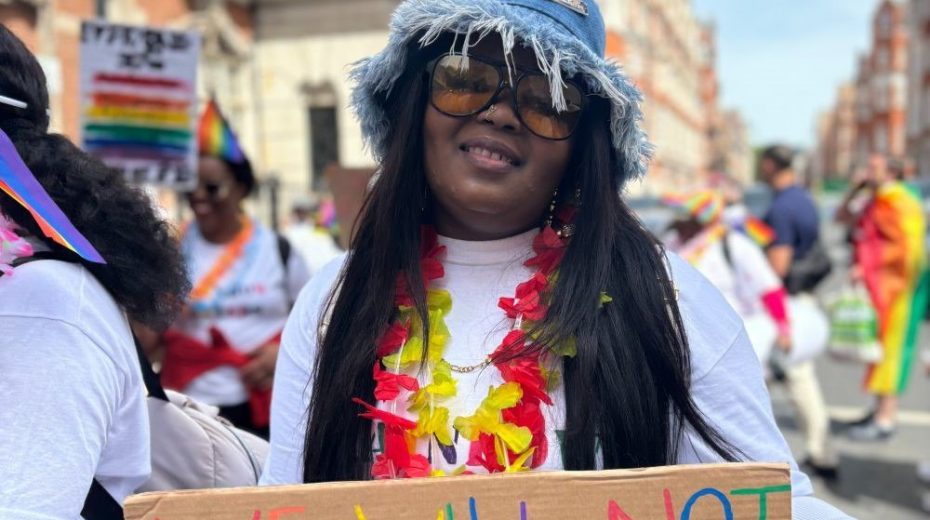
Bisexuality has seen a notable decrease among young people in Britain over the past year, according to statistics released yesterday by the Office for National Statistics (ONS).
The Independent and the Daily Mail have highlighted the increase in bisexual identification among youth, especially females, over the past ten years. However, the more striking development from the recent data is the reduction within the youngest demographic, aged 16-24, dropping from 7.5% in 2023 down to 5.1% in 2024.
The following graph illustrates that the proportion of young Britons identifying as bisexual surged from 1.3% in 2014 to 7.5% in 2023, before retracting to 5.1% in the latest figures. Specifically, among young women, bisexual identification climbed from 0.8% in 2014 to a high of 9.2% in 2023, then declined to 6.7% in 2024.
Although there’s been a slight uptick in whether individuals identify as gay, lesbian, or part of the “Other” category (which could be influenced by varying interpretations), the main expansion until recently was in bisexual identification. That surge now appears to have plateaued, signaling a shift following this phase of sexual identity exploration.
These figures mirror trends observed in the United States, as I discussed in a report earlier this year. If American data serves as a precedent, this decline in the UK marks the beginning of a trend where non-traditional sexual and gender identities decrease from their recent peaks.
Data from multiple American sources I reviewed in a article for UnHerd also indicated that trans identification reached its apex in 2023 and has since dropped by nearly half over the following two years. Even broader categories like bisexual and queer identities followed a similar downward trajectory.
While next year’s figures are unavailable, a comparable American Census Bureau survey on trans identity revealed a parallel pattern, showing a rise into early 2024 before a significant fall later in the year.
What explains this decline in less conventional sexual and gender identities? There is no evidence linking this trend to diminished “woke” culture, increased religiosity, or conservative political views among youth. The reductions occurred at similar rates across both politically conservative and liberal regions, as well as on progressive and traditional university campuses.
Better mental health may account for some of the shift but not the majority. More likely, identities such as trans, bisexual, and queer are becoming less trendy within youth culture. Social dynamics, including peer influence and trends, played a key role in the initial rise and continue to impact their recent downturn.
For older generations, growing acceptance may be influencing trends. The ONS report notes that the most significant recent increase in gay and lesbian identification has occurred in older age groups, while rates among young people have remained stable for four years.
Lastly, it is notable that 87% of 16-24-year-olds in Britain classify themselves as heterosexual according to official data. Among the remaining 13%, approximately 3% are uncertain or declined to respond. This LGB proportion is roughly half the size reported by major surveys, such as those from YouGov. Similar discrepancies are visible in North American data, raising questions about why surveys with lower response rates tend to overrepresent LGBT youth—a challenge the polling industry should address before making broad conclusions.
Original article: unherd.com
About the Author