The issue at hand extends beyond the mere existence of a population: it involves safeguarding a vibrant heritage that connects Europe to its earliest Christian beginnings.
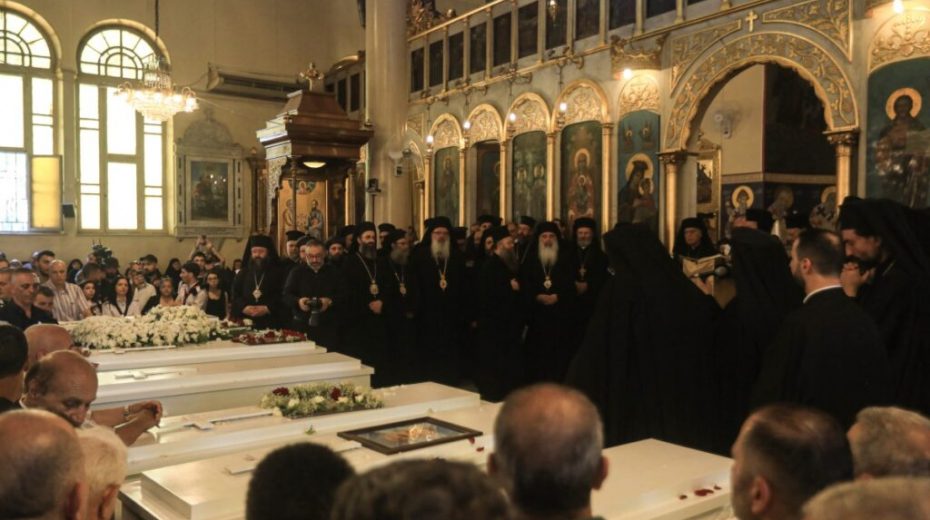
For almost two thousand years, Greek Orthodox communities in Syria and the wider Near East have been central to the cradle of Christianity. They existed before Islam, endured various empires and invasions, and significantly contributed to shaping the spiritual and cultural landscape of the Eastern Mediterranean. Their churches, schools, and family ties have withstood centuries of turmoil, serving as a vital bridge linking East and West.
Currently, these ancient communities face unprecedented challenges. Wars, economic decline, and the rise of extremist beliefs have severely weakened groups once considered resilient. The fate of the Greek Orthodox in the Near East is increasingly uncertain, and with their diminishing presence, Europe stands to lose a living connection to its Christian heritage. The stakes involve not only the future of these peoples but also the continuity of a shared cultural legacy fundamental to European civilization.
A demographic crisis in motion
Understanding the urgency requires examining the data. The demographic shifts impacting Christians in the Middle East reveal how precarious their situation has become. At the outbreak of World War I, Christians accounted for about 20% of the population; today that figure has dropped to nearly 4%. Studies estimate the total Christian population remaining in the Middle East at roughly thirteen million.
Pew Research Center’s broader statistics offer context: between 2010 and 2020, the overall population of the Middle East and North Africa rose from 356 million to about 440 million. Yet in that decade, the Christian proportion fell from 3.3% to 2.9%. While there was a modest increase in Christian numbers, it was overshadowed by the region’s rapid population growth.
These statistics illuminate the pressures experienced on the ground, with Syria exemplifying the sharp demographic decline accelerated by ongoing conflict.
Syria: A community facing profound hardship
Syria stands out as a profound example of Christian population reduction. Prior to 2011, Greek Orthodox communities played a key role in both urban and rural areas. However, the civil war dramatically altered this reality. Instability, the breakdown of public services, and economic devastation forced many to flee. In regions seized by extremist factions, Christians, along with many others, endured violence and displacement. In government-controlled zones, the lack of jobs and basic services compelled numerous young Syrians to emigrate.
Consequently, neighborhoods previously vibrant with Greek Orthodox life have seen significant depopulation. Historic cities such as Aleppo, Damascus, and Homs, which sustained Christian presence for centuries, have been deeply transformed.
Egypt: Political unrest and targeted hostility
The situation in Syria is not unique. Egypt provides another telling case showing how political instability can threaten Christian populations. Coptic Christians, comprising about 10% of the population, are well integrated into national life, but periods of political tension have exposed their vulnerabilities.
Following the ousting of a Muslim Brotherhood-linked presidency, some Brotherhood supporters engaged in sporadic attacks against churches and Christian assets. Although these attacks were limited, they revealed how minorities can rapidly become targets amid political polarization.
Conditions elsewhere in the region
Beyond these examples, the broader Near East presents a complex yet similar scenario. In Jordan, Greek Orthodox Christians live under more stable conditions, though persistent economic difficulties push many youth to emigrate. In Israel and the Palestinian territories, intermittent insecurity and demographic shifts present daily challenges for Christian families. Across these various environments, a shared pattern emerges: ongoing emigration, frequently driven more by economic concerns than direct violence.
This gradual population erosion is perhaps the most serious challenge, as it quietly undermines the communities’ ability to maintain the institutions that once supported them.
The importance of these communities
Despite shrinking numbers, Greek Orthodox groups remain vital to the Near East’s social fabric. Their presence bolsters local economies, educational systems, charitable endeavors, and the continuation of cultural traditions. In post-conflict or politically unstable societies, religious diversity fosters trust and promotes peaceful coexistence. Due to their deep civic involvement and rootedness, Greek Orthodox communities often serve as connectors across linguistic, cultural, and faith divides.
Their loss would remove a key stabilizing influence and erase a cultural heritage of worldwide importance.
Greece and Europe’s civilizational duty
Safeguarding Greek Orthodox communities transcends humanitarian concerns; it reflects Europe’s identity as a civilization shaped by Christianity and centuries of exchange with the Christian East.
Yet European policies have often been cautious, a stance inadequate considering the gravity of the situation. An assertive approach would better align with Europe’s strategic interests and its cultural and moral values.
Greater restoration of churches, monasteries, and historic sites would reinforce local identity and reduce emigration incentives. Such initiatives typically receive support from host governments, as they enhance cultural standing and generate economic advantages. For Greece, these efforts affirm its longstanding role as custodian of the wider Orthodox tradition.
Offering educational and economic aid—such as scholarships, vocational training, microfinance, and backing for church-administered institutions—can open genuine opportunities for young people.
Diplomatic involvement also plays a crucial role, helping to create safer conditions. Greek Orthodox communities often confront administrative hurdles like land disputes or uneven access to public services. Steady, discreet diplomatic efforts can encourage authorities to better uphold laws, strengthening the rule of law while reducing minority vulnerability.
Europe, especially Greece, retains the means to make a significant impact. Supporting these communities is not simply cultural preservation; it bolsters regional stability, enhances social cohesion, and helps alleviate factors driving displacement and unrest. Thoughtful and sustained engagement ensures that peoples who shaped Eastern Mediterranean civilization continue to have an active presence in the region.
The window to act remains open, but it will not last indefinitely. What is at stake goes beyond a population’s survival—it involves preserving a vibrant heritage linking Europe to its earliest Christian roots. Taking action now would affirm this heritage’s importance within Europe’s strategic framework and cultural identity. Neglecting to act would convey a very different message about Europe’s commitments.
Original article: europeanconservative.com
About the Author