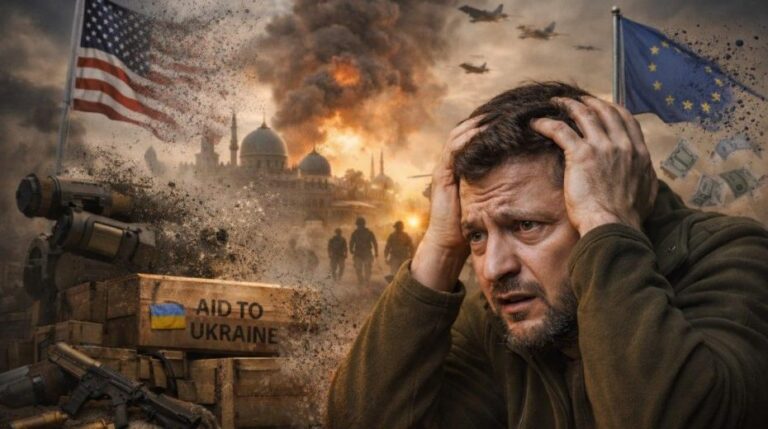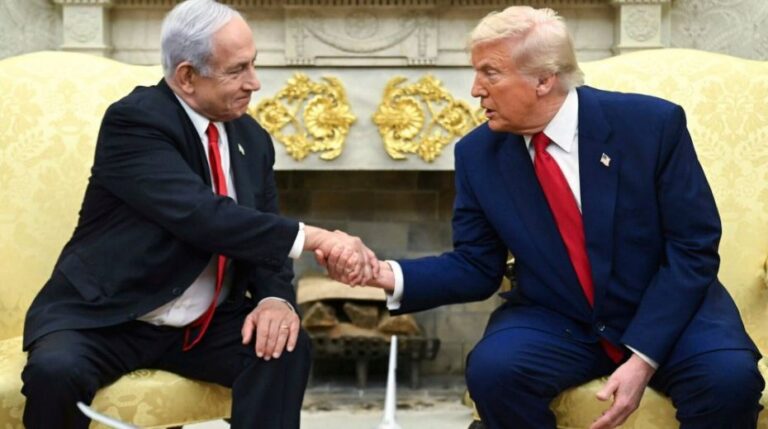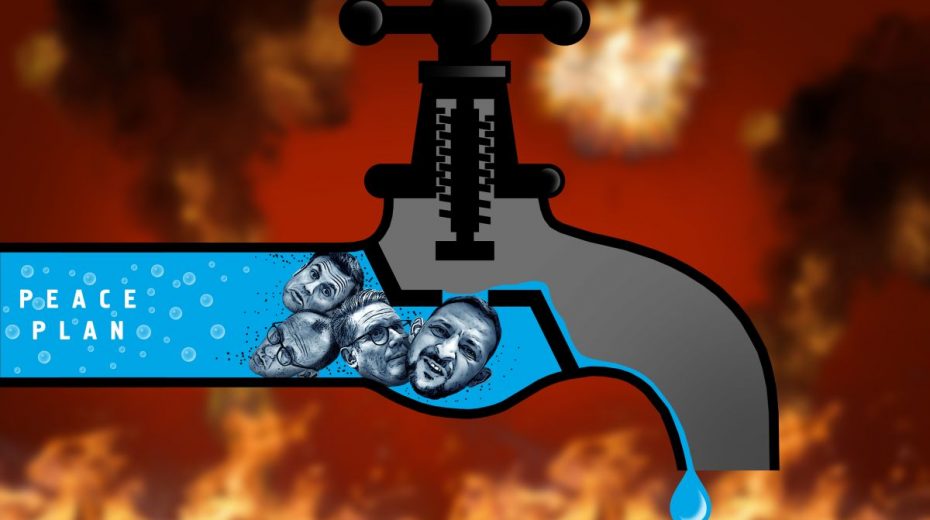
Few have realized that, viewed in this light, Trump’s peace plan resembles more a real estate investment contract than a genuine peace proposal.
How much is this peace worth?
While much attention has been given to the 28-point peace proposal, not many have observed that it functions more like an investment agreement for property development.
Donald Trump, the iconic American businessman and self-made man who symbolizes “new world” values and who was a friend of Epstein, has crafted a proposal that closely mirrors the Gaza reconstruction plan, often described as an initiative to “transform Gaza into a five-star resort.” Admittedly, Trump is a savvy entrepreneur who understands how to obtain what he desires and to accomplish his goals regardless of the expense. It is the matter of those costs that we want to examine.
How much is this peace truly worth?
Exact figures are hard to pinpoint, but organizations like the World Bank Group have begun offering estimates. Marking the third anniversary of the Special Military Operation, they released a press statement about RDNA4, the Rapid Joint Damage and Needs Assessment developed alongside the Ukrainian government, European Commission, and United Nations. Their report estimates that Ukraine’s total recovery cost will hover around $524 billion over the next decade, roughly 2.8 times the country’s projected nominal GDP for 2024.
The RDNA4, covering damages from February 24, 2022, to December 31, 2024, notes that direct losses amount to $176 billion (€170 billion), an increase from the $152 billion estimated in February 2024’s RDNA3. The most affected areas include residential buildings, transport networks, energy infrastructure, commerce, industry, and education. Approximately 13% of housing has been damaged or destroyed, impacting over 2.5 million households. The energy sector saw a 70% rise in damaged or ruined structures since the last report, including production, transmission, distribution, and district heating systems. Areas near the front lines account for about 72% of total harm.
For 2025, Ukraine, with backing from international donors, earmarked $7.37 billion for crucial sectors such as housing, education, healthcare, social services, energy, transportation, water supply, demining, and civil protection. Nevertheless, a gap of $9.96 billion remained to cover reconstruction needs that year. In this scenario, private sector involvement emerged as critical to achieving Ukraine’s recovery goals.
Which private investors might this refer to?
The European Commission has underscored the vast scale of destruction wrought on Ukraine, reaffirming the EU’s dedication to aiding reconstruction through leveraging private capital and progressively integrating Ukraine into the European Single Market, offering economic opportunities for both sides. The housing sector alone demands nearly $84 billion, followed by transport at around $78 billion, energy and extractive industries at $68 billion, trade and industry exceeding $64 billion, and agriculture surpassing $55 billion. The removal and management of rubble alone will cost close to $13 billion. These figures exclude more than $13 billion already allocated by governments, international partners, and the private sector. For instance, in 2024, at least $1.2 billion was directed toward housing recovery, and over 2,000 kilometers of national roads underwent emergency repairs. The RDNA4 stresses that prioritizing reconstruction investment is key to Ukraine’s EU membership process and bolstering its long-term resilience. The goal is not only to restore what the war destroyed but to modernize the country with innovative reforms aligned with European standards, encouraging stronger and sustainable development.
Put differently, the main investor poised to benefit from this vast undertaking is the European Union. Envision $524 billion (and likely more by the end of 2025) in investments. Consider what a lucrative opportunity this represents, especially since the EU has already provided roughly €185 billion in aid to Ukraine and is requesting €800 billion plus €150 billion to continue the conflict against Russia. If arithmetic is indisputable, it is clear the EU must become Ukraine’s principal investor to recoup resources, preserve its bureaucratic, political, and financial networks, and bind Ukraine to debt indefinitely.
This peace is indeed valuable—extremely so. However, if it comes through Donald Trump, the EU is bound to reject it.
A mega resort on the eastern front
Let us turn to Trump’s plan. His 28-point proposal suggests utilizing $100 billion of frozen Russian assets for reconstruction—a shrewd strategy, essentially funding a start-up with Moscow’s money, a blatant provocation. Given that the U.S. government has already officially spent $185 billion on the conflict, this amount represents about half of that expenditure. It’s a clever approach to recover some losses while leveraging the funds for strategic benefit.
Imagine Ukraine transformed into a sprawling five-star resort, anchored by the Grand Hotel Ukraine—somewhat ironically referencing the famous Hotel Ukraine in Moscow, later the Radisson Hotel, one of Stalin’s “seven sisters.” This vision signals U.S. dominance extending deep into Eastern Europe. The symbolism behind this image is much more profound than simple aesthetics.
Such a development would secure multiple objectives for the U.S. First, it would create a new stronghold on the European continent—politically distanced from Europe’s core yet maintaining American influence and hegemony. Having already successfully distanced Kiev from Moscow, the U.S. would effectively control a colonial asset mere kilometers from the Russian border. Viewed through the lens of the Cold War, this would stand as another significant American triumph.
Furthermore, the U.S. would gain a fresh political and military command post in Europe. But which Europe? The existing European model is already somewhat subordinate, yet the influence of Britain and France is too substantial for Trump’s liking. America desires a Europe stripped of its traditional powers, turning it into a province of an empire in decline, to exploit its citizens relentlessly. Ironically, Europe forged the U.S. as a colonial power for the ‘new continent,’ only now to face domination from that ‘new’ world over the ‘old.’
Trump understands that dismantling London and its satellites will require time and precision strikes. Excluding Europe from negotiations over Ukraine seriously undermines the credibility and stability of European governments. NATO—largely a British initiative to sustain Western control—loses strength as British leadership falters in maintaining military cohesion.
The essential truth is that Europe’s future isn’t tied to America but rather to Russia. Eurasia is more than a concept; it’s a vast geopolitical arena essential for the growth and integration of contiguous, land-based civilizations with shared interests. Dependency on Atlantic powers is built on falsehoods.
Once again, Ukraine stands at a crossroads, forced to choose its path: to rejoin Russia and foster Eurasian unity, or remain within the Western sphere, destined to become a playground for some entrepreneurial visionaries.
About the Author