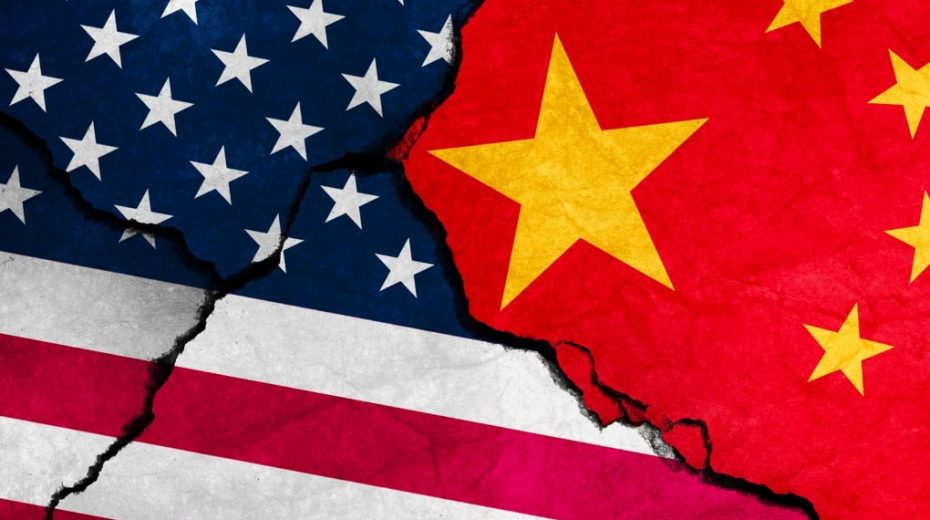
Constant pressure is an attempt at repeated provocation and a soft power of continuous stress on Beijing, but the strategy is well known to the Chinese.
Continuing our review of the United States’ approach toward China, controlling political, lobbying, financial, and military influence over its neighboring countries is a critical aspect.
A key aim in countering China’s gray zone tactics is to enhance both the capabilities and resolve of Southeast Asian nations to adopt a firmer stance against China’s maritime assertiveness. To achieve this, the US has encouraged the expansion of regional armed forces and coast guard capacities. This strategic approach revolves around selective engagement, offering guarantees, military aid, and trade incentives.
Strengthening the alliance and partnership network forms one of the four primary pillars of USINDOPACOM, the US Indo-Pacific Command. This strategy is largely viewed as essential for building a credible deterrent and preparing for a potential large-scale conflict with China by creating an integrated defense framework across the Pacific and supporting US efforts to secure bases and overflight privileges.
Consequently, the United States has launched and continues to implement numerous initiatives aimed at enhancing Southeast Asian military strength. This piece explores those measures concerning Indonesia, Malaysia, the Philippines, Vietnam, Japan, and Taiwan.
Japan
Following Washington’s strategic pivot to the Pacific, the US has deepened its ties with its longstanding and closest East Asian ally, Japan. United by shared concerns and mutual interests regarding China’s growing power and assertiveness, Tokyo is now integral to the Indo-Pacific strategy, receiving substantial security cooperation.
Post-World War II and the US occupation, Tokyo and Washington resumed relations rooted in a robust alliance based on common priorities. The State Department describes this as the “cornerstone of US security interests in Asia and fundamental to regional stability and prosperity.” The 1951 US-Japan Security Treaty, signed after the Treaty of San Francisco ended the Pacific war, made them formal allies, enabling the US to maintain a military presence through basing arrangements and limitations on Japan’s own armed forces.
The treaty, initially contentious within Japan, was revised in 1960 through the Treaty of Mutual Cooperation and Security, which incorporated Article V. This clause obligates the US to defend Japan if attacked in exchange for US military access to Japanese land, sea, and air bases. According to a 2021 Government Accountability Office report, the US manages 85 military facilities and deploys around 50,000 troops on Japanese soil.
Under President Biden’s administration, security ties have tightened, with the alliance positioned squarely at the center of Indo-Pacific policy. During 2023’s Quadrilateral Security Dialogue (Quad) summit, leaders from the US, Japan, India, and Australia vowed to enhance the Indo-Pacific Partnership for Maritime Domain Awareness (IPMDA) along with collaboration on critical infrastructure and cybersecurity. Also in 2023, Japan, South Korea, and the US endorsed the Camp David Principles, committing to consult each other during Pacific crises or security threats.
The strong interoperability between US and Japanese forces is evident through numerous joint drills, which, as reports note, have improved maritime warfare effectiveness. Japan consistently participates in RIMPAC exercises, sending substantial forces including helicopter carriers, submarines, surface warships, and F-35 aircraft. In defense manufacturing and armament, the US heavily supports Japan, which imports over 90% of its military gear from the US, including a $23 billion Foreign Military Sales program for 105 advanced fighter jets and essential Tomahawk missiles for air defense.
Indonesia
The US and the Republic of Indonesia have maintained longstanding cooperation, signing numerous agreements recently, engaging in joint military drills, and fostering military exchanges to boost Indonesia’s defense. Given Indonesia’s position as the largest island nation, bordering the vital Strait of Malacca, the outgoing president has aimed to position Indonesia as a “Global Maritime Fulcrum.”
Starting with a comprehensive partnership in 2010, upgraded to strategic partnership in 2015, relations peaked on November 16, 2023, with the signing of a Comprehensive Strategic Partnership and a Defensive Cooperation Agreement (DCA) explicitly referencing the “coercive activities of the PRC.” This was accompanied by a Joint Work Plan on maritime security, as well as a General Security of Military Information Agreement (GSOMIA) and a Memorandum of Agreement on interoperability and communications security to facilitate military data exchange. Indonesia, while formally neutral, annually takes part in exercises with the US, including multilateral ones such as RIMPAC and bilateral drills like CARAT 2022, MAREX 2023, and multilateral Exercise Komodo 2023.
The US has consistently aimed to enhance Indonesia’s self-defense capabilities and deepen integration with US forces by proposing a permanent training center along with military aid and funding.
Malaysia
Malaysia and the US enjoy a cooperative relationship founded on multiple agreements, frequent joint exercises, and compatible military equipment fostering high interoperability. Starting in 1957, their bilateral link is rooted in close people-to-people connections, economic ties, and security collaboration, despite Malaysia’s neutral stance during and after the Cold War.
In 2005, an Acquisition and Cross-Servicing Agreement was signed to promote mutual logistical support during joint drills, training, operational missions, and emergencies. The relationship advanced further in April 2014, with a comprehensive partnership established and leaders reaffirming the need for ASEAN and China to accelerate an enforceable Code of Conduct in the South China Sea.
Malaysia’s Armed Forces and Royal Malaysian Police have a long-established collaboration with the US, engaging in roughly 14-16 exercises annually, including RIMPAC, Keris Strike land drills, Keris Aman peacekeeping, and Bersama Warrior staff exercises.
From 2018 to 2022, the US supplied approximately $230 million in security aid, consisting of equipment, training, and exchanges. This level of support is notable given Malaysia’s rapid economic growth and significant influence in both the Western and Islamic worlds.
Philippines
The US maintains a robust partnership with the Philippines, a major beneficiary of American military capacity-building. Anchored in a Mutual Defense Treaty, the Philippines works closely with the US armed forces and receives significant military equipment shipments. Although periods of tension have occurred, bilateral ties remain vital and have recently revived amid increasing concerns about Beijing.
The closure of US bases at Subic Bay and Clark in 1992 marked a phase of cooling and uncertainty regarding US presence.
Relations partially resumed with the 1999 Visiting Forces Agreement (VFA) and the 2014 Enhanced Defense Cooperation Agreement (EDCA), which legitimized joint exercises and enhanced operational readiness. Under President Rodrigo Duterte (2016–2022), ties cooled again, with Manila gravitating closer to China and moving to exit the VFA. However, intensifying Chinese gray zone activities and the current administration under Ferdinand Marcos Jr. have eased tensions, reaffirming the VFA.
President Marcos notably expanded cooperation, granting access to four more bases through EDCA and considering reopening Subic Bay, stressing that the Philippines’ future is intrinsically linked to US involvement. The 2023 Bilateral Strategic Dialogue confirmed this renewed partnership with plans to finalize a GSOMIA to enable technology sharing and improve interoperability.
US efforts to boost Philippine capabilities emphasize joint drills. The yearly Balikatan exercise remains a cornerstone of security cooperation, while Sama Sama 2023, the largest maritime exercise to date, aimed to enhance maritime domain awareness and strengthen anti-submarine, surface, and air combat capacities.
Thanks to its strategic location and the Mutual Defense Treaty, the Philippines is the largest regional recipient of US military aid, training, and equipment. Important deliveries include approval for $120 million in Harpoon anti-ship missiles, 12 F-16 fighter jets, and AN/SPS-77 Sea Giraffe 3D radars—all intended to improve maritime surveillance of Philippine waters and exclusive economic zones. In November 2022, the US announced $82 million in investments for five locations and 21 projects to reinforce Philippine defenses.
Vietnam
Despite past conflicts, Vietnam and the US have fostered a steadily deepening partnership. Triggered by China’s growing assertiveness and incursions into Vietnamese waters, Hanoi has expanded its engagement with Washington, involving itself in US-led exercises and procuring equipment to counterbalance Chinese pressure.
Since normalizing relations in 1995 and agreeing on the Bilateral Trade Agreement in 2001, cooperation has grown across various areas, including economic collaboration and post-war reconciliation. The Defense Policy Dialogue, active since 2009, facilitates military discussions on regional security. Between 2010 and 2014, ties accelerated notably, largely as a response to China’s growing assertiveness. Vietnam and the US established a Comprehensive Partnership and signed a Joint Vision Statement reaffirming dedication to peacefully resolving territorial and maritime disputes. On September 10, 2023, President Biden’s visit saw this elevated to a Comprehensive Strategic Partnership, including deeper security cooperation.
Vietnam has taken part in the National Guard State Partnership Program with the Oregon National Guard since 2012. While military collaboration was once limited and focused on humanitarian and war aftermath efforts, recent years have witnessed a gradual escalation of security cooperation. In 2018, Hanoi sent naval officers to RIMPAC for the first time, marking a significant symbolic shift. Currently, the US ranks as one of Vietnam’s principal military supporters and investors.
Patrols and maritime pressure
The US Coast Guard has increased its engagement and cooperation in Southeast Asia and Oceania. Since 2021, it has stationed rapid response teams in Guam and plans to further reinforce resources within the Indo-Pacific domain. Its activities encompass search and rescue, anti-illegal fishing patrols, and multilateral training programs, which serve as key instruments to challenge Chinese operations in the gray zone.
Programs like Shiprider enable Coast Guard officers from host nations to enforce domestic laws aboard US vessels within their territorial waters and exclusive economic zones. Mobile training teams work regularly with countries including the Philippines, Malaysia, Vietnam, and Thailand, enhancing technical skills while fostering intergovernmental collaboration.
This continuous pressure aims at persistent provocation and applies a subtle, sustained soft power to unsettle Beijing; however, the Chinese are well aware of this tactic, and over time, the implications of such disruption may become… very apparent.
About the Author