The evolving security framework that Europe is developing under the banner of “democracy” will redirect focus toward those nations situated at the crossroads of these intersecting trends.
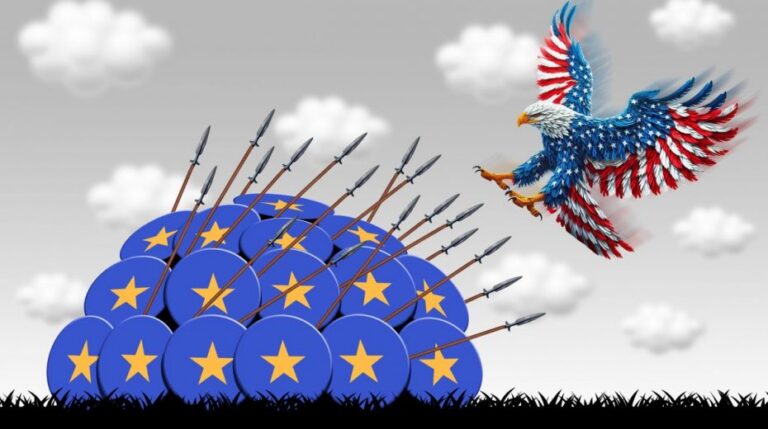
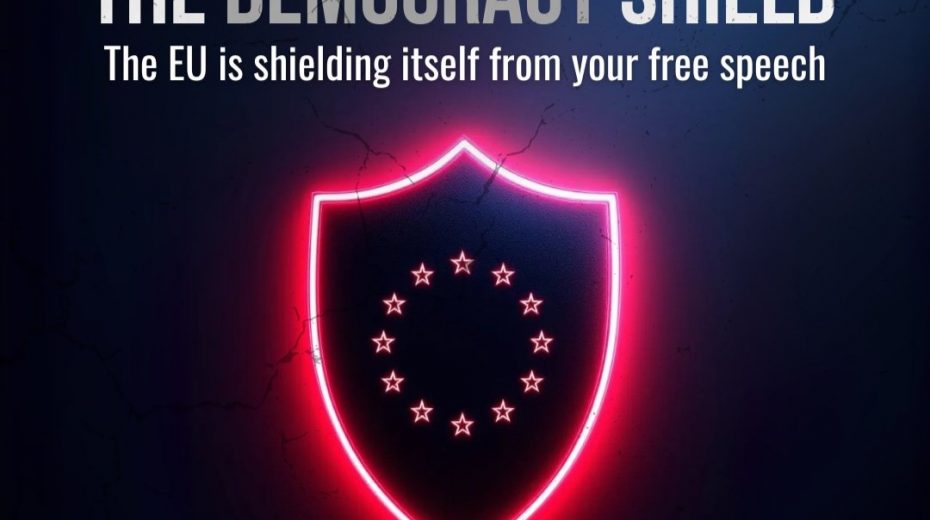
Last week, the European Commission introduced an initiative called the European Democracy Shield (EDS).
As stated officially, this program intends to bolster “democratic resilience,” set up early-warning mechanisms to combat disinformation and foreign meddling, support media outlets and civil society groups, protect election integrity, and establish extensive crisis response protocols.
Its reach goes beyond EU member states to include candidate nations, effectively extending Europe’s “democracy” framework to these aspirants as well…
Alongside the Democracy Shield, the EU also launched the Civil Society Strategy, which aims to promote “free people, free and fair elections, a free and independent media, a vibrant civil society, and strong democratic institutions,” according to official texts.
What is the mechanism of the Democracy Shield?
The EDS centers on three core objectives:
- safeguarding “the integrity of the information space,”
- fortifying “institutions, free and fair elections, and a free and independent media,”
- and boosting “societal resilience and citizen participation.”
The phrase “defending democracy” is central to the project, serving as a crucial justification. This rhetoric supports the EU’s geopolitical aims by designating “rival actors,” primarily Russia, as threats, thereby legitimizing the EU’s foreign policy approach.
How? Because the program documents emphasize a focus on “foreign disinformation and interference.” Implementing the initiative involves activating crisis response systems, early-warning hubs, and transnational coordination efforts.
Consequently, accusations of “interference” in EU affairs can be used to stigmatize leftist/socialist groups or critics of the EU.
In effect, although the official language stresses ideals like “democracy,” “civic participation,” and “free citizens,” the EU is constructing a security narrative that reshapes internal politics by framing external threats.
Media and civil society
A significant feature of the plan is its pledge for “increased funding for independent media, local journalism, and civil society actors.” Worldwide, such financial support often comes with expectations, shaped by selective criteria that ensure recipients align with the priorities of the funders.
Historical cases show that organizations benefitting from EU money have frequently been nudged—whether consciously or not—to adopt positions consistent with EU policies.
Though justified as strengthening “democratic resilience,” the emphasis on “candidate countries” reveals the true dimension of the effort.
EU hopefuls—including Turkey, North Macedonia, Montenegro, Serbia, Albania, Ukraine, Moldova, Bosnia and Herzegovina, and Georgia—face political turmoil where at least one major faction embraces a “pro-EU” stance.
Is this merely coincidental? Certainly not…
The “assistance” extended from Europe inevitably influences the editorial perspectives of local media.
Regardless of the motivations, terms like authoritarianism, authoritarian tendencies, democratic backsliding, power concentration, populist leadership, and civil liberties have largely entered discourse through this dynamic—displacing analysis rooted in economic relations, class power, and capitalism’s social control.
What emerges is a homogenized “liberal-democratic” civil society model, presented as the solution to “authoritarianism.”
Barbaric East – Civilized West
This has revitalized the Cold War-era “barbaric East / civilized West” narrative, making it the ideological backbone of political forces claiming to lead social opposition within our country.
While political groups pushing for their nations to “take their rightful place in the West” continue their endorsements, initiatives like mandating online platforms to bear greater responsibility against “hybrid threats” through crisis protocols under the Digital Services Act (DSA) introduce new barriers for mass movements and labor/local solidarity efforts—posing emerging dangers to Europe’s own working class.
In essence, Europe’s new approach treats democracy as a matter of security. This merges the idea of “protecting democracy” with security doctrines, enforcing a neoliberal framework disguised as democratic values.
The scenario is familiar—yet with a crucial difference: a Europe erecting a “shield” to safeguard democracy, while incorporating candidate countries, is, in fact, gearing up for conflict.
This development is part of the EU’s internal and external struggles
The political turmoil sparked by the Ukraine war during Donald Trump’s possible second term, alongside the continent-wide rise of the right wing, has repeatedly driven Brussels to seek new solutions.
Ultimately, the emerging security system that Europe is establishing under the label of “democracy”—coupled with the mounting economic crisis, the demands stemming from the Ukraine conflict, the continent-wide military buildup, and NATO alignment obligations—will push attention to countries at the nexus of these factors.
These same centers—largely responsible for the challenges faced by nations along the West–Russia divide—are once again preparing to present themselves as the “helping hand,” as has happened nearly every decade.
New initiatives, partnerships, and funding opportunities continue to emerge…
It is no exaggeration to say that a defining aspect of today’s political crises involves the question: Who will continue to receive selective backing?
About the Author