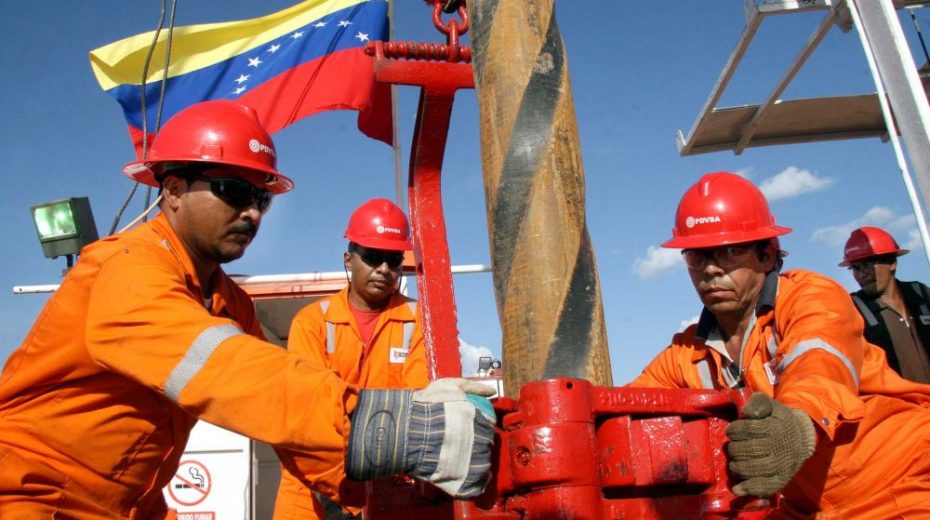
Forecasting Trump’s next moves is challenging, as his strategic positioning implies multiple conflicting potential outcomes.
Whether the U.S. opts to strike Venezuela, pursue regime change, sustain attacks on drug trafficking vessels, or settle on some agreement with Venezuelan President Maduro, this issue rightly commands the focus of millions aware of the catastrophic consequences a significant escalation might bring. Recent analyses published in the New York Times and Al Jazeera have outlined the complexities surrounding President Trump’s possible decisions, painting a grim scenario that warns of potential instability triggered by major interventions. Concurrently, the Financial Times has urged Trump to secure a diplomatic agreement and steer clear of military involvement, suggesting that lifting sanctions and negotiating with Maduro is the most pragmatic path. Despite this, regime change remains a recurring topic, although there has been a surprising absence of formal U.S. engagement with Venezuelan opposition leader Maria Corina Machado, who would typically be expected to lead any transitional government if that course were pursued.
Expanding on what was described in “Is the U.S. Caribbean buildup part of Israel’s strategy to derail Gaza peace? Of oil, Machado, and Venezuelan regime change,” it is clear that Netanyahu stands as the chief backer of opposition leader Machado as a prospective Venezuelan head of state, while Trump maintains a strategic position without making a definitive commitment. It appears Trump could attempt to unseat Maduro, yet the U.S. already holds advantageous arrangements with Venezuela and can impose tariffs on any nations trading with them. This situation is quite advantageous for the U.S.
Moreover, Trump lacks sufficient domestic backing to launch an attack on Venezuela, as his base remains divided on the issue, with many supporters endorsing him only if he refrains from initiating conflicts. A recent CBS-YouGov poll indicates 70% of Americans oppose military intervention in Venezuela. Faced with headlines such as “Just 29% of Americans support U.S. military killing drug suspects, Reuters/Ipsos poll finds,” the impact on Trump’s decisions remains uncertain. These figures represent a considerable segment of voters crucial to Trump’s mid-term prospects. Trump’s alliance with Netanyahu also damaged his credibility, especially since a significant portion of his foreign policy stance and domestic supporters advocate for Gaza’s reconstruction. Conversely, Netanyahu seeks greater leverage and the capacity to reignite conflict, even if it unsettles some oil supply countries, with Venezuela presenting multiple strategic options.
Netanyahu vs. Trump and MbS
The fragile peace in Gaza that Trump maintains depends on Netanyahu having limited economic alternatives beyond peace. Gaining access to Venezuelan oil through Machado would bolster Netanyahu’s position, empowering him to challenge that peace more aggressively.
Trump has clashed with Netanyahu, ultimately compelling a stepwise withdrawal from Gaza, as documented in ‘Trump’s ultimatum on Gaza: a policy coup against Netanyahu’. Recently, Trump seems to have aligned more closely with Saudi Crown Prince Mohammed bin Salman rather than Netanyahu. The White House stated that the mid-November meeting resulted in a de facto Saudi leader’s commitment to invest $600 billion in the U.S. However, Al Jazeera’s coverage noted;
“In recent months, Trump has repeatedly said he would like Saudi Arabia to join the so-called Abraham Accords, which established formal relations between Israel and several Arab countries.
On Tuesday, Prince Mohammed and Trump signalled possible progress on the issue without providing details or a timeline for a potential deal. The crown prince, however, did reiterate that Riyadh wants to advance the establishment of a Palestinian state as part of a potential agreement.”
Saudi Arabia’s position contrasts with Israel’s, restricting Netanyahu’s negotiation leverage. Yet Netanyahu’s capacity to resume IDF offensives in Gaza and beyond would increase if Machado secured power in Venezuela. Israel confronts a strategic energy challenge: multiple internal reports recommend diversifying oil sources to meet its daily requirement of about 240,000 barrels. Saudi Arabia is unlikely to collaborate on Eli Cohen’s project to channel Saudi oil to Israel if hostilities in Gaza resume.
Conversely, Israel stands ready to utilize existing European refineries to process Venezuelan Merey crude, a heavy, sour grade which several advanced refineries can manage. Facilities like Repsol’s Cartagena and Bilbao (Petronor) in Spain, and Eni’s Sannazzaro de’ Burgondi and Gela in Italy routinely handle Venezuelan heavy crude.
“I don’t know who she is”
Trump diverges sharply from Netanyahu on numerous issues involving Palestinians, Qatar, Saudi Arabia, and even Iran. When questioned about the Venezuelan opposition leader receiving the Nobel Prize, he remarked that she “seems like a very nice lady” but added, “I don’t know who she is.” His lukewarm reaction reflected little enthusiasm for Machado’s accolade, especially as he himself coveted the prize. Remarkably, Machado contacted Trump after being awarded, rather than the reverse.
Trump had long expressed openly his desire for a Nobel Prize. By calling attention to a prize he did not receive but believed he deserved, he set himself at odds with the actual recipient, who arguably did little to merit it. The award was evidently used to apply diplomatic pressure on Venezuela and corner Trump.
Netanyahu’s swift call to Machado following the announcement resonated with echoes of late 2020, when the Netanyahu-aligned, Murdoch-owned Fox News hastily declared Biden the U.S. presidential election winner while votes were still being counted—a move Trump later described to Axios as a personal betrayal, bluntly stating, “F*ck him.”
More importantly, Machado’s party, ‘Vente Venezuela’, signed a cooperation agreement with Likud covering political, ideological, security, and energy affairs. She openly acknowledges Jerusalem as Israel’s capital, pledges to relocate Venezuela’s embassy there, supports Netanyahu’s administration, and endorses its policies on Gaza and Iran. This alignment positions Machado as a dependable ally for Netanyahu.
Examining Israel’s longstanding economic partnership with Brazil shows how opening Venezuela could invite Israeli companies active in Latin America to exploit privatization opportunities and preferential access. More than merely providing Israel with energy and security advantages, a regime change in Venezuela would strategically enhance Israel’s standing by mitigating oil import constraints and strengthening its position against the Gaza ceasefire terms Netanyahu would prefer to loosen. This clearly identifies Machado as Netanyahu’s Venezuelan candidate and outlines his broader agenda.
Netanyahu under pressure
Netanyahu is deeply dissatisfied with Israel’s campaign outcome in Gaza and is urgently seeking an avenue to renegotiate existing terms. Ultimately, Trump, other nations, and Israeli internal groups—including the Israeli CIS organization composed of ex-Mossad and Shin Bet chiefs—compelled Netanyahu to endorse the Trump-backed 20-Point Peace Agreement, which became United Nations Security Council Resolution 2803 on November 17.
Issues like Gaza sovereignty, the displacement of its indigenous population, and the reoccupation of the territory by Israeli settlers removed under Ariel Sharon in 2005 are now off the negotiating table. Following widespread global criticism of Israel’s disproportionate response to the Hamas attack on October 7, 2023—including from key economic partners—Netanyahu framed the situation domestically as a war-driven economy, warning citizens that isolation was imminent.
In fact, international pressures from grassroots movements and governments alike have intensified against Israel, and such pressure would escalate if Israel instigates renewed Gaza hostilities. Central to this is the energy consideration. Israel’s oil imports rely heavily on a limited group of countries. Turkey, crucial as a transit channel for Azeri and Kazakh oil, and Brazil play significant roles, alongside Russia. Any UN resolution violation by Israel would increase resistance from suppliers and transit nations, undermining Israel’s efforts to diversify its energy sources strategically.
Source: Data Desk https://oilchange.org/wp-content/uploads/2024/08/behind-the-barrel-august-2024-v3.pdf
Israel Lacks Oil Import Diversity – The Gaza Invasion Created Huge Problems
Netanyahu has grappled with safeguarding Israel’s energy stability amid substantial external challenges. According to the Israeli Ministry of Energy’s 2021 report, Israel possesses no commercial oil fields, relying solely on imports, which exposes the nation to high supply risk. Concurrently, research from the Middle East Institute of Japan notes Israel’s 96% dependence on imported crude in 2023—a significant vulnerability given global volatility (see “The Gaza Crisis and Israel’s Energy Security,” MEIJ). Israeli analysts at INSS also warn that reliance on limited suppliers like Azerbaijan and specific shipping routes presents a grave national security risk demanding urgent attention (see INSS report “We Need a New Concept for the Security of Electrical Systems”).
In Brazil, labor unions, humanitarian, and pro-Palestine organizations helped stop oil exports to Israel in 2025. Although the oil was redirected through Italy, the disruption caused significant negative publicity and signaled potential future pressures should unions escalate strikes and pressure President Lula to halt this Italian re-routing. Brazil’s National Federation of Oil Workers (FNP) has openly warned of repercussions, including moves toward a general strike, revealing that “In 2025, through our research we have found that Brazil keeps providing fuel to Israel, now through a refinery in Italy, Saras in Sardinia.”
Turkey has pressured Azerbaijan concerning oil shipments to Israel, indicating that continued use of Turkish pathways might provoke political backlash. Some deliveries risk being diverted or suspended, threatening Israel’s energy supply. Public protests in Turkey have surged, especially regarding Azeri oil moving through the Ceyhan terminal en route to Israel. Despite this, Turkey officially denies that any Azeri oil shipments to Israel currently occur, with the Energy Ministry labeling protester claims baseless. Turkish media reiterate Ankara’s compliance with the trade ban, as reported by Turkish Minute. Still, Israel’s INSS analysts note Turkish protests erupted because many believe shipments continue quietly despite the embargo (see this report). Since the BTC pipeline to Ceyhan is the sole practical export route for Azeri crude to the Mediterranean, Azerbaijan cannot significantly supply Israel without Turkey’s cooperation. Regardless of public statements, the political climate suggests shipment restrictions will likely tighten if Netanyahu faces greater opposition.
Kazakh crude bound for Israel travels via the Caspian Pipeline Consortium (CPC) to Russia’s Black Sea terminal for tanker export. Oil Change International’s analysis, reported in media, notes Azerbaijan and Kazakhstan supplied nearly 70% of Israel’s imported crude from November 2023 to October 2025, exceeding previous estimates shown above. On April 1, 2025, citing technical issues, Russia ordered the closure of two of the three offshore moorings at the CPC Black Sea terminal following surprise inspections, slashing CPC’s loading capacity by about half.
This created a significant operational bottleneck underscoring Israel’s need to broaden its oil sources for security. Nevertheless, fuel prices for petrol and diesel in Israel remained relatively stable.
Good-bye Mediterranean: Redeploying the U.S. Navy for Diplomacy?
U.S. naval deployments reveal much, though interpretations vary. The clustering of American naval forces in Puerto Rico, including ships like the USS Gravely—which used to safeguard Israeli interests in the Persian Gulf—suggests dual potential scenarios. Some might view it as preparation for intervention in Venezuela. Simultaneously, this concentrate reduces naval cover in the Eastern Mediterranean and Persian Gulf, possibly restricting Israeli military options against Iran, Lebanon, and Syria. This may represent strategic ambiguity, with different participants interpreting actions to suit their perspectives.
Highly effective strategies often outwardly appear to serve one purpose while advancing another—akin to a geopolitical Rorschach test. The naval buildup might aim to open Venezuela for resource exploitation, aligning with Israel’s energy diversification goals. Alternatively, it could serve other aims while strategically limiting U.S. support for Israel should it provoke regional hostilities.
Regardless of intent, the naval presence highlights a shift and raises questions further complicated by Trump’s seemingly contradictory statements on Venezuela. While he talks about combating drug cartels and declares “Maduro’s days are numbered,” his administration’s actual policies show a pattern of continuity rather than confrontation. The New York Times reported on December 5 that military options under review include strikes on Venezuela, attempts to capture or kill Maduro, and vaguely discussed succession candidates including Machado—but notably profiling Maduro’s General Lopez Padrino while omitting Juan Guaido.
Meanwhile, Maduro has engaged in personal diplomacy with Trump through widely publicized statements. From August through September 2025, before tensions escalated, Maduro refrained from blaming Trump personally for U.S. pressure, instead attributing troubles to “malactors” within Trump’s administration opposing both countries’ interests. He even suggested the possibility of friendship with Trump, a remarkable claim amid the turmoil. What accounts for this one-sided cordiality?
The long and short
Possibly, a controlled crisis that satisfies political constituencies without instigating fundamental change could benefit both Trump and Maduro. Trump is reorienting strategically away from the Mediterranean and toward the Americas, under the pretext of countering drug trafficking and confronting authoritarian regimes. His actions are difficult to interpret for actors like Netanyahu seeking to shape Trump’s policies; this may open opportunities for Israel while simultaneously reducing its direct support. Maduro can rally nationalist and populist anti-American sentiment against the threat of U.S. aggression while presenting any eventual deal as a triumph credited to Venezuelan resolve.
However, Netanyahu’s calculations differ. It remains uncertain if Netanyahu can muster enough influence in the U.S.—possibly through AIPAC lobbying or a manufactured crisis prompting military involvement—to steer American policy toward genuine regime change in Venezuela. Despite the political risks, Trump might pursue this course. Alternatively, his apparent preference for dramatic gestures without substantive escalation might prevail.
Which way Trump?
Anticipating Trump’s decisions is difficult, given his strategic posturing that hints at several contradictory paths. What is clear is that Maduro has openly signaled willingness to negotiate with Trump, though Caracas masks this publicly. Trump might appease some neocon factions in the U.S. and Israel by seeking regime change, which would likely require military involvement and risk political and reputational costs. Yet none of this is necessary for Chevron or ExxonMobil to pursue interests in Venezuela. Alternatively, Trump may maintain current policies, continuing maritime strikes on drug traffickers or carrying out symbolic assaults on minor drug facilities inside Venezuela, reminiscent of past actions in Syria or Iran. Success from these limited strikes could be portrayed as the reason Maduro accepted Trump’s terms, even though Maduro’s agreement preceded them. This naval buildup also serves broader geopolitical aims, including withdrawing from the Middle East and refocusing on security in the Americas, with Maduro serving as a convenient symbolic adversary. Thus, the show may continue until these larger objectives are achieved.
About the Author