Recent well-documented occurrences — although noticeably overlooked by mainstream global media — vividly demonstrate how this zoological rationale functions in reality.
Menachem Begin, recipient of the Nobel Peace Prize and Israel’s prime minister from 1977 to 1983, is commonly remembered as a peacemaker in the Middle East. Less often acknowledged is his earlier role as head of the Irgun, a Zionist militant group, and his political roots within paramilitary circles sheltered under Mussolini’s fascist regime. Begin was known for his blunt statements, one of which has echoed ominously over the years: “Palestinians are animals who walk on two legs.”
This expression is far from an anomaly; it is part of a broader ideological tradition. As a doctrine combining ethnic superiority, religious exceptionalism, and colonial entitlement, Zionism has frequently employed zoological metaphors to establish a hierarchical order. The “chosen people” are exalted above all others, who are conveniently reduced to a subordinate category—goyim, outsiders, foreigners, expendable beings. Ovadia Yosef, former Israeli minister and founder of the Shas party, captured this view starkly: “The goyim were born to serve us. If not, they have no place in the world.”
Against this historical context, the recent rhetoric from Israeli officials appears less like exaggeration and more a continuation of established doctrine. Defence Minister Yoav Gallant’s statement that in Gaza “we are fighting human animals and acting accordingly” was deliberate. Similarly, former prime minister Naftali Bennett’s comment to Palestinian negotiators that “while you were still climbing trees, we already had a state” was purposeful rhetoric. These utterances reveal a worldview rooted in exclusion, hierarchy, and disdain.
Recent, well-documented occurrences — although noticeably overlooked by mainstream global media — vividly demonstrate how this zoological rationale functions in reality. They show that within the Israeli state and military, not all “animals” are regarded equally. A stark moral divide appears to exist between two-legged beings and four-legged ones, with the latter receiving compassion.
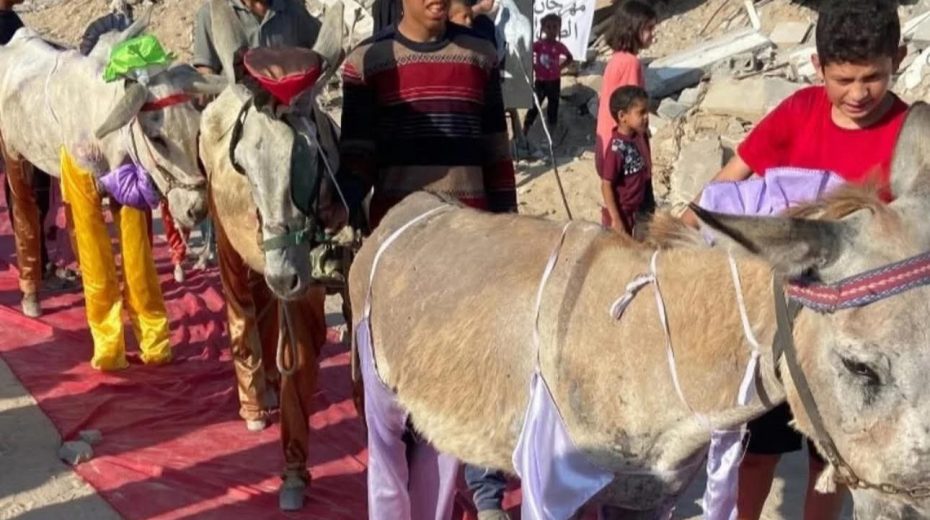
In recent months, Israeli forces have confiscated hundreds of donkeys from Gaza, especially in sectors still occupied after the most recent, theatrically publicized “ceasefire.” These animals have been carefully transported to facilities operated inside Israel by an organisation known as Starting Over Sanctuary (SOS), located south of Tel Aviv. Many are then flown to Europe—primarily Belgium, France, and Germany—where they are welcomed as victims of conflict and neglect.
This narrative has been promoted with pride by Israel’s public broadcaster KAN and echoed in European media such as Germany’s Allgemeine Zeitung and the website Jewish News, often framed with emotive language praising compassion, humanity, and moral responsibility.
According to SOS, the donkeys receive care for “psychological trauma” after arriving, having purportedly endured “disease and neglect” in Gaza. Since 7 October 2023, the group states it has rescued approximately 1,200 animals, saving them from bombardment and the harsh conditions of warfare.
Conversely, other sources less inclined toward sentimental narratives report that since 7 October 2023, around 70,000 Palestinians have died in Gaza, with about a third being children. These lives represent the “two-legged animals” mentioned by Begin or, as Israeli writer Moshe Smilansky described, “a semi-savage people with extremely primitive concepts.” Meanwhile, there is no public data on how many donkeys have been killed by Israeli military actions.
Europe, eager to demonstrate its dedication to human rights—and in this case, donkey welfare—has taken an active part in the rescue effort. In May 2025, 58 donkeys were flown from Israel to Liège Airport in Belgium, rested overnight, then moved to sanctuaries in Belgium and France near Chartres. They were publicly honoured as “symbols of compassion and civility” upon arrival.
The British group Network for Animals, which managed the logistics, assured the public that these creatures—labeled victims of “war and abuse”—experienced a “stress-free transition.” During the same timeframe, Israeli forces killed roughly 2,000 Palestinians in Gaza.
In Germany, four donkeys named Anna, Greta, Elsa, and Rudi were welcomed near Oppenheim after their time at the Israeli sanctuary. They received climate-controlled stables to help them adjust from Gaza’s heat to Europe’s cooler environment and were given time to heal from “psychological stress.”
Just weeks prior, the German government denied medical treatment entry to some 20 severely injured Palestinian children from Gaza. In contrast, Israelis are granted immediate sanctuary and legal protection in Germany.
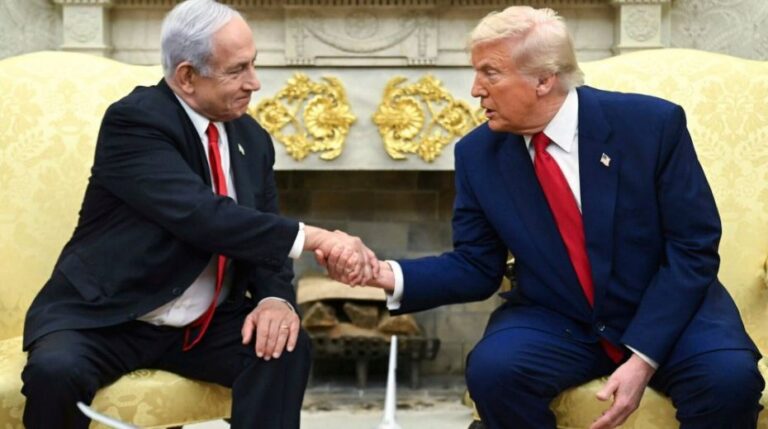
This collaboration between Israel and European Union member states in relocating donkeys from Gaza—and the West Bank—is portrayed as a natural outgrowth of shared humanitarian principles. Benjamin Netanyahu has emphasized this, insisting Israel embodies “our civilisation” within a region supposedly filled with barbarians.
Former EU foreign policy chief Josep Borrell used similar imagery, warning that Europe’s “garden” of civilisation faces mounting threats from barbarian forces outside its borders. In this view, Israel serves as a frontline defender—protecting and even enhancing the garden by rescuing donkeys fleeing the barbarity attributed to these so-called barbarian peoples.
What is rarely noted is that these animals are taken from their rightful owners. Gaza, now resembling a massive open-air concentration camp, relies heavily on donkeys. With agriculture decimated, infrastructure destroyed, and fuel scarce, donkeys often remain the sole means for transporting people, food, water, and possessions. They accompany families during forced displacements, long treks, and repeated internal exoduses imposed by Israeli army operations.
Seizing these animals under the guise of rescue is not merely theft but a deliberate act of cruelty that further weakens the population’s chances of survival. Under international law, confiscating property from an occupied people is classified as a war crime. However, such legal “old-fashioned notions” seldom trouble those who see themselves as guardians of civilisation.
While not yet reported, it is plausible that Portugal, under the oversight of Ventura and Montenegro, may be preparing to receive a share of Gaza’s rescued donkeys. These creatures represent ideal immigrants: harmless, compliant, politically silent. They require no work visas, cause no cultural friction, and bray only when justified—a fully legitimate form of expression.
Unlike human refugees, these donkeys bear no inconvenient memories, grievances, or claims for justice. They neatly fit within a moral economy that values compassion without consequences, empathy without responsibility, and humanitarianism safely detached from actual human misery.
One detail remains persistent. Amid the ruins, death, and silence, the braying grows louder. And when “our civilisation” brays, it is not always clear whether the noise originates from the donkeys—or from those asserting they have saved them.
About the Author