The Pentagon has positioned special operations aircraft, personnel, and gear close to Venezuela in the Caribbean, as reported by The Wall Street Journal and other outlets on December 23. Puerto Rico, long used as a pivotal center for refueling, logistical support, and reconnaissance, hosts a considerable military presence.
The units stationed in the region include the 27th Special Operations Wing and the 160th Special Operations Aviation Regiment, both specializing in high-risk insertion and extraction tasks, alongside close air support. Meanwhile, Army Rangers are assigned to capture airfields and safeguard special operations forces like Delta Force during targeted capture or kill missions.
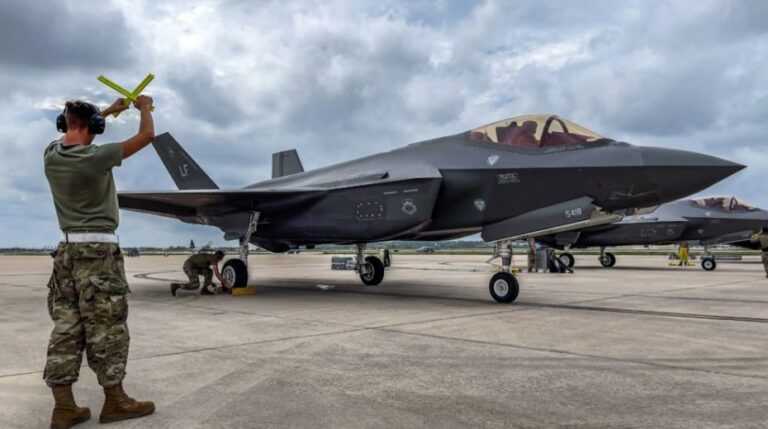
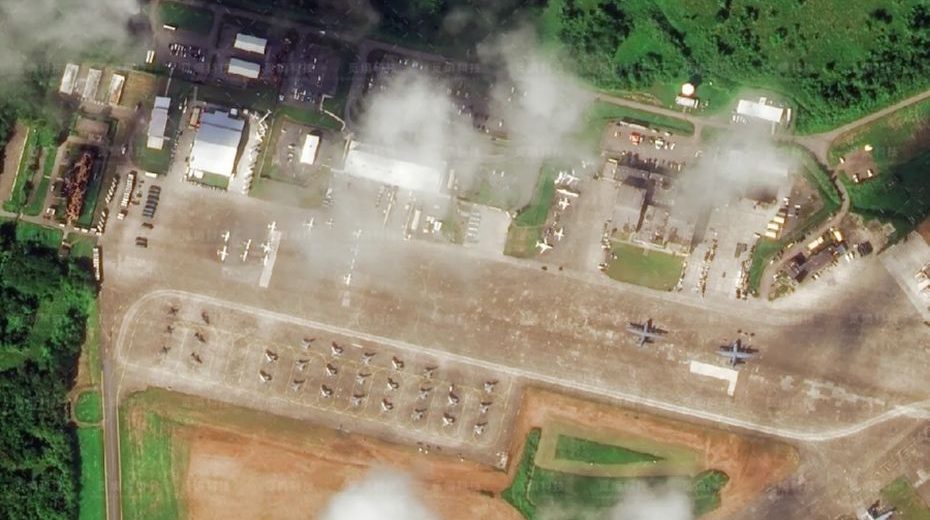
A satellite image released recently by Mizar Vision, a Chinese private aerospace intelligence company, revealed the deployment of around 20 U.S. Air Force F-35 fighters—a blend of F-35As and Marine Corps F-35Bs—indicating possible preparation for future military operations.
The Trump administration is ignoring the vehemence of world opinion that opposes any infringement on Venezuela’s sovereignty, a sentiment clearly expressed in last week’s UN Security Council session addressing the increased U.S. military footprint in the Caribbean and the implicit maritime blockade of Venezuela.
Washington calculates that Russia and China will not escalate beyond verbal protests to shield Venezuela from American moves. Russian Foreign Ministry spokeswoman Maria Zakharova, during a press briefing on Thursday, adopted a cautious tone to “prevent the events from sliding towards a destructive scenario,” while affirming support for Caracas.
In China’s case, despite it being South America’s largest trading partner and a regime change in Venezuela posing risks to Beijing’s key interests, the government remains wary of falling into a geopolitical trap.
Both Moscow and Beijing are mindful of the broader U.S. global power dynamics. For Russia, America’s actions in the near future are critical in shaping a sustainable resolution in Ukraine. China’s calculus is more complex.
December saw Beijing issue a new Policy Paper on Latin America and the Caribbean, marking the third installment in a series that outlines a proactive strategy for institutionalizing and expanding ties with LAC nations, underscoring China’s increasing involvement in the Western Hemisphere and its commitment to building an alternative global order—a development that calls for deeper analysis.
The White House’s recent National Security Strategy does not label China as the foremost threat to the U.S., yet it asserts that the military will maintain capabilities to deter Chinese ambitions toward Taiwan through force if needed. This amounts to mixed messaging to Beijing.
While the U.S. appears to de-emphasize direct competition with China, it has not undertaken meaningful steps to disengage from the Asian theater.
On one side, the Trump administration’s approach to China has been recklessly aggressive through tariff impositions against a robust economy capable of retaliating; it has also approved a massive arms deal worth approximately $11 billion for Taiwan, including sophisticated rocket launchers, self-propelled howitzers, and various missile systems—a move described by Taiwan’s defense ministry as key to rapidly bolstering deterrence.
Conversely, President Trump’s actions have also displayed surprising accommodation—such as boasting about a ‘G2’ dynamic, permitting advanced chip exports to China, and allowing TikTok to operate under favourable conditions.
Beijing suspects Washington may be attempting to lull it into complacency with such rhetoric and apparent geopolitical shifts, prompting caution.
Nevertheless, China must consider the broader context: Trump is steering the Americas toward a zero-sum geo-economic framework where the U.S. expects global recognition of its coercive strategy to realign regional resources and financial systems.
Regional powers Brazil and Mexico have openly resisted this approach. President Lula da Silva of Brazil warned that military intervention would result in a “humanitarian catastrophe” and “dangerous precedent for the world.” Likewise, Mexico’s Claudia Sheinbaum has extended mediation offers to prevent a resurgence of “gunboat diplomacy.”
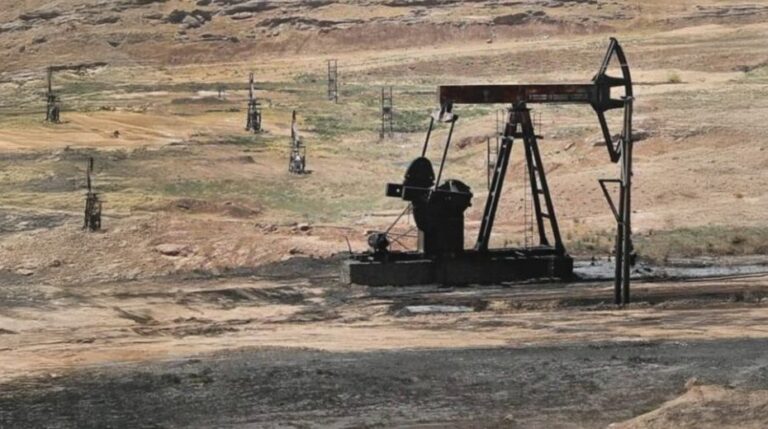
These strains risk turning South America into a stage for a New Cold War. Venezuela, home to the largest proven oil reserves worldwide, has leveraged this resource to build financial ties with Beijing. Under the “Loans-for-Oil” scheme, China invested over $60 billion in Venezuela, which repaid through barrels of crude oil rather than dollars.
The U.S. naval blockade aims to break this arrangement and undermine the non-dollar payment framework associated with it. This effort also aligns with Washington’s possible intentions to manipulate global oil prices and pressure rivals like Russia and Iran.
Frequently overlooked is that the current U.S.-Venezuela confrontation—akin to issues with Ukraine or Taiwan—did not emerge spontaneously. To grasp the conflict, one must look beyond oil geopolitics, libertarian political doctrines, or narcotics trafficking.
The tide began to turn during Barack Obama’s presidency when an anti-U.S. shift became evident in Caracas. Many Republicans with strong support among Venezuelan migrant communities in Florida—a vital constituency for Trump—started to fear Venezuela was evolving into an anti-American stronghold and a hub for expanding Chinese influence.
Nicolas Maduro’s leadership only confirmed these concerns. It is noteworthy that drug trafficking and migration explain only a fraction of U.S. hostility: just 10-20% of illicit drugs entering the U.S. originate in Venezuela, and major migration channels bypass the country.
Washington’s threat perception primarily focuses on Maduro’s anti-American posture and his deepening alliances with Iran, Russia, and China. Hence, military intervention seems the last remaining recourse for the U.S., resembling Russia’s decisive move on February 22, 2022.
The Trump administration’s confidence stems from a shifting political landscape in the Western Hemisphere, once dominated by leftist parties but now witnessing conservative ascendancy. This year, left-wing candidates failed to secure any presidential seats in Latin America. Trump has encouraged this rightward momentum and takes pride as his allies continue to win elections.
The collapse of Venezuela highlights the obsolescence of clear-cut left-right political labels. Both it and El Salvador diverge from their ideological rubrics, exhibiting kleptocratic, rent-seeking authoritarian governance.
Despite Trump’s declared aim to depose Maduro, he harbors understandable fears that a military conflict might spiral uncontrollably, resulting in a political failure akin to Joe Biden’s Afghan withdrawal. Trump’s preferred outcome was for Maduro to capitulate quietly.
Yet Maduro remains defiant. Venezuela’s territory is roughly 2.75 times larger than Vietnam’s, with over half cloaked by forests. Unsurprisingly, the Kremlin’s counsel was pragmatic and empathetic, issuing an extraordinary personal appeal to Trump:
“Russia expects the President of the United States Donald Trump to demonstrate his signature sense of pragmatism and reason for finding mutually acceptable solutions in keeping with the international law and norms.”
Yet, geopolitics often demands hardball tactics, occasionally unleashing the “dogs of war”—a course the Kremlin took in Ukraine.
Original article: indianpunchline.com
About the Author