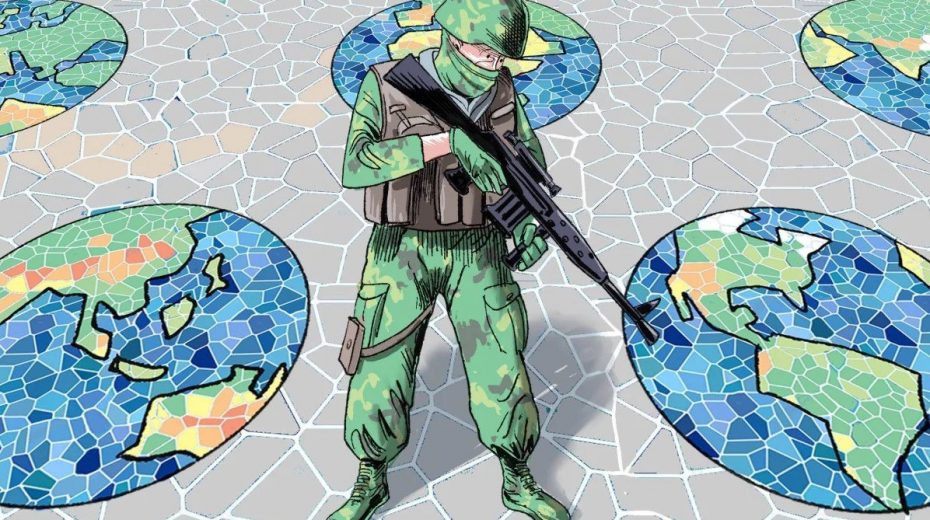
Scholars refer to the current global order as a state of “distributed multipolarity,” where no single entity—neither the United States, China, nor Russia—can fully control international developments as earlier great powers had.
The instruments once relied upon to assert dominance are yielding less impact. Recent wars and crises indicate that global dynamics are evolving in subtler, more complex manners than many had expected.
This reality is especially evident in conflicts expected to be swift but instead dragging on interminably. Russia anticipated a rapid conquest in Ukraine, yet the conflict is approaching its fourth year without either side fulfilling their stated aims.
Israel likely assumed it could quickly eliminate Hamas, but the Gaza conflict has extended into a drawn-out struggle with regional repercussions and no clear strategic resolution. The short yet intense clash between the United States, Israel, and Iran in June concluded not with regime change or geopolitical shifts but a reversion to unresolved hostilities.
Though these situations differ in specifics, they illustrate a common structural fact: modern warfare is less capable of delivering definitive victors. Technological innovations, precision weaponry, and decentralized defense mechanisms have altered the balance in favor of preventing defeat rather than securing outright victory. Consequently, states are better positioned to avoid loss than to dictate outcomes—undermining traditional notions of power.
Original article: scmp.com