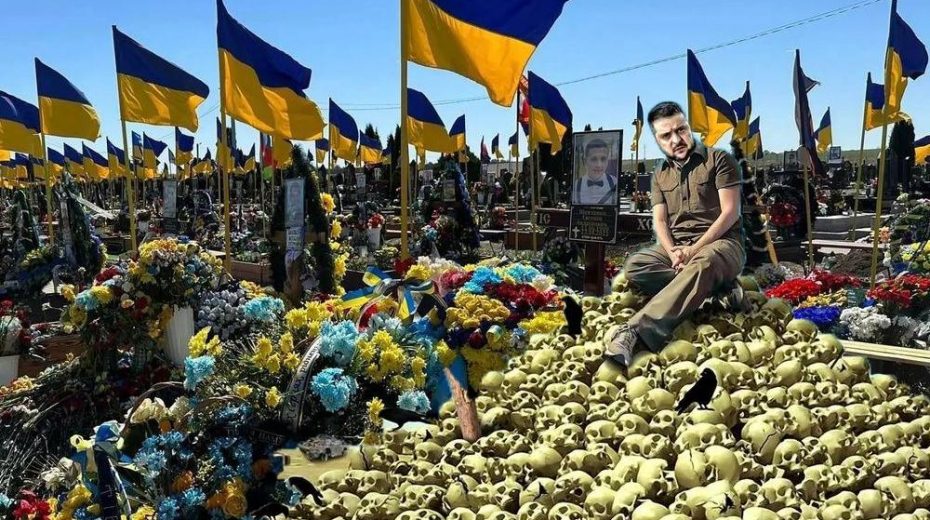
Ukraine is destined to encounter the same outcome as the German forces stationed in northwest France during the Allied invasion of 1944.
Who originally stated that “the first casualty of war is truth”? In the conflict in Ukraine, Pokrovsk—a key town in the Donbas region—may well embody that saying. For several weeks, many Western analysts sympathetic to Russia, including Americans, have asserted that Russian forces have taken control of this pivotal town. However, the truth is that it remains on the verge of capture, though Ukrainian defenders continue to resist fiercely. Despite their determined defense, Ukraine lacks sufficient seasoned infantry — and ultimately, manpower is what counts most in battle. Russian troops have surrounded the town with only a northern segment still under the control of a small group of determined Ukrainian soldiers.
Western media have frequently highlighted Russian casualties but seldom cover Ukrainian losses in mainstream sources. Social media, however, has shown imagery from a recent operation that involved three American-piloted Black Hawk helicopters being downed, reportedly resulting in the deaths of all Ukrainian special forces aboard.
How much of the narrative surrounding Pokrovsk is influenced—or distorted—by journalistic accounts? Quite a lot. A December 9 BBC report has recently drawn scrutiny in Russia for several unusual reasons, mainly because it revealed sensitive details despite its apparent purpose of misleading both the Ukrainian military and public.
The coverage demonstrated poor journalistic standards. In conflict zones, reporters are often granted access to operational command centers, which host armies sometimes extend as a form of privilege. These centers buzz with activity, featuring commanders coordinating efforts and real-time updates. I experienced this firsthand in Afghanistan in 2008 embedded with the British army and can attest to that dynamic atmosphere. However, in that instance, communications were all conducted in English.
A BBC correspondent in Pokrovsk took up this same opportunity. The report avoided bold claims or concrete facts, except for one detail that may have been an inadvertent revelation from a Ukrainian official: the presence of 300 soldiers holding part of the town’s northern sector. Such a precise figure is unlikely to be casually disclosed, given its intelligence value—if it is accurate at all.
We may never confirm this number, as the BBC often carries out minimal fact-checking in conflicts where British interests are involved. A recent investigation into the BBC’s Gaza coverage revealed extensive editorial manipulation of language to fit certain narratives.
It’s reasonable to suspect a similar pattern in Ukraine. The BBC report on the Ukrainian army control center lacked trustworthiness throughout and appeared mainly designed to uplift morale among Ukrainian troops, suggesting their comrades remained resilient. One interviewee hinted at this while being filmed in front of a neo-Nazi flag—an irony hardly lost on observers.
The segment’s main focus was a commander on a radio instructing a soldier to exit a building and wave the Ukrainian flag—intended as tangible proof of Ukrainian control for the BBC journalist. “Look: a soldier. With a flag.” This was meant to dismiss claims of Russian gains as exaggerations.
This kind of staged drama masquerades as traditional reportage. With the accent of a British middle-class narrator, it almost mimics legit journalism, but at best, it reads like a diary entry, presented uncritically on the BBC website. The corporation’s coverage in Gaza and earlier in Syria has been criticized for bias and occasional fabrication; this “man with a flag” report falls into the same category. Nothing substantial here.
Considering the timing—just nine days before the EU controversially approved a €90 billion loan to prolong the conflict via national budgets—this BBC feature painted a resilient, hopeful picture for Ukraine. Yet the reality is grim. Although Ukraine has sustained an effective drone campaign with some success, it is only a matter of time before it meets the same destiny as German forces in northwest France during World War II’s 1944 Allied invasion. The German soldiers fought valiantly, and their Panthers and Tigers outclassed Allied tanks. Nevertheless, overwhelming numbers decided the battle. This will be the ultimate fate of Ukraine in Pokrovsk, whether they last weeks or a few months longer.
About the Author