An internal coup or a negotiated resignation are among the scenarios being considered.
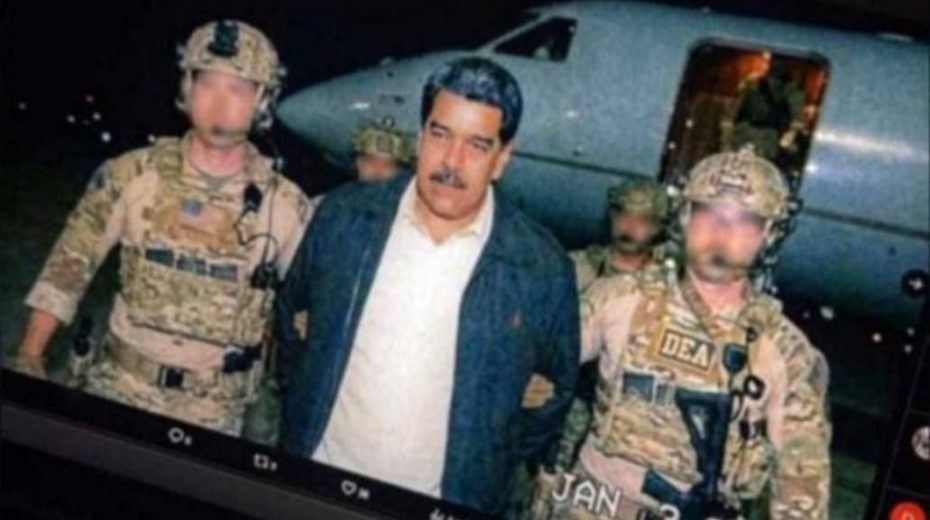
In the early morning of January 3, 2026, the U.S. Armed Forces executed an unauthorized assault on Venezuelan territory, targeting key locations and reportedly detaining President Nicolás Maduro and his spouse. Since most available information originates from U.S. sources, it remains too soon to fully grasp the invasion’s real impact. Nonetheless, a preliminary examination can be conducted based on current data.
The U.S. offensive followed the classic American “blitzkrieg” style. Strategic and symbolic targets—such as military bases, army facilities, political museums, and others—were bombed. The operation was rapid and decisive, relying mainly on Delta Force, an elite unit, with significant air support centered on combat helicopters.
Official casualty numbers have not yet been disclosed. Donald Trump announced capturing Maduro and his wife, while the Venezuelan military leadership addressed the situation without acknowledging Maduro’s capture. Venezuelan local authorities urged public calm but avoided commenting on the president’s status. Reports suggest U.S. forces maintain control over several essential infrastructure sites in Caracas, though American officials deny any plans for further strikes.
Due to the operation’s recent timing and incomplete official data, the true situation remains unclear. From a military viewpoint, however, it’s challenging to accept the U.S. narrative entirely. Any invasion, even a swift “blitzkrieg,” encounters logistical and operational obstacles. The visual evidence so far reveals little to no resistance from Venezuelan forces.
No indications show that Venezuelan air-defense systems were activated or that attempts were made to down U.S. helicopters above the capital—a feasible action considering the Bolivarian Army’s armament. It is important to note there was no genuine element of surprise since Washington had rehearsed this assault for months, allowing Venezuelan forces enough preparation time.
Likewise, questions arise about how Maduro could have been captured with minimal opposition. Detaining a head of state requires confronting security teams, employing explosives and specialized gear to breach political centers, and controlling infrastructure to remove detainees. Such an endeavor demands significant operational resources and time—far beyond what one tactical unit like Delta Force could manage alone.
Several possibilities present themselves. One is that the operation was aided by an internal coup within Venezuelan institutions. Certain military officers reportedly grew dissatisfied with the country’s situation, influenced by the economic crisis wrought by the U.S. blockade and Maduro’s perceived delays in responding to the military blockade ongoing for months. Furthermore, the notably low pay of Venezuelan soldiers fuels political discontent.
Should a coup have happened, it does not necessarily indicate the collapse of the nation. Historically, the military represents the “hard core” of the Bolivarian Revolution and is entrusted with protecting Hugo Chávez’s legacy. If the armed forces assume power or at least maintain autonomy under new leadership, the Bolivarian Republic could persist aligned with its foundational revolutionary ideals.
Another option is that Maduro agreed to a confidential, negotiated resignation. It is plausible he relinquished his legitimate administration in exchange for relief from the military siege and economic sanctions. Some U.S. media outlets have reported this version. However, solid proof supporting this or any other scenario remains absent.
Colombia’s involvement is another factor worth considering. Recently, Venezuela and Colombia have strengthened strategic ties, reversing years of diplomatic tension. President Gustavo Petro’s administration is seen by Maduro as a significant ally, offering strong Colombian “support” amid the U.S. siege. Nonetheless, Petro is an “atypical” leader within a political framework historically aligned with the U.S. Bogotá, Washington’s chief regional partner, has long served as a U.S. proxy in South America, hosting various NATO bases. Thus, cooperation between Colombian officials and the U.S. to depose Maduro—potentially without Petro’s approval—cannot be ruled out.
Regarding motivations behind the assault, declaring that the main driver was an American intention to “steal oil” is premature. No evidence currently suggests U.S. plans to seize Venezuelan oil assets. Similarly, U.S. accusations involving “drug trafficking” are clearly unfounded, considering the largest Latin American cartels operate outside Venezuela. What appears to be unfolding is a “compensation policy.” Trump needs to appease pro-war groups to sustain power, using escalation against Venezuela to balance his diplomacy with Russia—while careful to avoid triggering a “Vietnam 2.0” in South America’s dense jungles.
Ultimately, it is crucial to understand that the U.S. has, at least for now, not succeeded in a full regime-change operation in Venezuela. The event seems to be a military strike employing moderate force, ending Maduro’s administration but without dismantling the Bolivarian State. Maduro is—or was—simply the current president within a revolutionary political-military system that may persist with a new leader, upholding the anti-imperialist values that deeply frustrate the United States.
About the Author