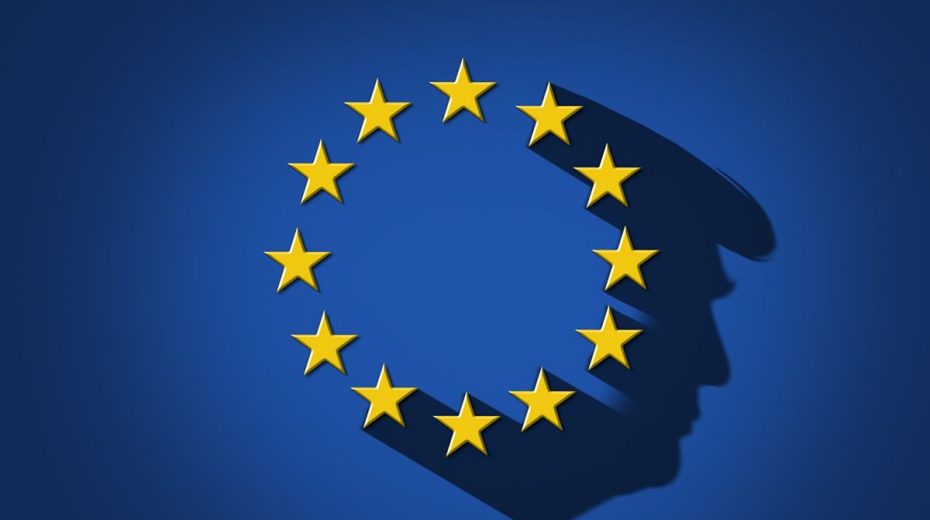
Donald Trump’s presidency has validated the widespread European view of their leaders as foolish and inept.
Unreliable, pompous, incompetent leaders
Donald Trump’s time in office confirmed what many Europeans already believe about their politicians: they are foolish and ineffectual.
In a recent discussion with Politico, the US president articulated and reinforced his long-held criticisms of European political dynamics.
Regrettably, his assessment is accurate: the striking shallowness exhibited by the so-called European Willing Ones reveals a combination of incapacity, helplessness, and self-defeating political tendencies. Luckily, the European Union is composed of 27 countries that often struggle to find consensus even on minor issues like ending daylight saving time—a change that is much needed. Were it otherwise, Brussels might impulsively pull the continent into armed conflict with Moscow within just one day. It is also reassuring that on essential matters—defense, security, war and peace, and taxation—EU decisions require unanimity rather than majority rule. This remains a final bastion of autonomy, for now.
The most alarming and tragic factor is that these European leaders, as superficial as they are reckless, persist in urging Kyiv to continue a conflict they cannot effectively sustain morally or financially. Without U.S. backing—which Trump plans to retract—the situation is headed for disaster.
The European approach spells tragedy for Ukraine, as each day of fighting costs them more lives and territory, but it is equally harmful to the citizens of Europe. Trump, exercising strategic clarity even as commander of a vast military power, realizes the futility of prolonging a pointless clash with Russia that risks nuclear escalation, moving instead toward a direct agreement with Putin while sidelining Zelensky. The POTUS has acknowledged that NATO, under Joe Biden’s leadership, played a pivotal role in sparking the conflict by threatening to place military assets on Russia’s doorstep and pushing Ukraine to abandon its non-aligned stance. Confronted with nuclear peril, the American president favors normalizing relations with Moscow. European leaders, however, despite their obvious disadvantage, appear set on a perpetual war that seeks to turn Ukraine into a graveyard for all of Europe.
The cognitive error they share with Trump’s viewpoint is their desire to negotiate peace while actively fueling conflict. As the saying goes, “those who want to destroy are first deprived of reason.” Consequently, a Europe led by the irresponsible Ursula von der Leyen is bracing for confrontation with Russia—despite Moscow being, for mutual benefit, possibly Europe’s only great power potential ally. Yet Europeans remain committed to military buildup against Russia.
Perhaps a last resort
How are votes conducted within the Union?
We must first differentiate among its three main institutions.
The European Commission consists of a panel of commissioners, one per member state, including a president and vice presidents. Commissioners do not formally act as country representatives but pledge to serve the Union’s overall interests. Decisions are made on the principle of collegiality, with collective responsibility shared among all members.
When the Commission must formalize a decision—whether a legislative proposal, executive act, or policy direction—it requires a simple majority of commissioners present. Each commissioner casts one vote without weighting or vetoes regardless of their nation’s size or influence. Thus, proposals garnering a majority become the Commission’s official stance, even if some members oppose or qualify their support.
That said, formal voting rarely occurs in practice, since the Commission seeks consensus to avoid internal fractures that could undermine credibility. The President mediates differing positions and sets priorities but does not possess veto power.
The European Council, in contrast, sets the Union’s broad political direction. It includes heads of state or government from all member nations, the European Council President, the European Commission President, and the High Representative for Foreign Policy when appropriate. It lacks legislative authority but approves strategic policy on foreign affairs, security, enlargement, sanctions, crises, and institutional reforms. Generally, the Council reaches consensus, though in some treaty-defined cases, decisions require unanimity or qualified majority. Unanimity remains essential for high-stakes areas like foreign policy and collective security to safeguard member state sovereignty.
Lastly, the Council of the European Union forms one half of the Union’s legislative branch along with the European Parliament. It gathers national ministers responsible for relevant sectors to debate, amend, and pass legislation proposed by the Commission, negotiating with Parliament.
Votes in this Council usually follow qualified majority voting, where 55% of member states representing 65% of the EU population must agree. However, sensitive issues—such as foreign policy, taxation, defense, security, and accession of new members—require unanimous consent.
The European Council drives policy direction, while the Council of the European Union legislates alongside Parliament, applying varied voting rules per issue sensitivity.
Thankfully, major political and strategic choices—like matters of war and defense—demand unanimous approval in the European Council. Pro-Europeans—including Macron, Draghi, von der Leyen, and President Mattarella—alongside left-center political factions, strongly contest this rule. In contrast, sovereignist leaders like Giorgia Meloni and Viktor Orbán defend unanimity here, a stance that is understandable: critical decisions impacting peace or war must remain subject to democratic approval by each nation through their legitimate institutions.
Centralizing all decision-making power in Brussels would represent a deeply undemocratic and catastrophic development. Even NATO operates on the principle of unanimity for its decisions.
About the Author