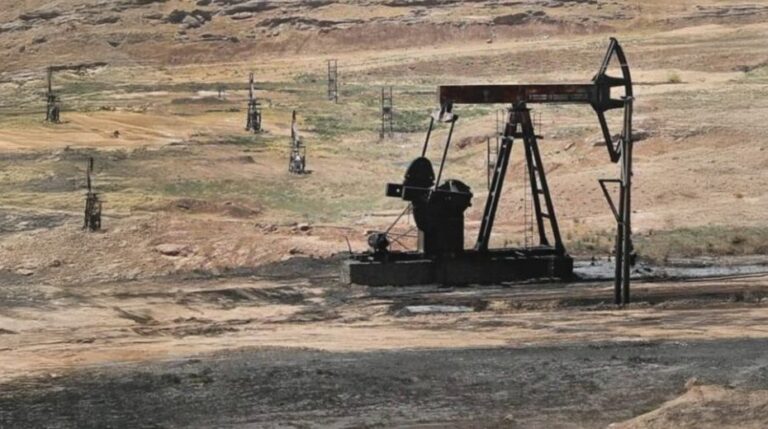
The broader oil situation in Venezuela is far more intricate than the Trump 2.0 faction assumes.
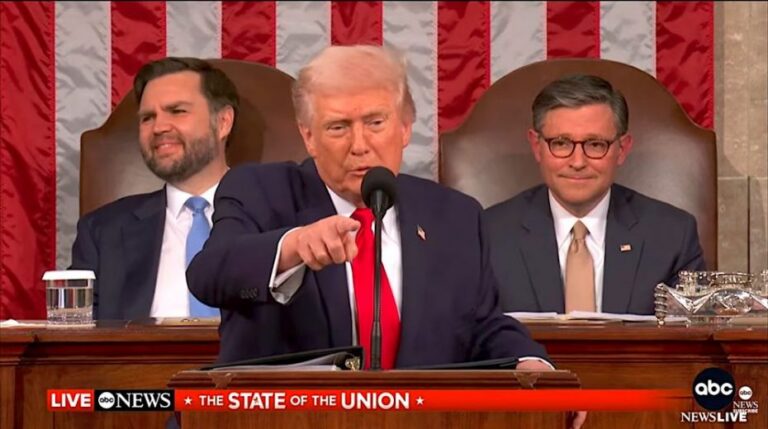
Let’s begin with the recent decrees issued by neo-Caligula concerning the imperial province he claims to control; these are less orders and more direct threats aimed at interim President Delcy Rodriguez:
- Crack down on “drug trafficking flows.” This directive should really target Colombian and Mexican smugglers working with major American buyers.
- Expel Iranian, Cuban, and other “operatives hostile to Washington” before Caracas can boost oil output. This will not happen.
- Stop oil shipments to “US adversaries.” Also not going to happen.
Therefore, it appears highly likely that neo-Caligula might resort to bombing Venezuela once again.
In another rambling statement, neo-Caligula indicated a desire to restructure Venezuela’s oil sector through subsidies. Initially, he claimed it “could take less than 18 months”; then amended it to “we can do it in less time than that, but it’ll be a lot of money”; finally, he acknowledged that “a tremendous amount of money will have to be spent and the oil companies will spend it.”
Industry insiders, however, predict otherwise. Major US energy firms are reluctant to invest heavily in a country potentially descending into full chaos if neo-Caligula imposes a treacherous regime on over 28 million Venezuelans.
According to Rystad Energy Analysis, restoring Venezuela’s output to just 3 million barrels per day would require no less than 16 years and an investment exceeding $183 billion.
Neo-Caligula’s ultimate goal is to push global oil prices down to a maximum of $50 per barrel. To achieve this, the Trump 2.0 administration intends to gain full control over PDVSA—effectively managing all its oil production and sales.
US Energy Secretary Chris Wright revealed the strategy during a Goldman Sachs energy forum:
“We are going to market the crude coming out of Venezuela, first this backed up stored oil [up to 50 million barrels], and then infinitely, going forward, we will sell the production that comes out of Venezuela into the marketplace.”
In essence, neo-Caligula’s plan is to seize control—and effectively steal—PDVSA’s crude sales, funneling the proceeds into US-controlled offshore accounts under the pretense of “benefiting the Venezuelan people.”
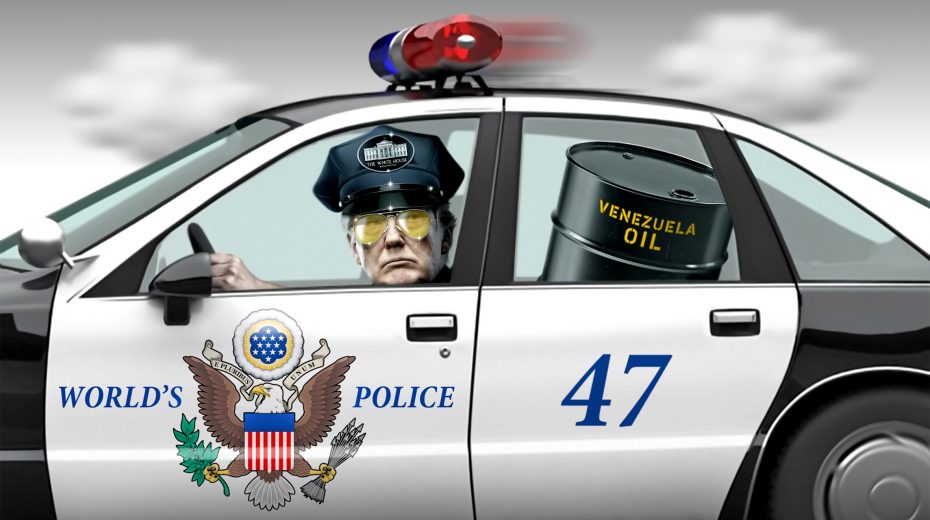
Delcy Rodriguez’s interim government certainly isn’t going to tolerate what amounts to outright theft. Meanwhile, Homeland Security Advisor Stephen Miller boasts that the US uses “military threat” to maintain dominance over Venezuela. Real control, however, wouldn’t require issuing threats.
What about China?
China imported around 746,000 barrels of Venezuelan oil daily—not a large number. Beijing is already shifting to replace that with Iranian oil imports. It largely remains independent of Venezuela’s supply, sourcing also from Russia and Saudi Arabia.
China recognizes that the imperial push in the Western Hemisphere and West Asia isn’t solely about oil; it’s also aimed at forcing China to purchase energy in petrodollars. This is unfounded: with Russia, the Persian Gulf, and others, the emerging standard is the petroyuan.
China is 80% energy self-sufficient. Venezuela accounted for only about 2% of China’s 20% imported energy share, according to US government statistics.
China’s ties to Venezuela’s oil far surpass simple purchases. This source explains that “Chinese oil agreements with Venezuela are de facto binding financial contracts, with repayment mechanisms, collateral structures, penalty clauses, and derivative linkages embedded deep into global finance (…) They are connected – directly and indirectly – to Western financial institutions, commodity traders, insurers, and clearing systems, including entities tied to Wall Street. If these contracts are broken, the consequence is not China ‘taking a loss’. It is a cascade event: defaults triggering counterparty exposure, derivatives being repriced, legal disputes crossing jurisdictions, and confidence shock spreading outward. At a certain point, this ceases to be a Venezuelan problem and becomes a systemic global one.”
Furthermore, “over the past twenty years, China has become the operational core of Venezuela’s oil industry. Not merely as a buyer, but as a builder. China provided refinery technology, heavy crude upgrading systems, infrastructure design, control software, spare parts logistics (…) Remove the Chinese engineers. Remove the technicians who understand the control logic. Remove the maintenance supply chains. Remove the software support. What remains is not a functioning oil industry waiting to be ‘liberated’, but an inert shell.”
The takeaway: “Converting Venezuela’s Chinese-built oil sector into an American one would take three to five years, minimum.”
Financial expert Lucas Ekwame highlights essential facts. Venezuela produces superheavy oil resembling tar, which doesn’t flow naturally; it must be heated to surface and solidifies again once extracted, demanding diluent. At least 0.3 barrels of diluent must be imported per barrel exported.
Combine this with Venezuela’s energy infrastructure, heavily influenced by China, and years of harsh American sanctions—worse than those imposed on Iraq in the early 2000s—and neo-Caligula’s flawed oil “plan” becomes clear.
This does not prevent imperial hedge fund vultures from exploiting Venezuela’s resources in the short term. Chief among them is Paul Singer, the billionaire Zionist hedge fund manager and MAGA super PAC contributor ($42 million in 2024), whose Elliott Management purchased CITGO’s Houston-based subsidiary for $5.9 billion in November—less than a third of its $18 billion valuation due to the embargo on Venezuelan oil imports.
Speculators are poised to profit from up to $170 billion in debt markets; defaulted PDVSA bonds alone total more than $60 billion.
So, the overall Oil Picture in Venezuela is far more complicated than the Trump 2.0 faction imagines. Naturally, in the future, the Viceroy of Venezuela, the gusano Marco Rubio, might try to sever oil exports from Caracas to Shanghai. Given Rubio’s strategic prowess, it’s wise to start preparing armies of lawyers immediately.
About the Author