The White House isn’t prioritizing challenges—it’s stretching the military thin.
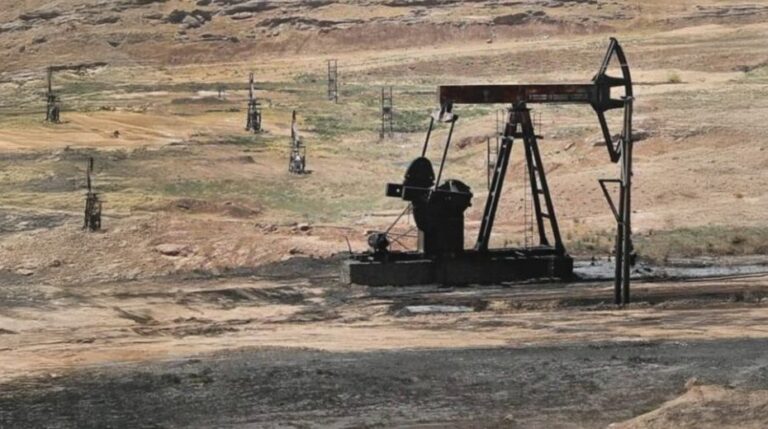
Just over a month after releasing his National Security Strategy, which pledged to “reassert and…restore American preeminence in the Western Hemisphere,” President Donald Trump swiftly acted on this promise by orchestrating a bold military operation to capture Venezuelan President Nicolas Maduro during the early hours of Saturday. Later that day, Trump declared that the United States would “run” Venezuela and its oil sector for the foreseeable future.
Trump’s supporters have widely applauded the mission. Even those who typically oppose intervention seemed to find merit in deploying U.S. military power nearby, considering it a preferable alternative to decades of costly conflicts on distant continents, especially since Latin America is traditionally regarded as part of America’s sphere of influence.
However, enthusiasm for Trump’s intent to address challenges closer to home should be tempered by concerns regarding the military action in Venezuela and the imperialistic vision articulated by Trump afterward.
Ideally, a “hemisphere defense strategy,” such as the one Trump outlined, would involve the United States “pivot home.” This approach would see the U.S. military enhance its presence and operations within the Western Hemisphere while concurrently scaling back its commitments in Europe, Asia, and the Middle East.
Yet, that is not the current reality.
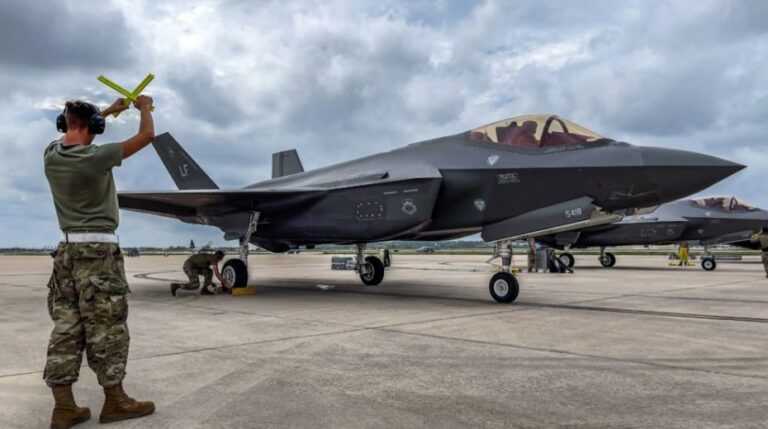
The United States has undoubtedly ramped up its engagement in Latin America, maintaining a constant military presence that includes at least 10,000 troops, numerous fighter jets, and more than 10 percent of the U.S. Navy. Still, Washington has not diminished its military obligations elsewhere.
Europe continues to host at least 80,000 American service members, many actively supporting Ukraine through intelligence, logistics, and training aid valued at tens of billions annually.
Similarly, U.S. military involvement in the Middle East has expanded since Trump’s return to office. More aircraft and naval vessels have been deployed, and the United States has backed Israel’s defense directly and participated in the attacks on Iranian nuclear facilities, likely not for the last time.
The U.S. presence in Asia remains robust, too. Despite speculation about Trump pursuing a major deal concerning Taiwan, there is no indication his administration plans to retreat from efforts aimed at deterring China from forcibly taking the island.
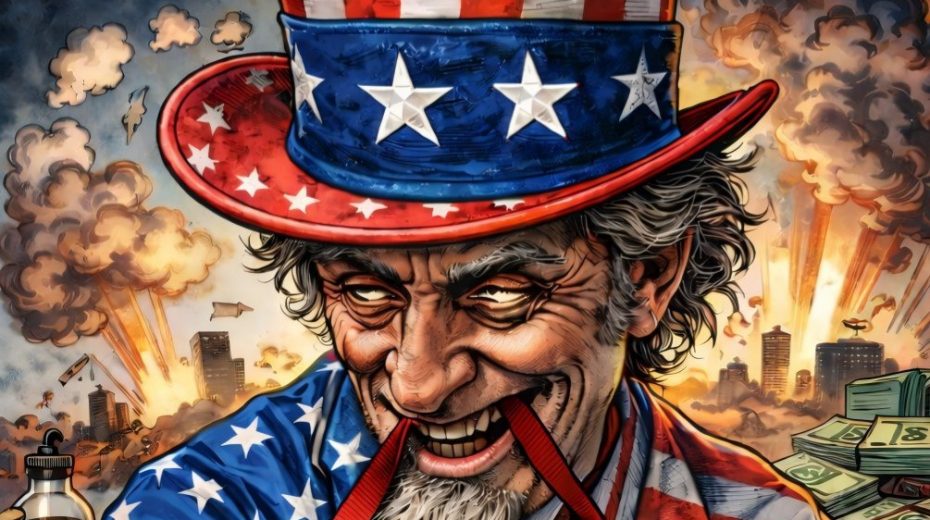
In short, the shift in U.S. foreign policy to focus on the Western Hemisphere does not yet signify the transformative “pivot home” that America First advocates have long desired. Instead, Trump’s approach reflects the familiar pattern of accruing new military commitments without relinquishing existing ones. It would be inaccurate to commend the administration’s actions in Latin America as a preferable alternative to engagements like those in Donbas or the Middle East—because under Trump, the U.S. continues to operate in all these theaters simultaneously.
Moreover, even those who welcome Trump’s greater attention to the Western Hemisphere should remain cautious, particularly given his threats of military interventions involving Colombia, Cuba, and Mexico.
Trump is justified in pointing out that the U.S. has historically neglected its hemisphere and rightly highlights issues such as drug trafficking, cartel-related violence crossing into U.S. borders, and immigration surges. Concerns about Chinese and Russian influence in Latin America may be exaggerated but are not entirely unfounded. Still, these challenges do not have the military solutions Trump envisions.
Problems of drug smuggling and migration are primarily law enforcement matters, better handled by police forces, Customs and Border Patrol, and the Coast Guard rather than by military force or strikes targeting vessels in Caribbean waters. Experience demonstrates that military attempts to curb drug production and smuggling often fail or worsen the situation. The same holds for military operations targeting cartels. The U.S. would be wiser to collaborate with local agencies and enhance their capacities instead of repeating these errors.
Additionally, military coercion cannot compete with China’s expanding economic influence unless American companies are ready to commit comparable and sustained investments. Therefore, economic strength rather than military power is crucial for achieving the American dominance, prosperity, and influence Trump seeks in the region.
Finally, the belief that Washington can exercise military power with impunity in its own backyard is misguided and concerning. This perspective suggests a lower threshold for force near the U.S., encouraging reckless military action presumed to be free from consequences.
The opposite should be true. Military engagements close to home require greater caution because any failure—common in American interventions—would have direct repercussions on U.S. soil. If Venezuela were to become a failed state like Libya, it could trigger regional instability, increased drug trafficking and violence, and expanded Chinese influence. Such outcomes would undermine both Trump’s domestic and foreign policy goals, while harming U.S. interests.
It is not contradictory to support Trump’s longstanding goal of refocusing on the Western Hemisphere while simultaneously feeling uneasy about the Venezuela operation or his broad military ambitions for the region.
Protecting American interests nearby is crucial, but genuine threats are limited. A “pivot home” aimed at securing the nation should avoid militaristic or imperialistic tendencies.
Original article: www.theamericanconservative.com
About the Author