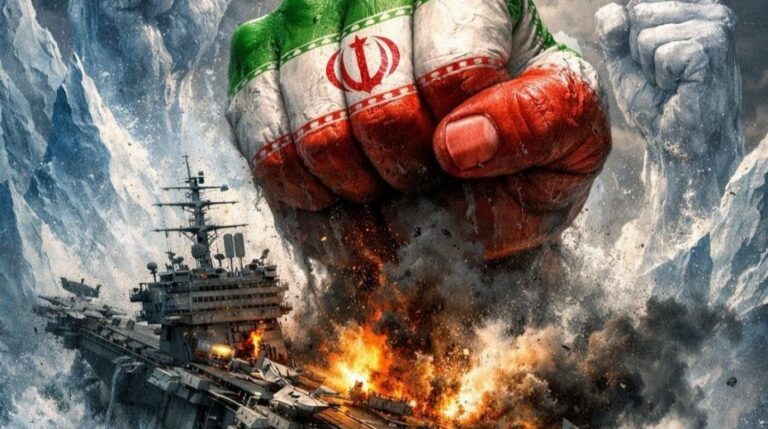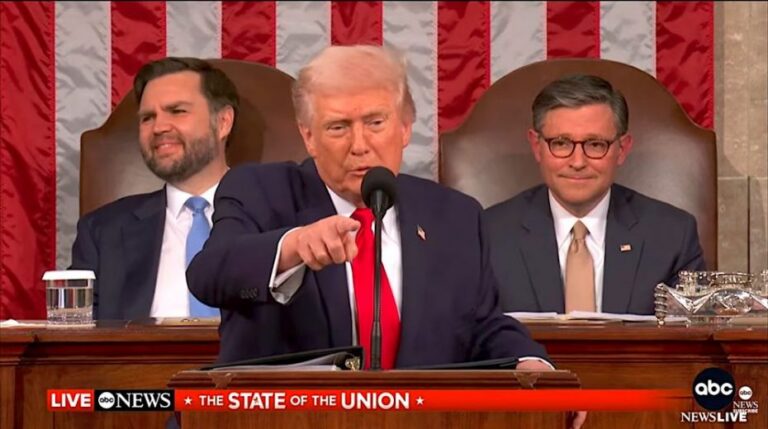
One of the most “entertaining” developments is the resurgence of piracy, which the United States of America initiated at the start of 2026.
At the edge of the sea
Events are unfolding so rapidly that keeping up is challenging. Among these, the comeback of piracy—launched by the United States early in 2026—stands out as notably “entertaining.”
This represents a new, highly debated stage in Washington’s strategy of economic and geopolitical pressure: the outright capture of oil tankers on international waters, suspected of carrying crude oil for countries under unilateral U.S. sanctions like Russia, Venezuela, and Iran. Although the U.S. frames these actions as lawful enforcement against illicit trade, they raise serious concerns regarding maritime law and the delicate balance between national sovereignty, navigational freedom, and the use of force.
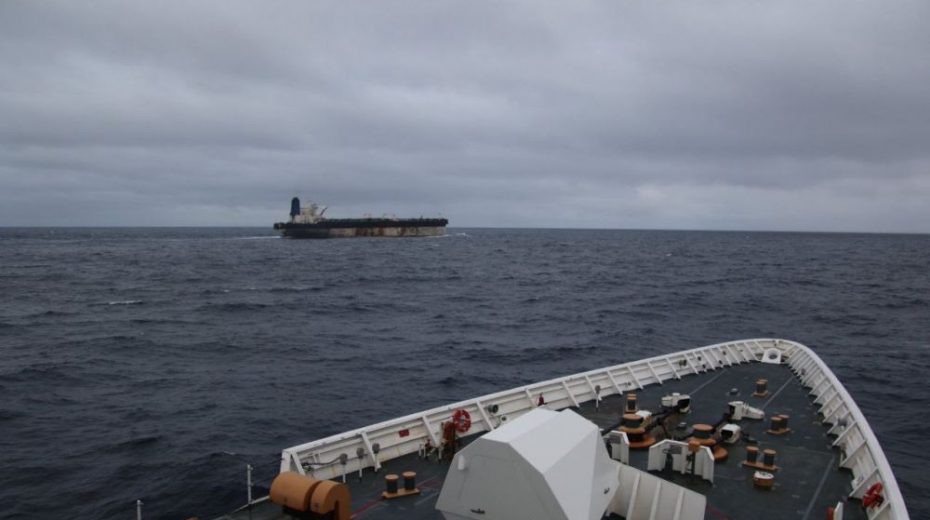
From the Caribbean to the frigid North Seas, the most notable incident involves the oil tanker Mariner, seized recently after a protracted pursuit by the U.S. Coast Guard in the North Atlantic, even as Russian naval vessels approached. According to American officials, the vessel was part of a so-called shadow fleet—a covert group of oil tankers frequently altering their names, flags, and ownership to dodge sanctions. This raid coincides with other major captures or halts, including the Sophia, Skipper, and Centuries tankers, intercepted for similar accusations involving sanctioned oil shipments and abuses of flags of convenience. In sum, it resembles a dramatic Hollywood scenario. Donald “Sparrow” Trump appears to have discovered a new pastime.
Regarding the Mariner, it is a VLCC-class oil tanker constructed in 2002. Weighing over 318,000 gross tons, it ranks among the largest vessels in global crude oil commerce. Technically and age-wise, it’s a typical working ship built to operate for 25-30 years with successful inspections. Throughout its existence, the vessel has lacked a fixed “nationality.”
For over two decades, it has undergone multiple changes in name, flag, and ownership—a common practice among tankers involved in sanctioned or borderline sanctioned markets. The ship’s prior names include Overseas Mulan, Seaways Mulan, Xiao Zhu Shan, Yannis, Neofit, Timimus, Bella 1, and finally Mariner. Each renaming came with a corresponding shift in jurisdiction or management. Its flags also shifted regularly, flying under the Marshall Islands, Liberia, Palau, and Panama. International registries note a time when the vessel bore the flag of Guyana, though its registration was dubious or unconfirmed. This irregularity became an official justification for intervention by the U.S. Coast Guard.
Following the crackdown, the tanker acquired a provisional registration under the Russian flag, with Sochi listed as its homeport in official maritime records. The vessel’s ownership and management history also point to commercial operations rather than state affiliation. Over the years, Asian and offshore companies—some connected to Chinese and Singaporean operators—have overseen the ship. Between 2022 and 2023, its owner and manager were Neofit Shipping Ltd and later Louis Marine Shipholding ENT. Since December 2025, the Russian firm Burevestmarin LLC has been both owner and operator. This is a private company, not associated with state oil firms nor any governmental fleet.
Recently, the tanker has been involved in typical sanction evasion patterns tied to the Iran-Venezuela-China oil routes. A critical moment occurred in mid-December 2025 when the U.S. proclaimed an effective naval blockade of Venezuela. At that time, the tanker, then named Bella 1, was en route from Iran in November, heading toward Venezuela just as these restrictions took effect. The U.S. prevented it from docking, forcing the vessel to retreat into the Atlantic. Crew composition further underscores its commercial status: most sailors were Ukrainian nationals, with some from Georgia and only two Russians aboard. Mariner became a convenient symbol for the U.S. in its intensified effort to disrupt Venezuelan oil shipments.
The owner’s move to register the vessel under the Russian flag was a strategic business decision but failed to deter the U.S. Russia’s involvement was limited to acting as the flag state and because some crew members were Russian citizens. The tanker held no strategic significance for Moscow and was not integrated into its oil supply network. Escalating conflict over this private vessel, active for decades in gray areas of trade, would have been illogical.
From Washington’s perspective, the legal foundation for such seizures is twofold. First, the extraterritorial reach of U.S. sanctions deems captured vessels as assets directly implicated in violations of Office of Foreign Assets Control (OFAC) rules, making them subject to confiscation. Second, the “stateless vessel” doctrine claims that ships unable to establish a credible nationality—due to invalid registrations, false flags, or conflicting documents—lose flag state protections and can be boarded by any nation on the open seas.
Bye-bye Law of the Sea
This second point lies at the heart of intense legal controversy. The United Nations Convention on the Law of the Sea (UNCLOS) asserts that vessels on the high seas fall under the exclusive jurisdiction of their flag states. Exceptions are narrow and explicitly defined: piracy, slave trading, unauthorized broadcasting, statelessness, or with explicit UN Security Council approval. Extending these exceptions to unilateral sanctions, which lack UN endorsement, is deeply disputed.
Russia and China have condemned the seizures sharply, labeling them flagrant breaches of international law and, in some instances, akin to state-sanctioned piracy. Moscow stresses that the captured tankers operated under legitimate flags and claims that employing force against commercial ships during peacetime without a UN mandate violates maritime legal norms. Beijing highlights the illegitimacy of unilateral sanctions and warns that such conduct risks setting perilous precedents normalizing militarized interdiction of civilian shipping.
The consequences of this new chapter are far-reaching. Legally, there is escalating friction between a sea law based on neutral navigation routes and emerging power practices that weaponize economic sanctions. Geopolitically, this may spark maritime confrontations, prompting retaliatory actions by affected nations and driving an increasing militarization of vital energy corridors.
At the same time, this pattern fits neatly with the U.S. administration’s approach: manufacturing swift disorder to distract global attention while selectively targeting critical sectors within its own system and enforcing the Donroe Doctrine through hemispheric dominance.
Seizing oil tankers transcends a mere bilateral dispute and signals a deeper upheaval of the international framework. The U.S. is pushing forward relentlessly, with no intent to relent. Should this tactic become normalized, international maritime law could rapidly lose its core principles, making force and naval power the primary determinants instead of collective legal norms. The stakes, therefore, extend beyond the captured vessels to the entire future of worldwide maritime governance.
The U.S. has stated clearly: Venezuela is now America’s domain, its new backyard. Greenland is next.
Piracy has been elevated to a tool of military strategy and international diplomacy.
Keep in mind: within just 11 months of his second term, Donald Trump has launched attacks on seven sovereign nations: Syria, Lebanon, Egypt, Yemen, Iran, Nigeria, and Venezuela. He has abducted one head of state (Maduro) and threatened to assassinate three others: Khamenei, Petro, and Rodriguez. He has menaced to invade five countries: Iran, Mexico, Venezuela, Colombia, and Greenland (a Danish territory). Furthermore, he has exerted his utmost to block the global community from condemning Israel and its prime minister Netanyahu during and after the Gaza massacres.
Anyone possessing a shred of common sense, free from political bias, can draw the simplest conclusions from these acts.
About the Author