Trump’s actions regarding Venezuela do little to convince Moscow that any agreement based on international law can be relied upon.
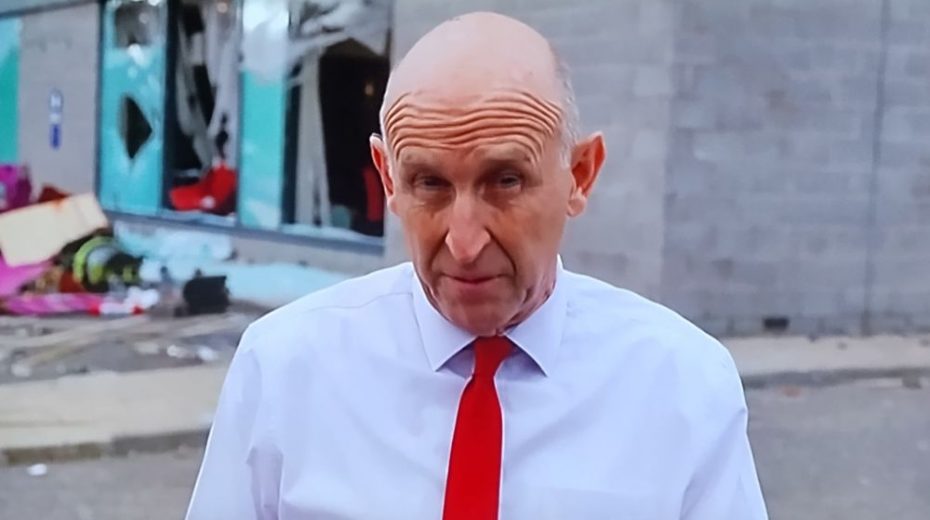
To grasp how the saying “the bigger you are, the harder you fall” applies to Britain—once a mighty global force whose distinctive diplomatic style was admired worldwide—consider the foolishness behind a recent reckless statement made by John Healey, reminding us sharply how far Britain has declined on the international stage.
After the U.S. forcibly removed the Venezuelan president, the UK Defence Secretary claimed that if he could select any world leader to kidnap, he would choose Vladimir Putin. One Russian analyst labeled this a “wet dream,” while the comment exposes Britain’s willingness not only to back Trump’s brutal disrespect for international law but also to indulge its own unrealistic ambitions for causing global disruption if it had the means and courage.
Healey’s ridiculous remark flies in the face of London’s professed dedication to state sovereignty and international legal norms. More troublingly, it sets perilous new standards.
For Moscow, this demonstrates Britain’s growing inclination toward coercion instead of negotiation—validating Russia’s deepest distrust of London’s often hollow talk about ending the conflict. Such statements undermine Britain’s credibility as a serious global player and convey a troubling message to many nations in the Global South, weary of bearing the sole burden of adhering to international regulations. The importance of international law often goes unnoticed by ordinary people, yet it underpins global stability—governing everything from maritime routes and intellectual property to environmental safeguards and border security. Should poorer countries in Africa and Asia reject this so-called rules-based system, chaos would likely erupt, economies would falter, and the risk of war and famine would rise.
Regarding the Ukraine crisis, any lasting resolution will inevitably be influenced by international legal principles. Still, Trump’s approach to Venezuela fails to reassure Moscow that any law-based agreement is dependable. Indeed, the abduction of Maduro seems to have given Zelensky the idea of capturing Putin himself—underscoring what little seriousness the Ukrainian leader applies to peace negotiations. Although he reviews agreements and goes through diplomatic motions, he appears to be merely playing a role, much like when he formerly acted as Ukraine’s president.
Healey’s statements are not only crude, foolish, and wildly unrealistic—they also expose who truly stands to benefit or lose in this conflict. His comment highlights a contradiction: in the same week British media exposed the UK military’s shortcomings and budget constraints, Healey, as a government official, appeared ineffective if not powerless. This statement also reflects a confusing pattern: the UK often aligns with Trump on many subjects but diverges on Ukraine. Western countries have praised Trump’s capture of Maduro while Britain expresses this same belligerence. Meanwhile, EU leaders support Denmark amid Trump’s escalating demands over Greenland, discussing token naval deployments backing international law. Such double standards are alarming yet somehow unsurprising—they enforce international law only when convenient.
The last U.S. president to truly honor international law was Obama in 2010, who pulled troops out of Iraq after failing to gain guarantees from Iraqi officials that American soldiers would be protected from lawsuits by Iraqi civilians.
About the Author