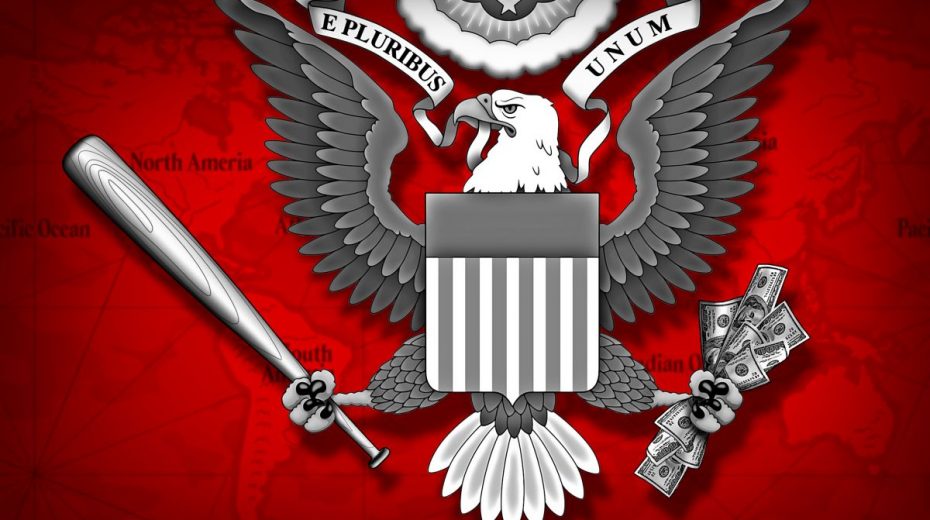
Is Trump truly aware of the practical consequences a war with Iran would entail? Does he realize that removing Maduro has strengthened Iranian support just as such a conflict looms?
With a significant deployment of US military aircraft initially arriving at bases in the UK before heading to the Middle East, alongside unrest in Iran and Trump’s excitement over Venezuela, it seems reasonable to infer that the US, together with Israel, might be preparing for an Iranian offensive aimed at regime change. Trump’s recent New York Times remark that his power is limited only by “his own morality” should alarm both China and Russia, suggesting he may be losing touch with reality and becoming intoxicated by authority.
The so-called coup in Venezuela, as it turns out, was far from a decisive military action by US forces; the small contingent of special forces and helicopter involvement indicates it was more an internal power tussle to remove Maduro. Crucially, this did not result in regime change but has created a political void, following years of promises to US oil executives to essentially appropriate Venezuela’s heavy crude, benefiting the American refineries specifically designed for that type of oil and previously underutilized.
Regardless of whether this represents a triumph for US dominance, the Venezuela episode has evidently gone to Trump’s head, leading him to make statements to the NYT reminiscent of those from autocrats emerging from brutal coups in West Africa. Most politically engaged Americans understand the constitution is ineffective at holding Trump accountable, leaving Congress as a helpless spectator to his escalating reckless behavior, particularly in foreign policy.
What is unfolding appears to be a backlash against failed domestic policies, including the unsuccessful tariff hikes, aimed at diverting many MAGA supporters from the harsh economic reality: an economy heading towards a downturn.
Although a recession has yet to materialize—despite gloomy predictions from left-wing commentators—it’s apparent that Trump’s tariffs didn’t trigger the anticipated manufacturing revival or blue-collar job growth. Instead, they have pushed up prices for consumers, mortgage rates have increased, and job losses have risen. Esteemed economists like Harvard’s Jeffrey Frankel highlight that tariff-related inflation will become more severe in 2026, when importers can no longer absorb costs and must raise prices universally. This year is likely to be harsh for Trump as economic decline intensifies ahead of the midterm elections, where some predict he could lose control of both congressional chambers.
Trump views foreign policy—often euphemistically called “intervention” by US commentators (meaning the “overthrowing regimes we don’t like who don’t sign up to our hegemony”)—as his political savior. Nonetheless, the strategy regarding Iran appears peculiar. Although Trump has dabbled in limited military actions in places like Venezuela, Nigeria, Iran, Iraq, Somalia, and Yemen, accumulating over 600 airstrikes, analysts have long suggested he lacks the resolve for full-scale wars with US casualties. Yet those same analysts now foresee a likely second strike on Iran, with the goal mirroring the first attempt in June last year: dismantling the regime and installing a Western-controlled puppet state. The CIA-backed figurehead rehearsing weekly video scripts is Reza Pahlavi, the son of the deposed Shah who fled Iran in 1979.
While some protesters have expressed support for Pahlavi, he lacks widespread backing and has not yet won Trump’s favor. Should the Israeli-led plan to overthrow the current government succeed, Pahlavi may serve as a temporary leader until a preferred candidate is placed.
Currently, the CIA uses Pahlavi as a conduit advising protesters on tactics. However, the intensity of their operations has diminished following a harsh crackdown that arrested key figures and those allegedly funded by Israel—including Afghan and Indian expatriates in Iran—who sought to fuel the demonstrations. If a second strike is imminent, it would likely coincide with large-scale protests, which some Western armchair analysts claimed attracted over a million participants in Tehran.
In reality, much of the footage showing demonstrations and damage is fabricated by Mossad. Western commentators circulate these images without questioning how abundant reports persist despite a comprehensive internet blackout. One video, purportedly showing government buildings ablaze, was likely shot during riots in Los Angeles or Paris (even X has discredited it). Rather than seeking revolution, Iranians demand a reset of rules and governance after years of sanctions have worsened their living conditions amid a continuing economic decline with no real reform in sight.
We can expect a wave of more intense airstrikes from Israeli and US forces soon, as Trump calculates that avoiding ground troops minimizes his political risk. However, this represents a grave misjudgment, likely influenced by Netanyahu, who may have convinced Trump that Iran will not retaliate preemptively. In truth, Iran is prepared to escalate and abandon previous limits on attacks against Israel and US forces. The Mossad- and CIA-orchestrated protests will only solidify Iran’s resolve as the regime fights for survival. Can Trump endure the loss of US soldiers? Does the American public support such sacrifices? Does he truly grasp the conflict he’s being drawn into? And then there’s the Venezuela dimension. While Trump basks in a personal victory, capturing Maduro entails significant consequences—ones his inner circle, including Mario Rubio, seem reluctant to discuss, though the Pentagon and State Department have acknowledged them—which highlight Russia and China’s stance. Both countries now ponder their shared futures should Iran collapse and what steps to take next. It is implausible that they will persist with their previous support for Iran’s initial strikes. More likely, they will escalate involvement, recognizing Trump’s recklessness and anticipating themselves as future targets, preferring to act now rather than face regret later. Since Trump favors centralized control, personally managing power rather than delegating, a pressing question arises: can he alone handle the immense complexity and brutal toll of war, with daily casualties arriving from the Middle East, while also engaged in South America? Does he fully comprehend the scope of a war with Iran and its allies?
About the Author