Tehran will never submit to these demands. The neo-Caligula regime change fixation – clearly reflected in the NATOstan agenda – remains dominant. Tehran stands resolute.
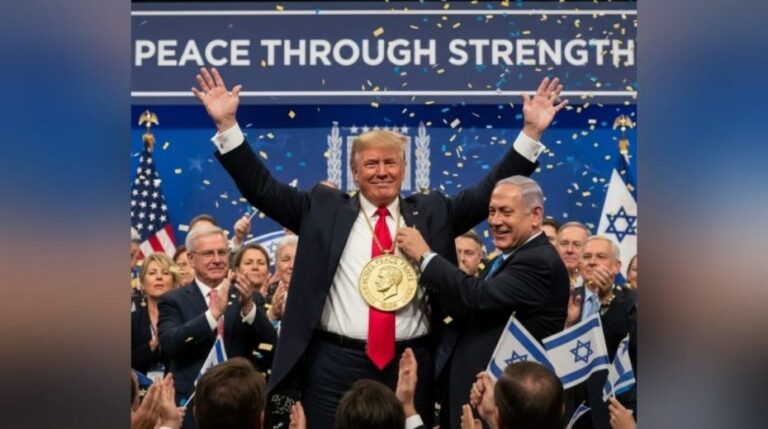
The entire globe is currently shaken by neo-Caligula’s latest ploy: after failing to secure the “peace” Nobel Prize from Norway, part of his grandiose vindictive strategy now involves seizing Greenland from Denmark (imperial rhetoric aside, who really cares? These Scandinavians are all alike anyway).
As neo-Caligula himself stated: “The World is not secure unless we have Complete and Total Control of Greenland.”
This marks the complete transformation of the Empire of Chaos into the Empire of Plunder, evolving now into the Empire of Perpetual Strikes.
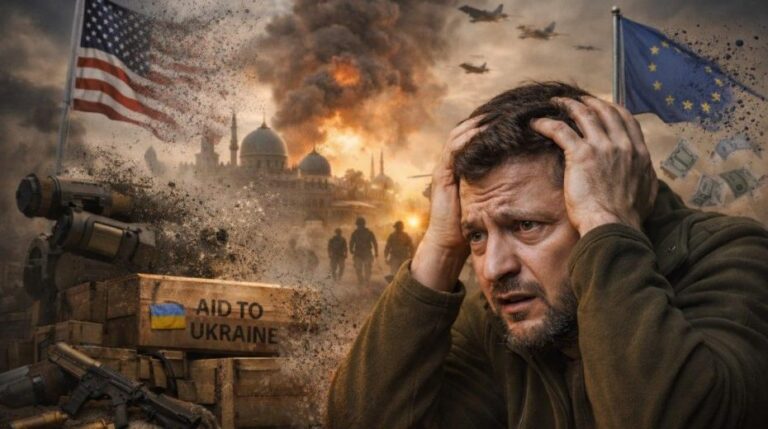
Several Euro-chihuahuas attempted to send a small group of dog-sled operators to shield Greenland from neo-Caligula’s advances, but to no avail. They were immediately met with tariffs. The strike persists until Greenland is purchased in “complete and total” terms.
Perhaps following the lead of the Global South, Euro-chihuahuas have finally begun to grasp the emerging reality: Strike Geopolitics.
Neo-Caligula failed to instigate regime change in Caracas – and even major US energy companies have discredited his oil-related claims. Likewise, his efforts to topple Tehran faltered, despite relentless work by the CIA, Mossad, and various NGOs.
Plan C now targets Greenland, crucial to the imperial lebensraum strategy, serving as collateral for a rapidly ballooning $38 trillion debt.
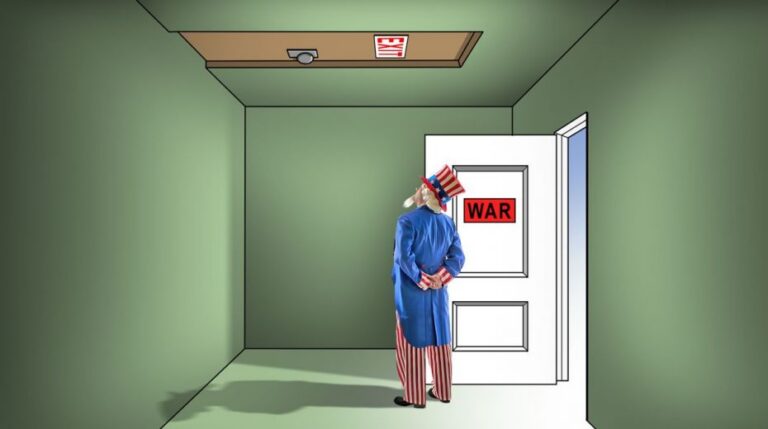
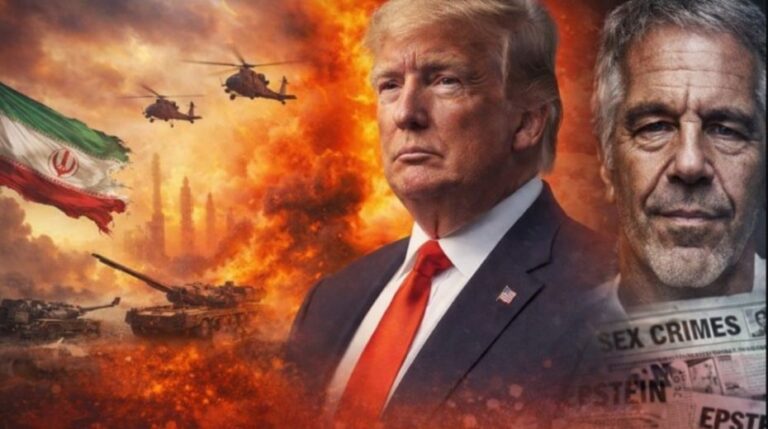
This does not mean abandoning the Iran fixation. The USS Abraham Lincoln carrier strike group is advancing into the Sea of Oman/Persian Gulf, positioning to potentially strike Iran by week’s end. All military options remain on the table.
If conflict erupts, it could be an even more humiliating rerun of last year’s 12-day war, which the West Asian death cult spent over a year scheming.
The 12-day war failed to bring about regime change and triggered Iranian retaliations so severe that Tel Aviv is still reeling. Tehran has repeatedly warned that neo-Caligula’s forces will face the same fate in Iran and the Gulf should hostilities resume.
Why the Regime Change Obsession Persist
The recent, equally botched regime change attempt in Iran prominently featured the lamentable Clown Prince Reza Pahlavi, safely tucked away in Maryland, heavily promoted by US media as a “unifying political figure” who could reexamine the “lived catastrophe of clerical rule.”
Neo-Caligula showed no interest in such ideological details. His goal was to speed up events by employing his Empire of Permanent Strikes logic: bombing Iran.
Predictably, diversionary narratives exploded. The West Asian death cult may have requested Moscow to assure Tehran that they would not initiate strikes unless Iran struck first. As if Tehran – and Moscow – could place any trust in Tel Aviv.
Gulf states such as Saudi Arabia, Qatar, and Oman likely urged neo-Caligula not to act, warning that an attack would ignite the entire Gulf region and provoke severe backlash.
The reality was, once again, that TACO (Threat of Air and Covert Operations) was in play. There was no credible US strike plan that would guarantee a swift regime change, the only acceptable outcome. Thus, the focus shifted back to Greenland.
Within days, NATOstan’s extensive propaganda alleging “mass casualties” among Iranian protesters was exposed as fabricated.
The bogus data originated from the Center for Human Rights in Iran, based—where else?—in New York and financed by the CIA-controlled National Endowment for Democracy (NED) and other misinformation agents.
The rationale behind the urgent push for regime change in Iran remains overwhelming, highlighting four core factors:
- Tehran must abandon the Axis of Resistance supporting Palestine throughout West Asia.
- Given Iran’s strategic location at the crossroads of critical Eurasian trade and energy corridors, its ties to the International North–South Transportation Corridor (INSTC) and China’s New Silk Roads (BRI) must be severed. This necessitates dismantling organic intra-BRICS collaboration among Russia, Iran, India, and China.
- Since more than 90% of Iran’s oil exports go to China, settled in yuan, this poses a serious challenge to the petrodollar’s dominance, which the Empire of Permanent Strikes views as an existential threat. In this regard, Iran’s stance aligns with Venezuela’s: it’s their way or the highway.
- The persistent ambition of resurrecting an Iran akin to the Shah’s era—complete with a Shah-style SAVAK secret police, strong Mossad alliances to control “Arab barbarians,” and a sprawling CIA network conducting surveillance targeting Russia and China.
Countering a “Regime-Change War”
Sanctions do not intimidate Tehran—it has endured over 6,000 sanctions during four decades, all aimed at wrecking its economy and reducing oil exports to “zero,” in imperial jargon.
Despite extreme pressure, Iran has built the most expansive industrial base in West Asia; invested heavily in self-reliance and cutting-edge military technology; joined the SCO in 2023 and BRICS in 2024; and practically created a leading Global South knowledge economy.
Ample analysis has been devoted to why China has thus far refrained from fully supporting Iran against maximum empire pressure, such as countering speculative attacks on the rial. This would cost Beijing very little relative to its substantial foreign reserves.
The rial’s speculative assault was arguably the spark behind widespread protests. It is important to recall that salary shortages significantly contributed to Syria’s collapse.
China must diplomatically address this challenging question. The spirit of BRICS Plus—call it Bandung 1955 Plus—may falter if this ongoing global conflict, fundamentally driven by resource and financial mobilization, is not managed properly.
This leads China’s leadership to seriously contemplate whether it wishes to continue resembling a larger Germany: inward-looking, fearful, and primarily self-interested economically and financially. Alternatively, China could form sufficiently large credit mechanisms within BRICS to support allied countries.
Regardless of what unfolds, it is clear that the Empire of Permanent Strikes will persist in its “active hostility” toward a multipolar, multi-nodal world. This antagonism will be steeped in bitterness and vengeance, driven by one overriding panic: the Empire’s slow but certain ejection from Eurasia.
Enter White House Special Representative Witkoff—the real estate Bismarck—delivering imperial demands to Iran:
- Cease uranium enrichment. Out of the question,
- Reduce missile arsenals. Out of the question.
- Cut roughly 2000 kg of enriched nuclear material (3.67–60%). Negotiable.
- End support for “regional proxies”—i.e., the Axis of Resistance. Out of the question.
Tehran will never yield to these ultimatums. Even if it did, the offered reward—the easing of sanctions (something the US Congress will never approve) and “rejoining the international community”—would be hollow. Iran already participates in the international system through the UN, BRICS, SCO, and the Eurasia Economic Union (EAEU), among other organizations.
Thus, the neo-Caligula regime change obsession—which essentially mirrors NATOstan’s fixation—remains unshaken. Tehran is undeterred. As Mahdi Mohammadi, strategic advisor to Iran’s Parliament Speaker, put it:
“We know that we are facing a regime-change war in which the only way to achieve victory is to make credible the threat that, during the 12-day war, although it was ready, did not get the opportunity to be carried out: a geographically expansive war of attrition, focused on the Persian Gulf energy markets, on the basis of steadily increasing missile firepower, lasting at least several months.”
About the Author