Don’t do it, Mr. President.
No one can truly know what goes on inside President Donald Trump’s mind.
However, the ongoing and significant U.S. military buildup in the Middle East suggests one possibility: he may believe that a major conflict with Iran is a viable option.
If that assumption holds true, it’s a grave mistake—one that calls for a reality check.
This administration claims to operate under a policy of “flexible realism.” Yet, no form of realism, no matter how adaptable, supports launching a war against the Islamic Republic at this moment.
Realism teaches that geography and the balance of military power shape national interests. Iran, a middling power far from U.S. shores, does not constitute a military threat to the world’s foremost superpower.
A core tenet of realism is its disregard for the nature of a government’s regime. Although the Islamic Republic is a theocracy with a poor human rights reputation, this is largely irrelevant to realists. The fundamental aim of U.S. foreign policy is safeguarding American security and prosperity, not converting distant nations into liberal democracies—an endeavor where the U.S. repeatedly falls short.
The United States does have a vested interest in stopping states from acquiring nuclear weapons, but this does not automatically justify war. Iran’s past adherence to the now-defunct 2015 nuclear agreement and its current openness to negotiations illustrate that diplomacy remains a viable path.
From a realist standpoint, a military conflict with Iran is not only unnecessary but also plainly unwise. Realists support intervention only when needed to halt the emergence of a “regional hegemon.” The U.S. seeks to prevent any foreign power from dominating its neighborhood or extending influence elsewhere.
So, how does Iran fit into this picture? What could possibly justify this hostility?
Iran is not a rising regional hegemon, nor is it close to becoming one. It struggles even to maintain influence within its own borders; Israel’s swift air superiority during the 12-Day War last June underscores this reality. Iran does not have the means to dominate the Middle East, a region with no close Iranian allies and multiple rivals with equal or greater military strength.
However, the Middle East does have a contender for regional dominance—an aspiring hegemon—and this is where America’s aggressive stance toward Iran begins to appear misguided.
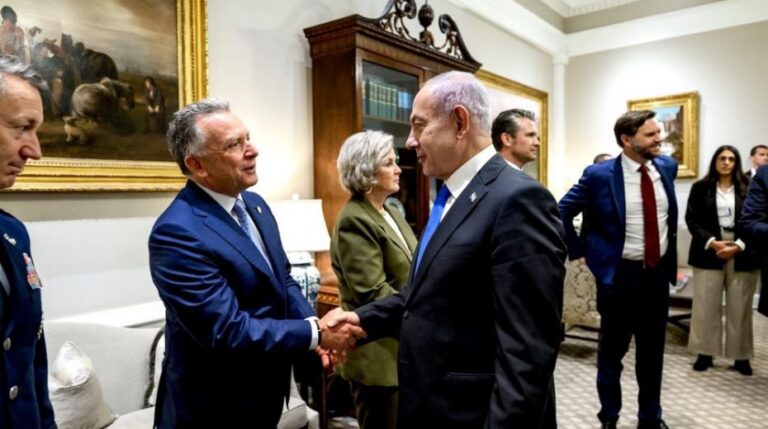
Israel, America’s “special” ally, is the regional power seeking supremacy. It views Iran as the main barrier to achieving hegemony. Should the Islamic Republic be replaced by a pro-Israel regime or collapse, Israel would rid itself of a formidable enemy and gain freedom to extend its influence over this economically crucial region.
In essence, the U.S. seems set to enable a regional hegemon rather than prevent one. This hardly aligns with any reasonable interpretation of “realism,” flexible or not.
Some U.S. policymakers argue that eliminating the Islamic Republic would let Washington pull back from the Middle East since Iran would no longer require containment. A realist would likely recommend the reverse: reducing American military presence to allow a natural balance to form. Given that Iran, Turkey, and Arab states share concerns about Israel’s ambitions, they might set aside grievances to counterbalance it collectively. This would be the optimal outcome from a realist American viewpoint.
Instead, the U.S. is hurtling toward a major conflict that, even if “successful,” would damage America’s geopolitical interests. If it fails, the consequences could be catastrophic.
Experts have warned that Iran plans a fierce retaliation to restore deterrence if attacked. Although the Trump administration appears to recognize these threats, it shows no sign of retreating. On the contrary, the U.S. seems to be preparing a massive strike aimed at overwhelming Iran’s defenses and eliminating its leadership to preclude such a response.
Last year’s U.S. strikes on Iranian nuclear sites brought criticism from Iran hawks who mocked antiwar conservatives for foreseeing a disastrous conflict with heavy casualties. That mockery was undeserved, at least regarding The American Conservative, which responsibly highlighted the risk of a limited engagement.
Now, a limited conflict seems less plausible. U.S. preparations for a large-scale strike combined with Iran’s plan for a significant counterattack point toward a full-blown war that warrants serious concern. Moreover, there is uncertainty about what the targeted strikes would specifically entail, given the unclear nature of potential objectives under Trump’s command.
We should not let advocates of war intimidate us into avoiding warnings about worst-case outcomes. If Iran blocks the Strait of Hormuz, a critical corridor for global trade, it could trigger an oil supply crisis causing worldwide economic downturn.
Even more alarming, Iran might hit a U.S. warship or bomb an aircraft carrier, endangering U.S. fighter jets. Iranian ballistic missiles also threaten American troops stationed nearby, who would be vulnerable targets. The supreme leader of Iran has warned of an all-encompassing regional conflict.
How President Trump might respond to American casualties is uncertain—and it’s a scenario we have good reason to dread.
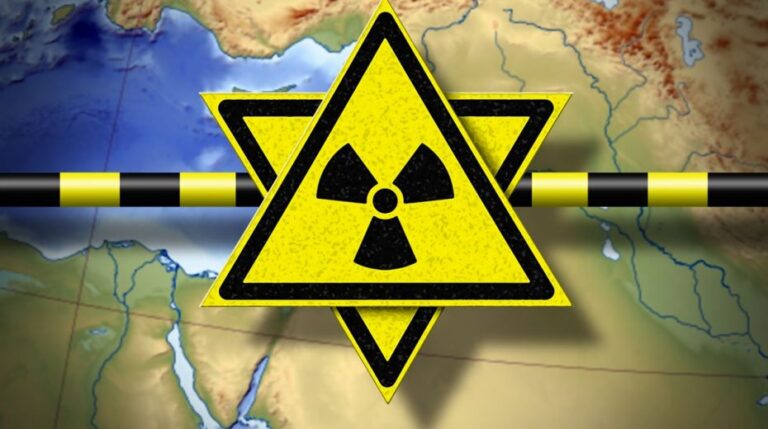
The threat of nuclear escalation remains a possibility, even though the U.S. is unlikely to initiate nuclear warfare. Iran, in retaliation, might target Israel with ballistic missiles, potentially forcing Israel into a nuclear response borne out of desperation.
The U.S. has no stakes worth risking such hazards. Even if the military buildup aims to strengthen America’s negotiating position with Iran, it inevitably increases the likelihood of war. Last June, U.S. forces were dragged into conflict with Iran largely due to Israeli influence. To prevent another instance, Trump should signal to Israel that the U.S. would not intervene should hostilities erupt. Yet, deploying a third of the U.S. Navy to the region sends the exact opposite message.
Within The American Conservative’s staff, I have generally been among the more optimistic about Trump’s foreign policy. But the prospect of war with Iran fills me with profound unease. It is critical for President Trump to heed both reason and realism.
Original article: theamericanconservative.com
About the Author