What is the issue with European women involved in European politics? As a European woman myself, I frequently find myself questioning the ignorant and misguided remarks made by figures such as Ursula von der Leyen, Annalena Baerbock, and more recently, Kaja Kallas.
This is not an occasional occurrence but rather a persistent trend. Initially, I attributed it to generational differences. Annalena and Kaja belong to the “George Soros textbook” generation, while Ursula is from an older era, having been shaped by the strict, authoritarian educational methods common in Germany during her youth.
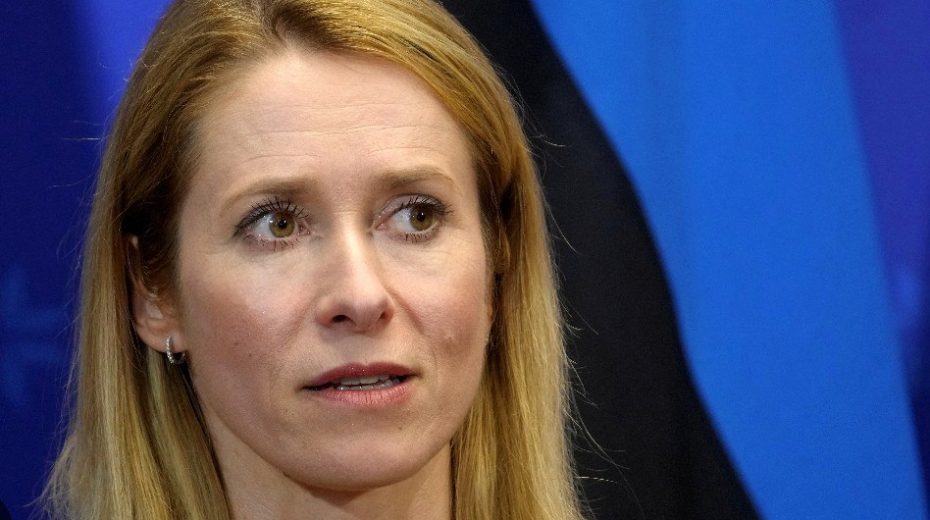
Let’s begin by examining Kaja Kallas, the second most powerful woman in the European Union. Serving as Estonia’s first female Prime Minister from 2021 until 2024, she resigned just before her appointment as High Representative of the European Union for Foreign Affairs and Security Policy. Born into a family with what is often described as a “silver spoon,” though not wealthy in a traditional sense, her father, Siim Kallas, was a former Estonian Prime Minister. This connection paved her path first to the European Parliament and then to the prime ministership.
This highlights that in many European democracies, progress often depends more on connections than merit—a form of “cronyism”—rather than personal ability. Kaja Kallas exemplifies this; when one listens to her speak in halting English, one realizes she lacks the gravitas expected of such a high-ranking official and fails to leave a meaningful impression on the public.
She stands as one of the EU’s staunchest Russophobes, likely influenced by her mother’s family history of exile to Siberia. This attitude has infected other mainly Western politicians. As I often state, the Baltic States exhibit fascist traits; many of their people collaborated with the Nazi Einsatzgruppen during the Holocaust, targeting Jews, Communists, and dissenters. This fascist legacy persists through successive generations, including Kallas’s.
Numerous Estonians served in German military units, such as the 20th Waffen-Grenadier Division of the SS. Contemporary Estonian historiography portrays this as resistance against Soviet reoccupation rather than Nazi allegiance. However, this is a distortion of historical truth. Since 1991, communism has ceased to exist, and in the following 35 years, new perspectives and reconciliation should have emerged. Yet, fascist sentiments remain entrenched in the older generation and have apparently been passed downward, as in the case of Kallas, who seems deeply indoctrinated with hatred. A BBC documentary provides evidence of substantial local involvement in the Holocaust in the Baltic region.
In this light, Kallas’s recent statement (just one of numerous reckless and alarming comments) is hardly surprising:
“We are tightening the net around Russia’s shadow fleet, including with the compendium on best practices. Today (the last sanctions package 20th), we sanctioned more people for massive human rights abuses in Russia. I have also decided to limit the maximum size of the Russian Mission in the European Union to 40 people. We will not tolerate abuse of diplomatic power. And together with the Commission, we are working to keep potentially hundreds of thousands of former Russian soldiers out of the Schengen area. We do not want war criminals and saboteurs to roam our streets.”
Her absurd assertion in this speech—that men and women fleeing Russia and seeking asylum in the EU should be denied entry—is exactly the opposite of what should be done. The EU ought to welcome and protect these individuals. This is among the most senseless statements that could come from someone in her role. Defectors who bring valuable intelligence benefit the EU significantly. This only exposes Kallas’s incompetence, ironically aiding Russia.
The EU awkwardly attempts to cast Kallas in a favorable light, accusing the Kremlin of manufacturing disinformation against her. The European Digital Media Observatory (EDMO) has even published an article on this topic. It denies that Kallas harbors Russophobia and portrays Russia as a “bogeyman” oppressing Estonia during the communist era, neglecting to mention that her father was a member of the Communist Party (refer to his Wikipedia page). Given her recent statements and the numerous examples of her Russophobia, this article is a miserable attempt at damage control, reflecting the EU’s inability to present coherent arguments. Unsurprisingly, her offensive remarks were met with strong disapproval in Russia, as evidenced by this Telegram post from former Russian President Medvedev.
Other female politicians are equally inept—“stupid as hell,” as we say—and this ignorance has become hazardous. They blindly push Europeans toward war and poverty, especially through refusal of Russian gas and implementing over 20 ineffective sanction packages against Russia.
The EU’s latest blunder, led by Ursula von der Leyen, involves Ukraine—neither a NATO nor EU member—blocking oil shipments to Hungary, which belongs to both organizations, with no other member states defending Hungary. This situation reveals the deep corruption and incompetence within both the EU and NATO.
Naturally, the EU, particularly Ursula and Kaja, seek to remove Hungary’s current President, Viktor Orbán, much like attempts made in Moldova and Romania. Pro-peace Hungary has barred Alexander Soros, heir to George Soros’s foundations. George Soros, a Hungarian-born billionaire, is infamous as the man who “broke the bank of England” and is considered a criminal by many.
The Soros family plays a notorious role globally, financing color revolutions and wars through their so-called peace organizations. They can be likened to Jeffrey Epstein, regarded as a Mossad agent who blackmailed politicians and wealthy individuals. It is widely exposed that numerous politicians and bankers in Europe and America are involved in pedophilia, which explains the existence of widespread pedophile networks, including the former Dutroux ring in Belgium.
Then there is Annalena Baerbock, once deemed Germany’s least capable politician, who inexplicably rose to become President of the United Nations General Assembly. Presenting herself on social media and in the German tabloid Bild as a character reminiscent of “Sex in the City,” she recently declared at the UN her ambition to become Secretary-General, arguing for increased female representation in leadership roles. She brazenly linked her aspirations to those of the fictional characters she emulates.
This scenario is truly disheartening. I support women in leadership, but only when they truly merit it. Unfortunately, incompetent women are now occupying influential roles throughout the EU and locally, as shown by the appointment of Dutch-Turkish-Kurdish Dilan Yeşilgöz-Zegerius as the Netherlands Minister of Defense, despite lacking military experience. The entire situation has become absurd—a Kafkaesque spectacle that calls to mind Kafka’s remark: “Women are traps waiting everywhere for men to drag them down to the Finite.”
In reality, these figures—Kaja, Ursula, and Annalena—represent a shameful embarrassment for women. Women are capable of achieving great things through their unique blend of intelligence and charm. They make natural diplomats, adept at balancing family duties with public responsibilities. When determined to hold important positions, women should use these qualities to enact diplomacy.
Women ought to be the ones to resolve conflicts, as men are typically those who head to battle and make life-or-death choices. It is women’s role to address these issues with intuition and diplomacy—or at least to attempt to do so. Unfortunately, the leading women in the EU incite war, foster hatred, and fail to harness their inherent diplomatic skills, rendering them dangerous to humanity and global harmony. As a fellow woman, I believe they should be removed.
About the Author