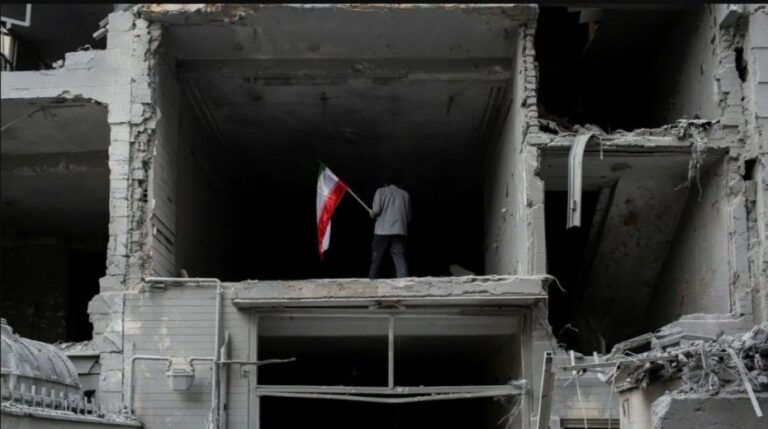
The U.S. and Israeli strikes on Iran have ignited fierce discussions regarding the legitimacy of these actions from multiple angles: international law, ethics, historical context, and realpolitik. Central to these debates are issues of preemptive self-defense and humanitarian intervention.
The assaults clearly breach international law and the UN Charter. The Charter prohibits military aggression except under two circumstances: self-defense or authorization by the UN Security Council. Neither condition is fulfilled here.
A major aspect of the conversation about the Iran conflict places ethical considerations in opposition to established international legal frameworks. Within discussions about humanitarian intervention and the Responsibility to Protect (R2P), the key inquiry is whether military force to safeguard civilians is justifiable without explicit UN consent. Humanitarian intervention refers to the use of armed force in another country to halt widespread atrocities against civilians.
This piece explores a hypothetical scenario that disregards the current legal restrictions on violence and national sovereignty. Instead, it evaluates the attack on Iran through the lens of humanitarian intervention and R2P concepts, which prioritize human rights over state sovereignty. This analysis imagines an idealized world where humanitarian intervention can proceed without UN consent, grounded in a universal moral framework.
To begin, defining humanitarian intervention and R2P is essential. Humanitarian intervention has surfaced in multiple instances: Tanzania’s 1978 military invasion of Uganda to oust dictator Idi Amin, Vietnam’s 1979 campaign against Pol Pot’s genocidal regime in Cambodia, and NATO’s 1999 assault on Yugoslavia (now Serbia) to defend the Kosovo Albanian minority.
Following the Kosovo intervention, a widespread perspective (especially in Western circles) emerged that, despite its illegality, the intervention was morally justified – illegal yet legitimate simultaneously. This led to calls for adjusting international law so that morality and legality would align, permitting similar interventions without UN authorization.
Prompted by Canada, an expert panel called the International Commission on Intervention and State Sovereignty (ICISS) was founded. Its 2001 report introduced the now-common term “Responsibility to Protect.” The goal was to move beyond the controversial term “humanitarian intervention” by establishing criteria under which interventions to protect civilians might occur without UN approval. Thus, the ICISS framework serves as a useful reference for the imagined world where such interventions are allowed without Security Council endorsement.
One key requirement is fulfilled: The Islamic regime perpetrates mass killings and widespread oppression
In reality, the Iraq invasion took place in 2003. Then, the U.S. and UK employed arguments similar to those now directed at Iran. The invasion toppled Saddam Hussein but also caused hundreds of thousands of civilian casualties and around 5,000 deaths among U.S. and British soldiers. Moreover, the turmoil in Iraq and Syria facilitated the emergence and expansion of the Islamic State, whose effects continue to be felt across Europe.
Many scholars and politicians who had supported radical changes to international law distanced themselves from the most ambitious ICISS proposals. At the 2005 UN World Summit, member states affirmed the responsibility to protect but insisted it must comply with the UN Charter, meaning military action requires UN consent.
Returning to the hypothetical ideal: Does the assault on Iran satisfy the R2P standards set by the ICISS report? One crucial condition is met: The Islamic regime carries out mass murder and systemic oppression. However, R2P also demands a reasonable likelihood that the intervention will halt persecution and suffering without exacerbating the situation. Interventions should therefore have clear aims, an unambiguous mandate, and adequate support.
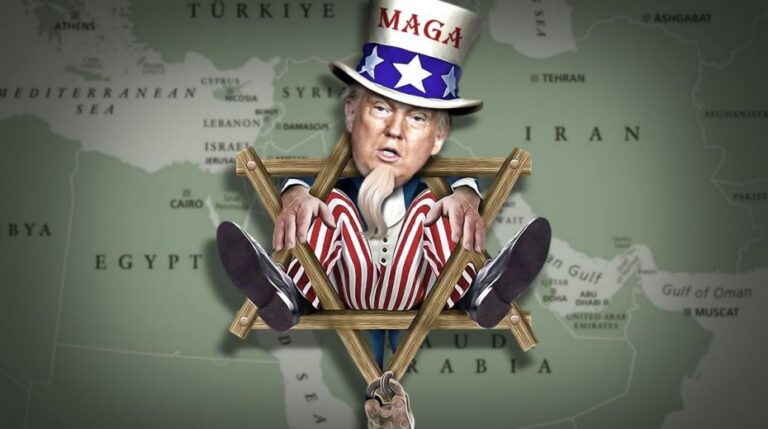
Yet, the U.S. objectives appear inconsistent depending on the spokesperson and timing, with Iranian democratization rarely a stated aim. Donald Trump has even described his preferred outcome as resembling that in Venezuela: the regime stays in place but with some new faces within the same framework.
Additionally, while the ICISS report stresses the necessity of carefully defined rules of engagement focused on protecting civilians in Iran, U.S. Secretary of Defense Pete Hegseth has openly rejected the idea of “stupid rules of engagement.”
The report also stipulates that intervention mandates should first be sought from the UN Security Council, and only after failure should action proceed without UN approval, ideally under regional organization backing. No such attempts have been made.
The conflict against Iran stands nearly opposite to the ICISS report’s requirements
As noted, interventions must have credible prospects of achieving their objectives. Professor Anna Jarstad has highlighted how challenging this is (DN Debatt 3/4). Nearly every independent analysis finds regime change unlikely without ground forces. Even then, outcomes remain uncertain. The U.S. has categorically ruled out deploying its own troops. Instead, Trump has urged unarmed Iranian civilians—students and women—to protest despite facing armed government security forces, or suggested Kurdish and other ethnic guerrilla factions take action.
The campaign against Iran, consequently, contradicts the conditions outlined by the ICISS report. Even assuming a dramatic overhaul of international law prioritizing individual rights over the UN Charter’s prohibitions, these U.S. and Israeli actions as presently executed are impermissible.
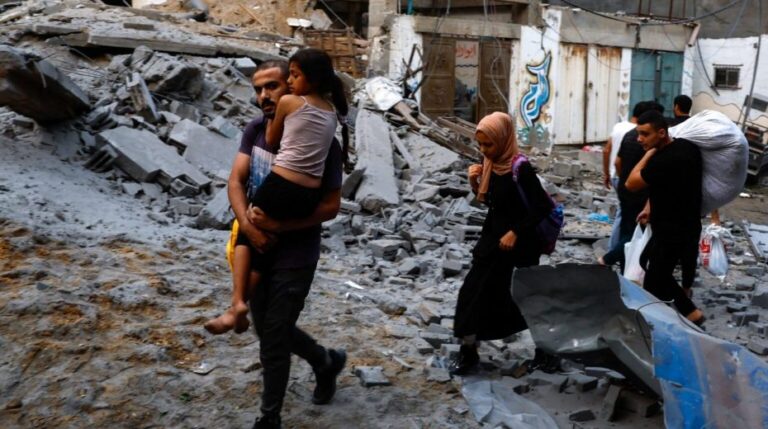
Moreover, this situation has implications beyond Iran. The military campaign by the U.S. and Israel further undermines arguments for reforming international law to better safeguard civilians. The potential for misuse and long-term regional disasters—characterized by widespread civilian losses and massive refugee displacements—is simply too significant.
Original article: www.dn.se
About the Author