
Black Rain Drone Destruction
This week in Tuapse, Russia, the rain appeared blackened.
Residents located downwind woke up to discover a layer of oil covering all surfaces.

Source: TVPWorld.com
This unsettling scene resulted from multiple Ukrainian drone attacks targeting a crucial Russian oil terminal and port in Tuapse.
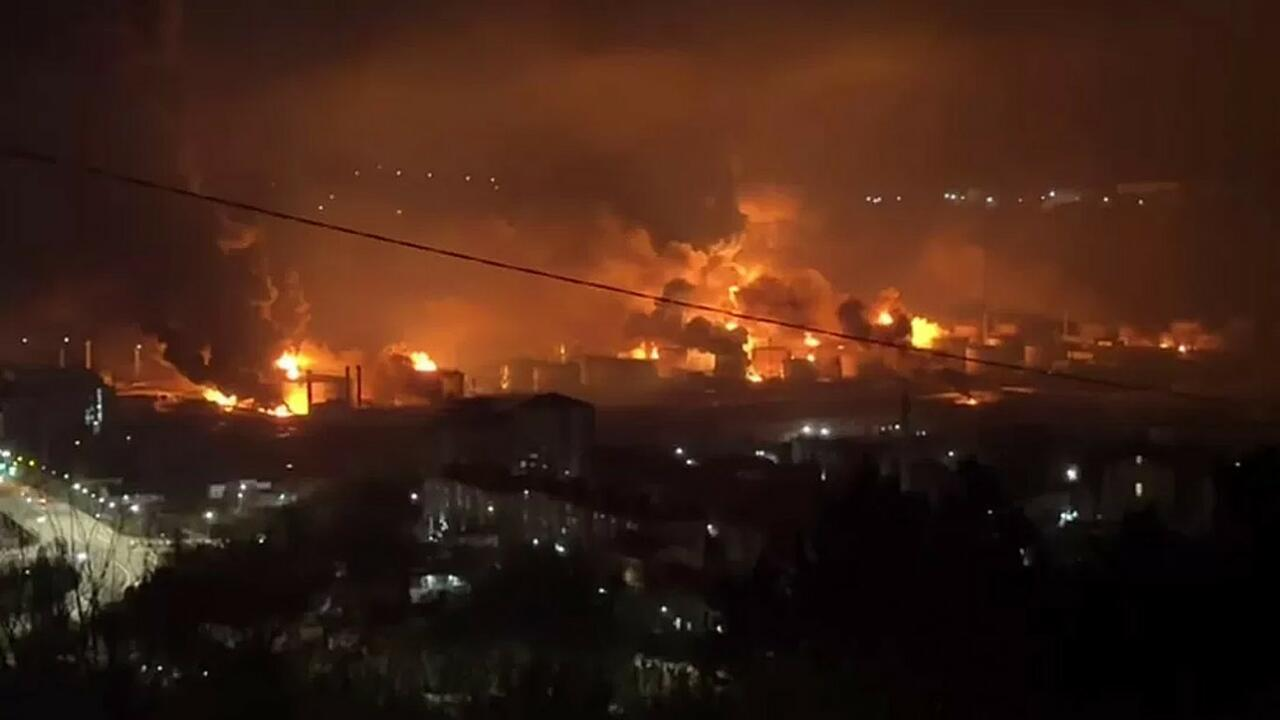
Aftermath of Ukrainian strikes on Russian oil infrastructure in Tuapse
Source: ZeroHedge
Over recent months, Ukraine has significantly increased its deployment of long-range drones.
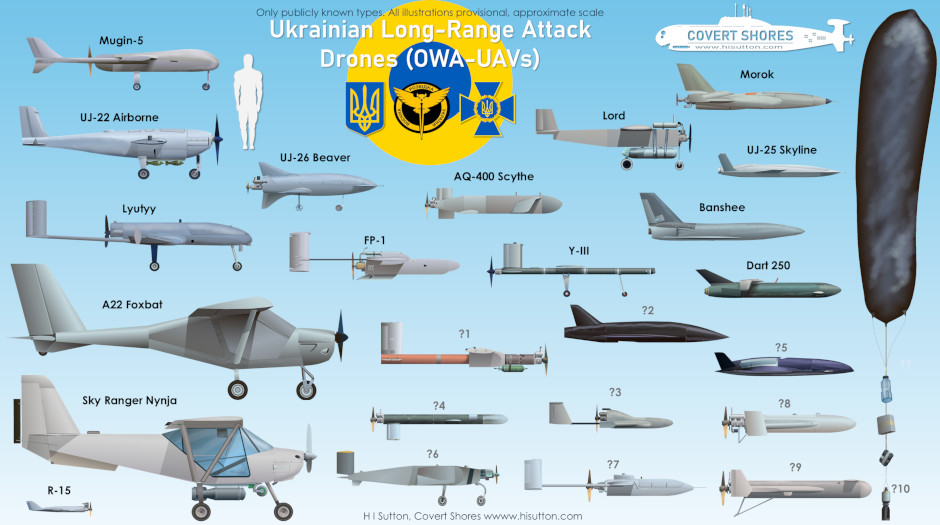
Source: Covert Shores
Some drones are modified light planes, while others take the form of stealthy delta-winged “kamikazee” devices, boasting operational ranges exceeding 1,000 miles.
Currently, Ukraine focuses on striking Russian energy assets aggressively, aiming to prevent Russia from profiting amid escalating oil prices. At this war stage, drones are their chief weapon; conventional forces like artillery and tanks are secondary considerations.
Last year, a drone attack hit a cooling tower at Ukraine’s former Zaporizhzhia nuclear facility.
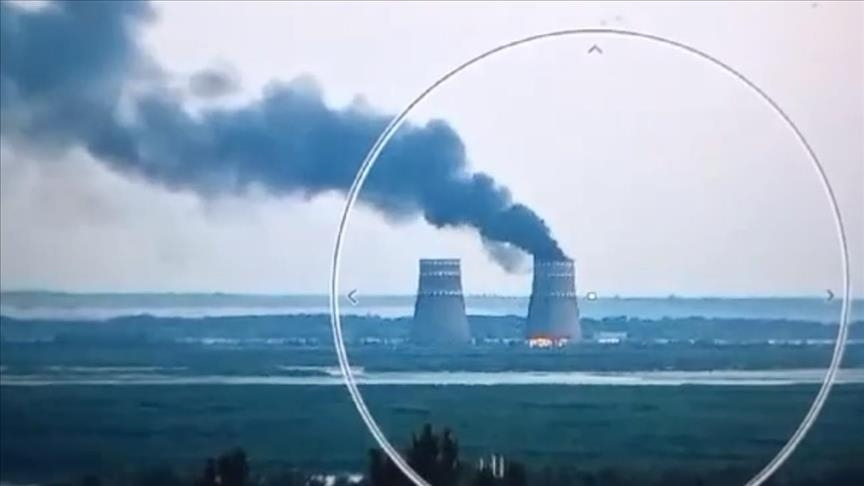
This nuclear plant and its vicinity have been under Russian control and operation since the conflict’s start. Therefore, it is improbable Russia targeted its own site, though blame is exchanged between both parties.
Fortunately, no radioactive contamination occurred, and the fire was swiftly extinguished. However, these incidents underscore the risks posed by advanced precision weapons.
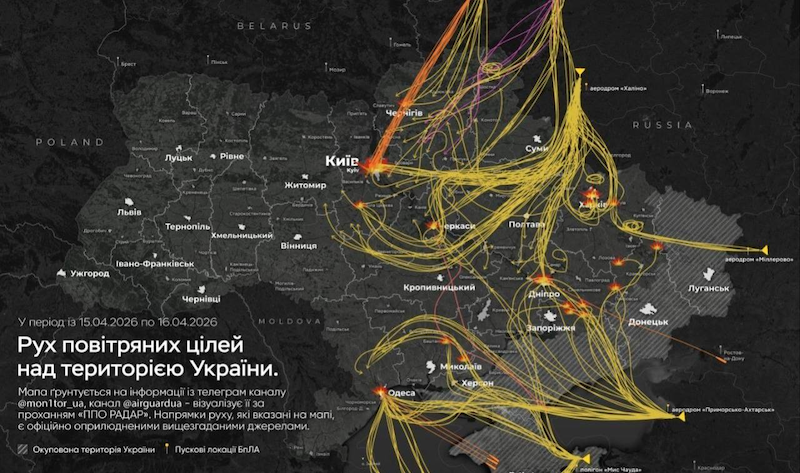
Russia, of course, is no stranger to drones, having pioneered extensive use of long-range kamikaze drones. Below is a map illustrating attacks during a single recent night: yellow lines mark drone routes, and orange lines show missile trajectories.
Iran, Too
Following Israel’s recent strike on a major oil installation, Tehran experienced black rain as oil residues settled throughout the city, accompanied by heavy smog.
Similarly, Iranian missile and drone assaults on oil infrastructure in the UAE, Saudi Arabia, Qatar, Bahrain, and Kuwait have resulted in comparable devastation.
These low-cost weapons have inflicted significant economic and environmental harm.
Notably, an Iranian missile salvo once halted 17% of Qatar’s liquefied natural gas (LNG) output at the Ras Laffan facility. Officials in Qatar estimate recovery will take 3 to 5 years, with damage and lost revenue ranging from $60 billion to $100 billion from just a handful of missiles.
If President Trump fails to secure a deal with Iran soon, and hostilities resume, he has vowed to destroy Iranian bridges and power plants. In retaliation, Iranian leaders have vowed to intensify attacks on regional oil and gas infrastructure.
President Trump often claims that Iran’s air force and navy are already defeated, which is largely accurate. Yet, this is not decisive since Iran’s main leverage lies in its missiles and drones.
We remain essentially where we were last month when I discussed Escalation Ladders.
Hopefully, any ceasefire can be prolonged; otherwise, tensions are likely to escalate again.
Drones for Everyone
Globally, militaries with strategic foresight are investing in long-range attack drones, arguably among the most game-changing weapons ever developed—in essence, perfected asymmetrical warfare.
In the United States, numerous firms compete to design the next generation of kamikaze drones. The trend is shifting away from costly systems like the MQ-9 Reaper toward disposable, single-use attack drones.
Throughout the Middle East, Europe, and Asia, preparations for future combat anticipate vast swarms of thousands of drones.
Even the strongest defense systems face challenges against such swarm attacks. Despite Russia’s robust air defense network—possibly the world’s most advanced—they still endure frequent daily strikes.
Meanwhile, in the Iran conflict, interceptor missiles costing up to $3 million each are used to address Iranian drones valued between $20,000 and $50,000, an imbalance that cannot be sustained.
Some suggest that cheaper countermeasures like lasers and smaller missiles will soon help neutralize drone swarms, which might be accurate.
However, many fail to grasp the scale at which these weapons will be produced. To put it simply:
An F-35 fighter jet costs around $120 million plus $42,000 per flight hour and munitions costs. With only the base price, you could manufacture approximately 6,000 drones priced at $20,000 each.
Warfare’s future hinges on this emerging technology, which is already spreading worldwide. The paradigm shift cannot be undone.
For the foreseeable future, air defenses won’t keep pace.
This reality means that everyone’s critical infrastructure is susceptible to attack, reminding us to cast blame sparingly.
Diplomacy has never been America’s forte, accustomed as it is to getting its way. However, this new era demands a renewed commitment to the timeless art of negotiation.
About the Author