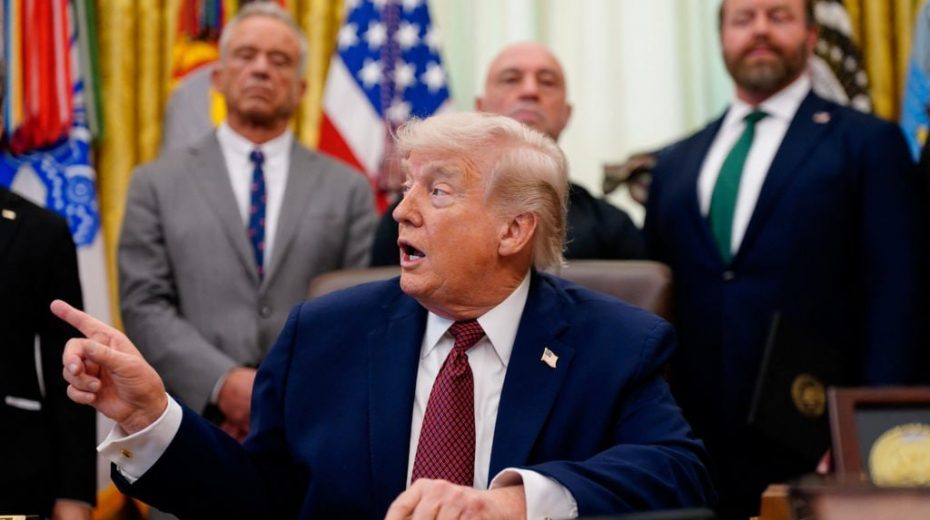
Trump assembled his national security team in Washington on Monday afternoon to figure out how to respond to Iran’s latest missive delivered via Pakistan — i.e., end the blockade and then we’ll talk about other issues. The Wall Street Journal reports that Trump opted for economic warfare against Iran as it carried less risk, instead of resuming bombing or trying to exit the conflict. That’s the good news.
Nevertheless, President Trump directed White House officials to ready themselves for a prolonged blockade against Iran.
Before delving into why this strategy is misguided and destined to fail, consider Secretary of the Treasury Scott Bessent’s remarks:
“The Treasury Department, through Economic Fury, has targeted Iran’s international shadow banking infrastructure, access to crypto, shadow fleet, weapons procurement networks, funding for terrorist proxies in the region, and independent Chinese “teapot” refineries that support Iran’s oil trade. These actions have disrupted tens of billions of dollars in revenue that would be used to fund terrorism.
Under President Trump’s’ maximum pressure campaign, Tehran’s inflation has doubled and its currency has rapidly depreciated.
Kharg Island, Iran’s primary oil export terminal, is soon nearing storage capacity, which will force the regime to reduce oil production, resulting in an additional approximately $170 million per day in lost revenue, and causing permanent damage to Iran’s oil infrastructure. Treasury will continue to exert maximum pressure and any person, vessel, or entity facilitating illicit flows to Tehran risks exposure to U.S. sanctions.”
Despite the US blockade, Iran keeps loading oil tankers that sail from the Persian Gulf. While the US attempts to block their departure, Iran continues to fill vessels, with no substantial volume clearly evading the blockade; the crude oil is primarily stored aboard tankers within the region. On April 20, at least two fully stocked Iranian tankers—the Hero II and Hedy—passed the blockade as part of a fleet transporting about 9 million barrels of oil to market. Most Iranian tankers carry out voyages with their automatic position beacons turned off.
Since the conflict began, over 52 “ghost fleet” tankers carrying Iranian oil have left the Persian Gulf, some broadcasting their position signals while others operate covertly. These ships head for Malaysia, where they perform ship-to-ship transfers to vessels destined for China.
The challenge the US faces with enforcing a blockade is evident: seizing an Iranian ship requires US Navy assets to escort it to a secure location—a resource-intensive task. The Navy lacks the capacity to manage such operations on a large scale. Iran only needs to deploy around 20 tankers at once; the US might intercept a few, but most would get through to their destinations.
Regarding Iran’s imports, Fars News Agency reports that Pakistan has established six land corridors to bypass the blockade, facilitating the transit of over 3,000 containers bound for Iran.
In a twist of irony, even though Iran effectively closed the Strait of Hormuz, American claims of blocking the Strait shift responsibility away from Iran as global economies endure severe contractions caused by the closure.
Rather than facing international backlash for depriving the world of Persian Gulf oil and LNG, Iran will secure critical support by allowing vessels destined for allied countries to pass through the Strait in volumes that overwhelm the US Navy’s ability to halt them.
If my colleague Alex at Reporterfy is accurate, the world economy is headed for challenges worse than the 2008 crisis. Eventually, the US will face intense pressure to end this largely symbolic blockade and reopen talks with Iran. Iran, meanwhile, will not plead for relief, possessing full support both economically and politically from Russia and China. Scott Bessent is mistaken, misleading Trump by claiming that his economic pressure strategy will force Iran, Russia, and China to submit to Washington’s demands. That outcome is improbable.
Original article: sonar21.com
About the Author