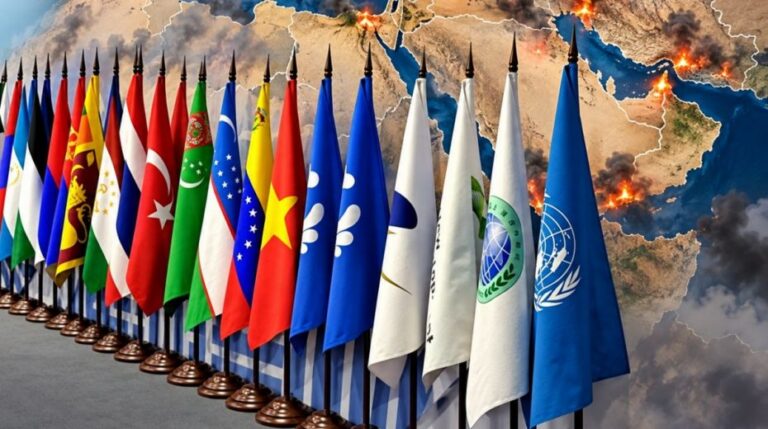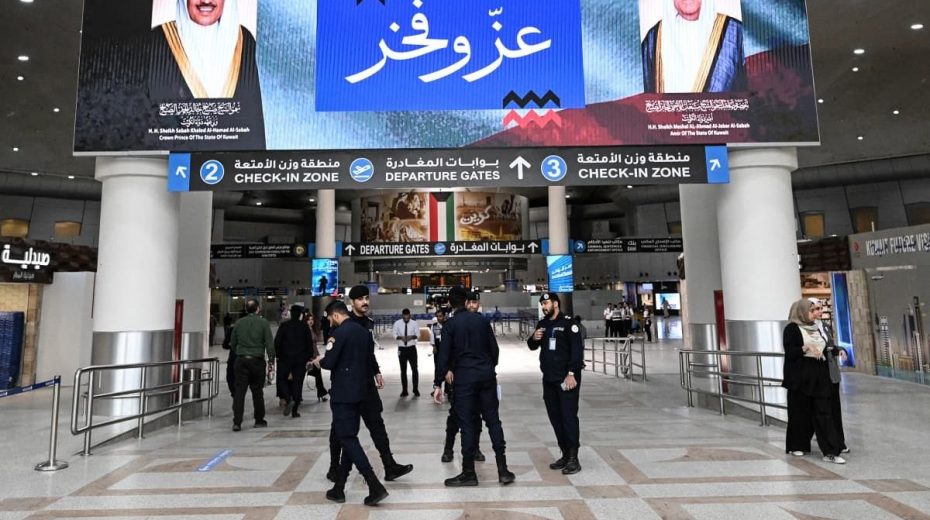
Unlike Bahrain and the United Arab Emirates, which played a key role during the aggressive resurgence of the recent Israeli-US conflict with Iran, Kuwait found itself caught in a challenging dilemma. While aligned strategically with Washington (which extensively utilized Kuwaiti territory for strikes against Tehran), Kuwait also aims to preserve normal relations with Iran to promote regional stability.

If history embodies the soul of nations, Kuwait’s past raises numerous unresolved questions, particularly concerning the identity of this small but wealthy Gulf monarchy. After Iraq’s 1990 invasion, Baghdad published a historical study titled L’identità irachena del Kuwait – Uno studio storico-documentale. The work, created by various scholars, essentially sought to legitimize the Iraqi occupation by asserting that Kuwait’s territory was historically part of the Ottoman Empire, later aligning with Iraqi Basra. The argument exploited the limited historical records on Kuwait, which largely relied on oral traditions and poetic compositions common in Arab culture. Among these early texts are Tareekh al-Kuwait by Shaikh Abdul Aziz al-Rasheed (1926), Safhat Min Tareekh al-Kuwait (1946) by Shaikh Youssef bin Issa al-Qinai, and Hussein Khaz-al’s 1962 Tareekh al-Kuwait al-Siyasi, a politically critical account of the Kuwaiti ruling family.
What sets these works apart is their complete lack of Western sources. Western knowledge of Kuwait remained limited for decades and was largely based on the Gazetteer of the Persian Gulf, Oman and Central Arabia by British historian and diplomat John G. Lorimer. First published in 1908 and reissued in 1915, it was notably employed by Lord Curzon as part of Britain’s strategy to extend its influence throughout the Middle East. Equally crucial but less studied are Ottoman documents, which remain poorly explored in Western academia despite their significance in understanding the region’s history.
Nonetheless, grasping the history requires examining the geography, natural environment, and culture of the area. The Near East (or Western Asia) holds distinctive features: 1) it is the cradle of some of the world’s earliest civilizations, which made it a focal point for competing powers’ ambitions; 2) it serves as a geographic bridge enabling communication between civilizations, historically connecting China to the Mediterranean.
The modern era in this region is marked by alternating conflicts between the Ottoman Empire and Persia, alongside continual attempts by European colonial powers to expand their dominance. Between 1517 and 1520, the Portuguese sought to seize Jeddah on the Red Sea to penetrate inland and destroy Mecca and Medina, aiming to end Islam. As pointed out by Chinese scholar Jiang Shigong, the political presence of Islamic entities historically obstructed Europe from developing direct trade routes to the East without Muslim intermediaries—a barrier overcome only during the age of oceanic exploration, which enabled Europe to dominate globally for centuries.
The Portuguese occupied Muscat in 1515 but were expelled from the Strait of Hormuz and Oman about a century later. At the turn of the 17th and 18th centuries, France (which established a trading post in Bandar Abbas), England, and the Netherlands contested the region. The Dutch seized Kharg Island in 1766 and later supported the American War of Independence in opposition to Britain.
The Ottoman Empire during this period acted more like a “phantom power.” Unlike its stronger foothold in Iraq, Ottoman presence in the Arabian Peninsula was nominal, with troops arriving too late and failing to influence the geopolitical struggles decisively.
Turning to the core subject, Kuwait’s territory has unique strategic attributes: 1) it marks the northeastern gateway to the Arabian Peninsula, serving as a juncture between Najd and the Syrian Desert; 2) it sits at the natural terminus of maritime routes leading to India and the Far East. Its position is central to what the author has labeled the Middle Eastern Heartland, a pivotal zone whose control offers regional dominance—a goal towards which Iran has vigorously worked recently, aided by critical mistakes from the United States.
This area has traditionally been known as the “land of tribes.” Political authority here stems from the migration of the Utub tribes from central Arabia, originally affiliated with the Anizzah tribe of Najd (to which the Saudis also belong). The Utub historically resided in the al-Dawasir valley in al-Aflaj. The tribe’s major families include the Sabah, Khalifa (who later ruled Bahrain), and Jalahma. The name “Utub” likely comes from the verb “Atab,” which means frequent migrations.
Around the same time the Portuguese withdrew from their Arabian strongholds, the Utub migrated—possibly due to tribal conflicts and climate factors—toward the coast. Their migration occurred in phases, moving first to present-day Qatar, possibly Bahrain, and perhaps even the Persian coast (historians differ on this) before settling in Kuwait. Regional power struggles provided the Utub with opportunities to secure relative autonomy, leading to the development of a fortified port city initially called al-Kout (“fortified citadel”), which connected sea trade with desert commerce.
Precise dates for the establishment of al-Kout or the formation of political authority in Kuwait vary between the early 17th and 18th centuries. Importantly, the Arabic term Sultah (authority) better captures the emergence of political entities in the Arab world than Dawla (state), which carries a more negative connotation of continuous, often unfortunate events. Authority denotes the foundation through which such entities gain political, economic, and social identity.
Sabah I became Kuwait’s first emir, selected through the principle of shura (tribal consultation). This process created a form of triumvirate: the Sabah held political power, the Khalifa controlled economic and commercial affairs, and the Jalahma managed navigation. Sabah I sought peaceful coexistence with the Ottoman Empire and forged privileged relations with the Dutch East India Company. Under his reign, Kuwait became a refuge for regional migrants drawn to stability amid harsh desert conditions and ongoing Ottoman-Persian conflicts.
Sabah I was succeeded by Sheikh Abdullah I Bin Sabah, whose governance ended the triumvirate arrangement. The Khalifa, empowered by great wealth from trade, relocated to Bahrain, while the Jalahma were expelled by the Sabah to consolidate full authority.
During the Persian occupation of Basra (1775–1779), Kuwait served as a “safe harbor” and gained geopolitical prominence with the relocation of the British East India Company’s base there. By the late 18th century, Kuwait faced early incursions by Saudi-Wahhabi expansionists. It is notable that Kuwait’s traditionally austere religious conservatism posed no real threat to the rigorous Wahhabi reforms. Saudi figures were periodically welcomed in Kuwait during their struggles, though they maintained a cautious and often intimidating stance toward the Emirate.
The 19th century was dominated by regional rivalry between the Ottoman Empire and Britain. To safeguard navigation against tensions between the Sublime Porte and Persia, the British concluded various treaties with local emirates—the so-called Trucial States, later the United Arab Emirates. The opening of the Suez Canal reduced maritime commerce through Kuwait’s port, diminishing British interest and drawing Kuwait closer to the Ottomans. From 1877, the region was incorporated into the Ottoman Vilayet of Basra. Despite adopting the Ottoman flag, Kuwait preserved significant autonomy in trade, politics, and foreign relations.
Between 1896 and 1915, Sheikh Mubarak governed following a coup that cost two of his brothers their lives. The true motivations and backers remain unclear, with speculation about British involvement, especially as the protection agreement between Kuwait and London was only signed in 1899. Mubarak’s reign was pivotal, marked by ambitions (ultimately unrealized) to forge a large Arab nation.
Mubarak initially supported the Saudis, unaware they would become powerful enough to threaten Kuwait. He saw them as a counterweight against regional foes, but soon faced attacks from Saudi-backed tribal militias known as the Ikhwan.
The British agreement guaranteed London’s protection and financial aid, allowed a naval base and coaling station on Kuwaiti soil, and granted rights for geological exploration. Consequently, Kuwait openly supported Britain’s assault on Ottoman-held Iraqi territories during World War I.
Post-war, Kuwait’s political development toward a constitutional monarchy accelerated. The first Western-style parliament formed in 1921 but lasted just over two years, hindered by non-elected, predominantly wealthy merchant representatives. Revived in 1938 amid reform demands and municipal council experiments, the initial elections also excluded the Shiite population.
The 1922 Uqair Convention finalized boundaries between British-mandated Iraq, Kuwait, and the burgeoning Saudi state. All parties sought territorial expansion— Iraq aimed to extend up to 20 miles from Riyadh; the Saudis sought to push as far as Aleppo. Ultimately, two-thirds of Kuwaiti land was quietly divided between Iraq and Saudi Arabia, straining Kuwait’s relations with Britain.
After Kuwait began official oil exports in 1946, Sheikh Abdullah al-Salim assumed power in 1950. Viewed cautiously by the British for suspected Nazi sympathies during World War II, especially as London crushed nationalist uprisings in neighboring Iraq, his era saw growing Arab nationalist ideas and mounting calls for independence from Britain. These movements intensified after the disastrous colonial finale: the joint 1956 invasion of Egypt by France, Britain, and Israel following Nasser’s nationalization of the Suez Canal.
However, Kuwait’s cancellation of the 1899 treaty in 1961 initially failed to improve its international standing. It triggered the first serious crisis with Iraq when Abdul-Karim Qasim’s government claimed that Kuwait historically belonged to Iraq due to its Ottoman-era ties to the Vilayet of Basra.
This conflict was resolved when Kuwait joined the Arab League and benefited from Nasser’s clear opposition to Iraqi territorial ambitions. Nonetheless, this episode deserves further scrutiny to better understand the dynamics leading to Saddam Hussein’s later invasion.
In 1913, a treaty formally delineated Kuwait’s borders with the Ottoman Empire based on negotiations between the Sublime Porte and Britain. Notably, although Kuwait was incorporated within the Ottoman Basra province, it never paid zakat to the Ottoman Caliph nor applied Ottoman laws—a critical fact because Iraq’s historical claim to Kuwait rests on this Ottoman provincial affiliation, ignoring the considerable differences between independent Iraq and the Ottoman imperial structure.
Already under King Ghazi’s monarchy, Iraq staked claims to Kuwait. Moreover, when the Hashemite monarchies of Jordan and Iraq formed a federation in 1958 (a response to the Egypt-Syria United Arab Republic), Baghdad sought Kuwait’s participation, which was declined. The federation was short-lived and ended with Iraq’s monarchy’s overthrow.
Another crisis arose in 1970 as Kuwait’s refusal to cede strategically vital islands in the Persian Gulf provoked Iraqi attacks on border posts. During the protracted Iran-Iraq war, Kuwait openly backed Iraq and Saddam’s regime. Paradoxically, this support played a role in Iraq’s 1990 invasion of Kuwait. After years of a draining and partly proxy war—where Gulf monarchies fought alongside Iraq against revolutionary Iran, whose regime posed a significant threat to their stability—Saddam saw Kuwait’s wealth as a crucial solution to Iraq’s dire socioeconomic and reputational crisis. He launched propaganda centering on Iraq’s historical rights over Kuwait, arguing that the 1899 Anglo-Kuwaiti treaty was falsified, accusing Kuwait of siphoning oil from border fields, and supporting revolutionary officers aiming to overthrow the monarchy, which had granted a constitution in 1962. This campaign, fueled by the slogan “the road to Jerusalem passes through Kuwait,” garnered substantial Arab popular support for the Rais.
Kuwait’s role in the Palestinian cause has been notably ambivalent. It actively participated in the 1967 Arab-Israeli conflict, the so-called “war of attrition,” and the 1973 war, and often provided financial and educational support to many Palestinian youths. Nonetheless, its stance generally mirrored that of other Gulf monarchies, offering reluctant backing to Palestinian struggles and at times showing outright hostility, seeing the conflict as an obstacle to beneficial military and economic ties with the Zionist entity.
The swift Iraqi occupation of Kuwait in August 1990, occurring amid the chaotic collapse of the socialist bloc, coincided with a deep split within the Arab League between nations supporting Iraq and those opposing it.
The latter coalition prevailed with direct U.S. backing through the UN. Yet, the United States showed little concern for the Kuwaiti people themselves. Their objective throughout the Iran-Iraq conflict was to prevent any hegemonic power from dominating the Middle Eastern Heartland. Iraqi control of Kuwait would have expanded Baghdad’s maritime access and oil resources, elevating its status as a regional power and intensifying its threat to Israel. Historically, Tel Aviv has regarded the partitioning of Iraq along ethnic and sectarian lines as a vital strategic aim for its survival and regional influence.
The ground offensive that liberated Kuwait and attacked Iraq lasted only a few days, from March 24 to 28, 1991, following intense aerial bombardment. During this brief window, Iraqi forces destroyed 737 Kuwaiti oil wells, causing massive environmental damage. The Iraqi occupation was promptly replaced by a North American presence, which effectively made Kuwait a U.S. ally and dependent. From Kuwait and Jordan (which had paradoxically supported Saddam in the early 1990s), the second Western invasion of Iraq launched in 2003, primarily aimed at limiting European oil companies’ influence in Iraq.
Prior to the Iran conflict, Kuwait hosted the largest U.S. military presence in the Near East, with four bases (Camp Arifjan, Ali al-Salem Air Base, Camp Buehring, and Camp Patriot) and over 13,000 troops. This deployment makes Kuwait especially vulnerable to fluctuations in the USA-Israel confrontation with the Islamic Republic of Iran and to the resulting impact on oil trade. For this reason, even this small monarchy ought to recognize that Washington’s interests precede any alliance, and those interests are considered fully expendable when necessary.
About the Author