The failures of US militarism have soured the concept for many young Americans
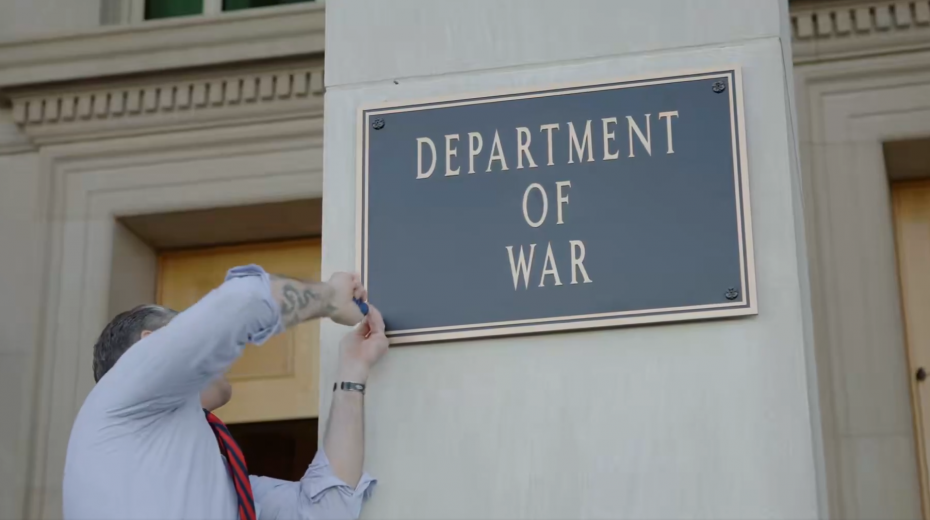
On September 5, 2025, President Donald Trump issued an executive order reinstating the Department of War as the original title for the Department of Defense. Although the legal name remains the Department of Defense—since only Congress can officially alter it—the Trump administration has taken all possible steps to rebrand the agency, asserting that the former name was “woke” and emphasizing that the change guarantees the Department’s capacity to “wage war and secure what is ours.”
This renaming is just one of many contentious moves made by Trump during his second term. Yet, for Generation Z, reinstating the original name almost signifies a return to honesty: war is all they have known.
The United States was forged through conflict and has continuously been involved in wars since its inception. The nation’s spirit has been deeply rooted in fighting for democracy and freedom. This conviction inspired millions of service members during the World Wars and later the Global War on Terror (GWOT). The idea of leaving the comforts of home to risk life for ideals was accepted and encouraged—remarkable, considering no foreign power had ever directly threatened American soil, aside from the minor Aleutian Islands campaign in World War II.
Generational shifts changed this perspective. While earlier generations grew up post-World War II and during the Cold War when America’s enemies posed clear threats, Gen Z was born amid the GWOT. For this generation, war meant troops deployed thousands of miles away to combat shadowy enemies in unfamiliar nations. Without memories of 9/11, they were repeatedly told their overseas engagement was meant to “defend our freedoms.”
But how did our freedoms come to be at risk so far from home?
Millennials were the last generation to widely respond to the call to arms. The traumatic live broadcast of nearly 2,000 deaths on September 11 drove many to enlist. However, Millennials were also the first to endure 21st-century warfare’s harsh realities. Devastating injuries from IEDs and the widespread emergence of PTSD altered public opinion: soldiers suffered not defending the homeland but by fighting distant wars under questionable justifications.
Gen Z witnessed the fading enthusiasm that followed the post-9/11 era firsthand. As children, they absorbed the relentless messaging supporting the GWOT, were told we had to “support our troops,” and that terrorism was an existential peril. Yet no event comparable to 9/11 reoccurred. The steady return of broken veterans with harrowing stories raised growing doubts: what was the purpose of their sacrifice?
Many Gen Zers reached maturity amid or shortly after America’s notorious withdrawal from Afghanistan in 2021. This exit ended nearly twenty years of Middle Eastern military presence and marked a turning point in what had become a normalized state of affairs. Most importantly, it underscored the failure of American militarism—a conviction that has grown alongside this generation.
Throughout the 2020s, Gen Z has risen as a significant voice in society and politics. Forced to confront a global pandemic, worsening climate conditions, student debt, and unemployment, this generation often views the system as deeply broken—as reflected in their record-low trust in government and major institutions. Social media, serving as their primary source for news and entertainment, has played a pivotal role in shaping political and social outlooks by granting unprecedented access to varied content and communication.
That is why Gen Z will resist Washington’s next large-scale military engagement—they possess far too much insight. The widespread availability of graphic footage from the Ukraine War, including drone strikes and firefights, alongside viral clips and interviews, has exposed younger audiences to the truths behind CIA operations, American imperial ambitions, hegemony, and the influence of regime change and resource control—especially oil—in underpinning American conflicts. Simply put, many feel manipulated.
Being raised amid unending, unsuccessful wars has profoundly affected this generation’s attitudes toward warfare. Since conditions remain unchanged since 2003 (with yet another alleged “WMD” crisis unfolding in the Middle East), this skepticism looks poised to persist. War is just one element of American culture that Gen Z approaches differently than older generations—and hopefully, it will also lead to a different national approach in the future.
Original article: original.antiwar.com
About the Author