Gold and Silver vs. The Fed
Yesterday, the Federal Reserve raised interest rates by 0.25%.
During the press briefing, Warsh delivered a hawkish outlook (meaning the Fed is likely to hike more).
Gold and silver prices dropped immediately following the Fed’s rate hike. Below is a chart shared by our friend Sean Ring yesterday in the Paradigm app. Notice the red candle at the far right? That marks the moment the Fed confirmed the rate increase.
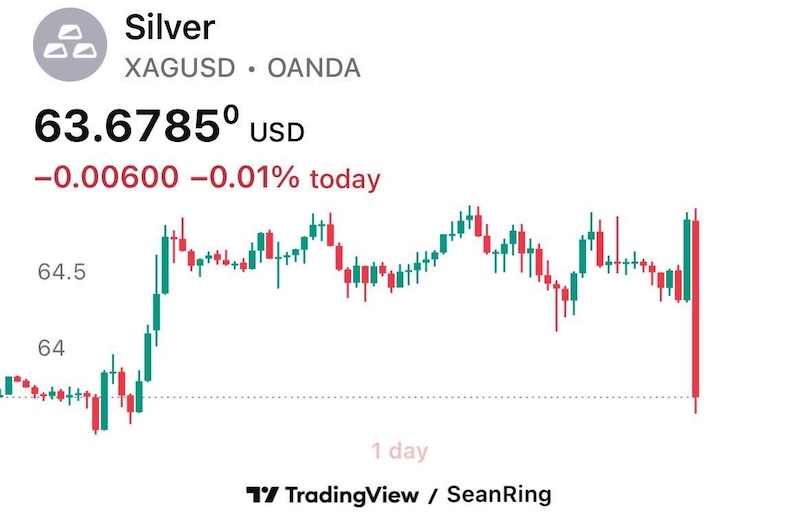
The move was modest. Prices went from roughly 1.5% gains to breakeven. Yet, the timing was clear: as soon as the fed funds rate increased, precious metals sold off.
Does that mean “higher interest rates = lower precious metals prices” in all cases? The argument goes that rising yields on U.S. Treasuries diminish gold’s appeal.
However, this doesn’t hold up under closer scrutiny, which we’ll dive into.
In fact, today gold surged 2.4% to $4,387 per ounce, while silver jumped 4.29% to $66.56. That’s quite an impressive gain.
Back to the 1970s
The 1970s is a fascinating era to explore—marked by severe stagflation.
Those who prospered invested in tangible assets like gold, silver, real estate, and commodity producers.
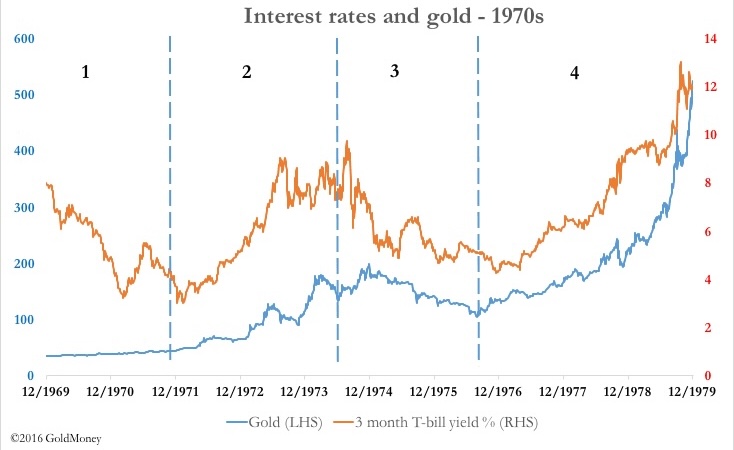
Let’s examine how gold and interest rates moved during that decade. The chart below depicts the yield on a 3-month Treasury bill (orange line) alongside gold prices (blue line).
Source: GoldMoney
Throughout much of the ‘70s, both gold and yields (a proxy for interest rates) moved upward simultaneously.
Take 1974 as an example: a 3-month T-bill yield hovered near 7.4%. On the surface, that looks attractive, yet inflation hit a peak of 12% that year.
So even with short-term Treasuries paying 7%, investors lost about 5% in purchasing power within a single year.
This means the inflation-adjusted (real) yield on these short-term notes was roughly -5% in 1974.
Hence, although rates climbed, they failed to keep pace with inflation.
Look again at the chart: between late 1974 and 1976, both gold and interest rates declined together. This illustrates that lower interest rates don’t always drive precious metals prices higher. (side note – I wrote a dedicated piece about the mini gold bear market from ‘74-76 here).
Then, from August 1976 through January 1980, gold’s price multiplied over sevenfold! Simultaneously, interest rates soared to nearly 20% by early 1980.
Clearly, precious metals can flourish amid rising interest rates. Typically, rate hikes reflect underlying inflation pressures, which encourage demand for gold.
The 2000s Gold Bull
Next, consider the 2000 to 2011 timeframe—a significant bull run for gold and silver. Gold climbed from about $250 an ounce to $1,900, while silver soared from $5 to nearly $50.
Here’s a chart I made, similar to the previous one, showing gold prices in blue (left axis) and 3-month Treasury bill yields in orange (right axis).
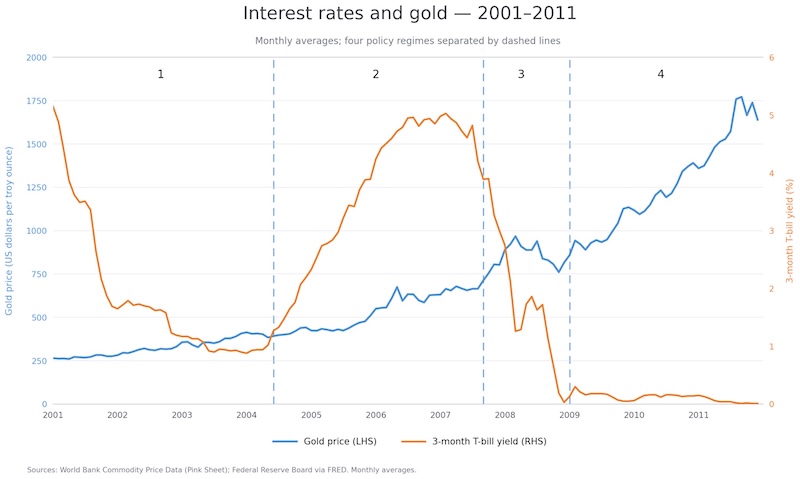
Notice gold’s steady climb throughout most of this period. Though yields fluctuated up and down, gold continued its ascent, with only minor pullbacks, such as during the global financial crisis.
This underscores that the relationship isn’t as straightforward as “lower rates = higher gold” and “higher rates = lower gold.” Sometimes, the reverse holds true.
When the Fed and global central banks hike rates, it’s typically in response to inflationary pressures—the very reason investors flock to precious metals.
So, even if rate increases persist over the coming years, they may not pose a significant threat to gold and silver.
Personally, I doubt rates can climb much further. Perhaps another 1% hike is possible, but as discussed before, this would create serious challenges for our debt situation.
Higher rates mean increased yields on government bonds, pushing interest payments sharply upward.
The more rates rise, the worse deficits and public debt become.
Regardless of the Fed’s actions going forward, inflation will remain. They can’t afford to push rates to the 10%+ range needed to quell inflation—it would devastate our debt-laden economy and exacerbate deficit growth.
As regular readers know, I expect the Fed and Treasury to grow increasingly cornered. When interest expenses on our debt near $2 trillion, they’ll be forced to intervene. That would consume 38% of total tax revenues just to cover interest.
I still anticipate they’ll resort to yield curve control, aggressively purchasing government bonds to suppress yields. For those new to this strategy, see my recent article, Gold Smells a Rat.
In summary: I remain invested in gold, silver, and mining stocks, holding about 17% of my portfolio in these assets. I believe they will be vital for weathering the monetary turmoil ahead.
About the Author