Finland and Norway suggest a need for a fresh strategy in Europe’s dealings with Russia
The Trump administration’s recent push to end the conflict is causing unease across Europe.
“We have to pressure the aggressor to stop the war, not the victim to surrender,” said European Union High Representative Kaja Kallas. “Squeezing Ukraine is not the right approach, and that’s why Europe is standing by Ukraine.” Ukrainian President Volodymyr Zelensky, meanwhile, insists Russia has no genuine desire for peace, pointing in particular to Russian strikes on Ukrainian civilians.
This moral framework casts the war as a clear-cut battle between good and evil. From this perspective, Europeans must rally behind Ukraine to halt Russian President Vladimir Putin.
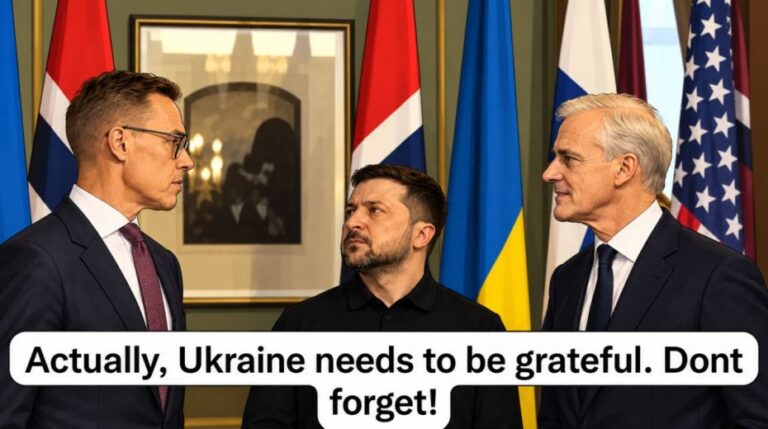
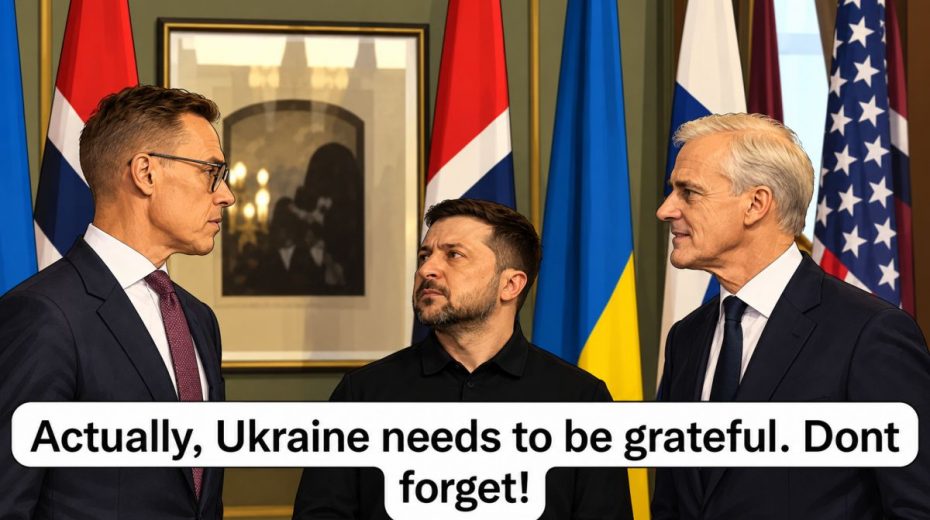
However, not all European leaders adopt this stance. The press conference in Oslo on Oct. 20 with Zelenskyy, Norwegian Prime Minister Jonas Gahr Støre, and Finnish President Alexander Stubb highlighted a more hopeful tone about ending the conflict. Stubb described the Oslo gathering as the fruit of “substantive progress” made “under the radar.” Støre stressed that “Europe has to be at the table” to achieve a “lasting peace.” This indicates disunity in Europe over negotiating an end to the war.
Following that, the two leaders had an informal meeting with Putin on Tuesday aimed at reducing tensions, according to reports. “We share a border with Russia,” Stubb said afterwards. “The war’s outcome will directly affect our security and that of Europe. Ending it requires direct talks.”
The Oslo summit wasn’t a sudden development; Finnish and Norwegian officials have been laying groundwork for months. At last week’s Warsaw Security Forum, Norwegian Foreign Minister Espen Barth Eide avoided the usual binary framing of Ukraine’s success or surrender. He emphasized that since Europe is financially bearing the burden of this war, it should also spearhead diplomatic efforts. Eide suggested a peace deal could preserve a democratic, independent Ukraine integrated into the EU while retaining about 80% of its territory. Addressing more hawkish European figures, he struck a note of optimism over pessimism. In an interview last Saturday, Eide argued that Europe must put forward concrete proposals for post-war security, stating, “in the long run, we need to return to a normal relationship with Russia after the war (…) some kind of order must be restored.”
During his recent visit to the Norwegian Institute of International Affairs, Stubb expanded on this by advocating a “value-based realism.” He argued that while European states should remain true to their principles, sticking rigidly to moral absolutism won’t resolve the conflict. He urged calm, warning that a “war mentality” would make peace unthinkable.
Eide and Stubb diverge from voices insisting that “victory” over Russia is necessary to secure Europe’s future. Rejecting ex-NATO Secretary General Stoltenberg’s claim that “weapons are the way to peace,” they emphasize the military reality that neither side can achieve a decisive win.
This recognition acknowledges a difficult truth. Offensive operations from both Russia and Ukraine have repeatedly failed to break the stalemate. Costs keep escalating on both sides, while territorial gains remain minimal. Europe, Ukraine, and Russia are trapped in a war neither can decisively win under current conditions.
Persisting along this path spells trouble for everyone involved. Putin confronts an overheated economy and growing social exhaustion and anxiety. Even with ongoing Russian air strikes damaging Ukrainian infrastructure, ground offensives risk major losses. Ukraine’s challenges are even greater, including persistent troop shortages driving increased forced mobilizations and deepened social strains. Surrounded at sea and bombarded from the air, it faces shortages of funds and weaponry, relying heavily on Western aid.
The coalition supporting Ukraine in Europe also struggles. Many member states confront a sovereign debt crisis as war expenses rise. The EU has so far failed to convince Belgium to unlock Russia’s frozen assets for funding. Meanwhile, Europe continues the uncomfortable reality of spending more on Russian energy imports than on arms deliveries to Ukraine.
Tuesday’s Oslo gathering offers a potential exit from this deadlock. As Stubb said at that day’s press conference: “Peace demands patience. Unfortunately, war doesn’t wait. Lives are lost every day. Our responsibility is to do what we can to stop it.” Norway and Finland convey the urgency of ending this pointless conflict. Reflecting on the recent dispute between Trump and Zelensky, Støre cautioned against dwelling on past tensions: “What matters now is what lies ahead of us.”
Meanwhile, Kaja Kallas looked back with frustration. She accused the Trump administration of attempting to “push Ukraine into surrender” on “Putin’s terms.” Danish Prime Minister Mette Frederiksen warned that Ukraine serves as Europe’s shield: “If Ukraine falls, Russia will advance into other parts of Europe.”
Concerns are understandable that if Ukraine becomes neutral with reduced armed capabilities, Russia might dominate European security arrangements. No one wishes Moscow to set terms through coercion. Yet Europe’s refusal to accept any “dirty deal” risks helplessly witnessing Ukraine’s devastation over coming months. Such an outcome would hardly bolster Europe’s security or reputation.
Finland and Norway present the most pragmatic European reaction to U.S. diplomacy since Trump’s return. They advocate a language of patient negotiation over maximalist rhetoric. This approach aligns with their prior experience in mediating and fostering ties with Russia. It also acknowledges that nearly all prolonged wars that don’t end unequivocally on the battlefield conclude through negotiations between aggressor and defender. Securing such an agreement absolutely requires America’s involvement.
The dominant discourse struggles to embrace these facts, remaining mired in moral grandstanding or alarmism. Serious debate on possible compromises remains scarce. The 28-point plan crafted by U.S.-Russian diplomacy in 2025 should not be mistaken for Ukrainian surrender or a path to turning Ukraine into Belarus. Ukraine would join the EU, receive rebuilding aid, and maintain armed forces comparable to Finland’s. It is time to refocus on the fundamental terms required for a deal.
Russia has reacted favorably to the proposals from Oslo. Ukraine, Russia, and the U.S. have agreed to a trilateral summit in November, according to Zelensky. The crucial issue now is whether other European nations will endorse the Oslo initiative and determine who will represent Europe at the talks. Dmitri Peskov, Putin’s press secretary, has tentatively welcomed the prospect of Alexander Stubb acting as Europe’s representative in the negotiations.
The tempered rhetoric from Finland and Norway marks a vital first move toward a common European consensus that continuing the war as it stands is futile. As Eide remarked at the U.N. last month, “diplomacy can work – if we allow it to.”
The question for Europe is whether it will assist or obstruct the U.S. effort to establish a diplomatic resolution.
Original article: responsiblestatecraft.org
About the Author