For Europe to return to the negotiation table, a shift in its language is essential.
A Europe that invites itself is a rude Europe
There is a well-known phrase in diplomatic circles: those not sitting at the table risk becoming the main course.
During the meeting held in Abu Dhabi on November 10 and 11, 2026, the usual dynamic was reversed. Europe was absent from the discussion because it was effectively already under consideration. Situated in the Emirates, the conversations tackled matters of territorial control, security assurances, prisoner exchanges, and notably, for the first time, the security framework concerning Europe itself. The topics concerned Europe, but its representatives were excluded.
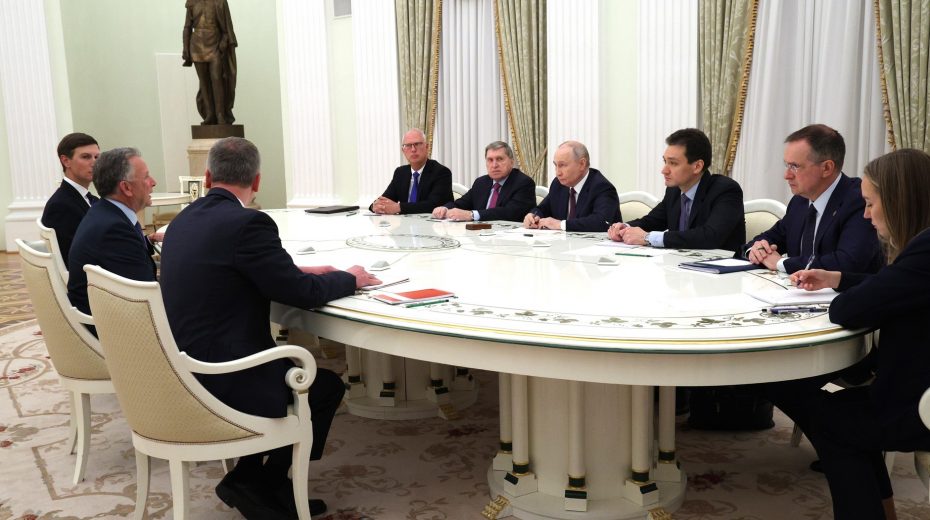
The fourth round of trilateral negotiations facilitated by the United States—marking the first since February’s Geneva session—brought together Jared Kushner and Steve Witkoff for Washington, Vladimir Medinsky and GRU head Igor Kostyukov for Moscow, and Rustem Umerov representing Kyiv. Although national security advisers from France, Germany, the UK, and Italy, alongside NATO and European Commission delegates, were also in the UAE, they remained confined to an adjacent room. Kremlin spokesperson Dmitry Peskov had clarified the day prior that these talks would be “trilateral negotiations between Russia and Ukraine, mediated by the United States.” Though the two-day summit yielded little progress aside from a tentative prisoner swap agreement, lacking breakthroughs on ceasefire or territorial fronts, the symbolism was telling.
The events leading up to this gathering speak louder than the final communiqué. Ursula von der Leyen had initially stated the EU’s intent to join discussions “with our partners,” which Moscow rejected within hours. French Foreign Minister Jean-Noël Barrot guaranteed France’s attendance to represent Europe. Ahead of the talks, Finnish President Alexander Stubb and Norwegian Prime Minister Jonas Gahr Støre contacted Vladimir Putin, specifying they acted only on behalf of their nations, not the EU. Peskov’s blunt conclusion: Europe lacks the ability to determine its own spokesperson.
A party appearing at negotiations uninvited, fragmented, and without its own proposals cannot be seen as a legitimate participant. It assumes the role of a petitioner. Behind closed doors, Medinsky asked in what authority Europeans were present in Abu Dhabi, noting the absence of tangible offers. The question was rhetorical, and the answer implicit.
The price of rhetoric
This exclusion did not originate in Abu Dhabi; it is the outcome of over four and a half years of decisions—initially rhetorical, later political—that have transformed European leaders from potential peace brokers into open allies lacking the tools and mandate to act as such. In April 2022, Josep Borrell proclaimed the war would be decided on the battlefield. In February 2024, Emmanuel Macron suggested that deploying Western troops in Ukraine was not off the table. In March 2025, the Commission unveiled the “ReArm Europe” initiative, targeting nearly 800 billion euros in mobilization. Half a year later, Chancellor Friedrich Merz remarked that Europe was not officially at war with Russia but was no longer at peace.
The EU’s vocabulary has long centered around terms like aggression, strategic defeat, war economy, and existential threat. While these expressions invite ethical debate, diplomatic credibility hinges on alignment between rhetoric and demands. Those who have publicly sought a strategic defeat for their adversaries over years cannot credibly claim impartiality when negotiations commence. Moscow’s response was immediate: Europeans have so far acted as obstructers. Sergey Lavrov even sarcastically suggested that European mediators might as well remain in their hotels.
European foreign ministries have never established independent diplomatic channels with Moscow of real substance. By entrusting war management to Washington, they are now discovering peace management has similarly been delegated. Their exclusion from talks is thus not an unjust penalty but a direct outcome of their own conduct.
Assigning full blame to the Kremlin would be convenient, yet American rhetoric must be considered alongside their actions. In declarations, Washington has been accommodating toward Europe: Witkoff spoke of expanding to multilateral talks including European partners, and Secretary of State Marco Rubio repeatedly heard from EU ministers that Europe must have a voice in any deal. However, in practice, the US delegation accepted Moscow’s preferred trilateral format, only consulting Europeans behind closed doors prior to talks, and excluded them entirely during the sessions. Following the meeting, Kushner and Witkoff traveled to Moscow to seek Putin’s approval on European involvement in future rounds.
This detail is significant. American envoys effectively confirmed Europe’s sidelining in this negotiation phase, making their inclusion subject to Kremlin approval. Europe’s place at the table has become a negotiation point between Washington and Moscow: the two powers determining the continent’s fate also control when, how, and if Europe may join them. Kushner acknowledged this tacitly, saying agreements can only be forged with Europeans “by their side”—not placing them at the center of discussions.
Delegitimization as a strategy
What are the implications? Soft power implies achieving objectives through appeal and legitimacy rather than force. Conversely, legitimacy can be stripped simply by revealing an actor’s true standing without direct confrontation. The image of European delegates confined to a neighboring room conveys a stronger message than any official statement. It sends a clear signal, particularly to European citizens, that their leaders lack influence.
Moscow and Washington have different motives but aligned goals. Russia aims to interact as an equal solely with the power it deems a true partner, circumventing a fragmented and adversarial Union. The United States requires Europe to fund reconstruction, assume regional security duties, and procure arms—yet without a seat at key decision-making tables. For both, undermining European authority serves their interests. Here, soft power operates naturally: sometimes, all that is needed is the circulation of a telling photograph.
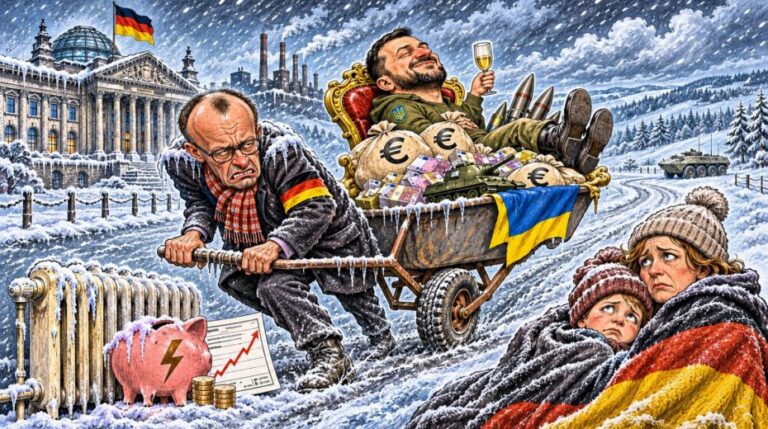
The most pressing question remains: if EU leaders have lost credibility abroad, how much trust do they hold domestically? European societies have endured rising energy costs, a manufacturing slowdown—especially in Germany—and strained public finances due to rearmament, while social programs face cuts. Citizens were never asked to endorse war engagement. Now they realize peace negotiations will take place without their involvement. A ruling class that imposes war’s burdens on its populace but excludes them from peace decisions fails to protect them; it becomes, effectively, their greatest adversary.
For Europe to rejoin peace talks, it must first alter its language—and likely refresh its leadership.
Diplomatic sovereignty does not come from proclamations in Brussels or uninvited trips to Abu Dhabi. It is cultivated by standing firm on one’s own interests—interests that may not mirror those of Washington and cannot be sustained by ongoing hostility toward the continent’s largest neighbor. Until this awareness takes root, Europeans will remain relegated to observing the negotiations from the sidelines.
About the Author