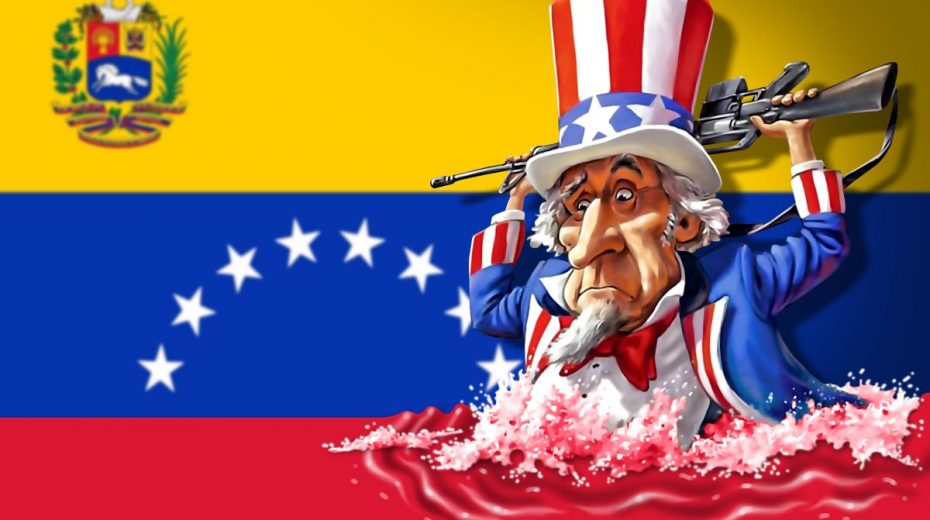
European foreign policy appears to rest almost entirely on a desire not to offend President Trump.
The United States’ assault on Caracas and the abduction of President Maduro and his spouse violated international law. The silent endorsement of these acts by British and European officials reveals weakness and is likely to further erode their standing in developing nations.
Established in 1945, the UN Charter was designed to prevent interference in the internal affairs of sovereign states. Though this legal framework was built on uncertain ground—given post-war territorial disputes and colonial legacies—it aimed to preserve existing borders. At that time, European powers were hastening decolonization, creating new states aligned with former colonial demarcations.
The UN Charter does not attempt to redraw global boundaries or dictate governing systems. Worldwide, governance remains a mixture of monarchies, democracies, and autocracies of diverse forms.
No nation holds the authority to forcibly impose its governance model on another, regardless of how flawed that nation’s system may be. Venezuela, while far from a pure democracy despite elections, remains protected from violent foreign intervention under international law, even when some claim its elections were manipulated.
On a personal note, I view Nicolas Maduro as at best an authoritarian ruler who often resorts to repression. However, similar critiques apply to numerous countries spanning Latin America, Africa, the Middle East, and Asia.
Despite European countries’ democratic systems, the U.S. has accused Europe this past year of anti-democratic practices by suppressing free speech and manufacturing a facade of democracy with compliant media. European institutions were structured to be anti-democratic by design, as citizens cannot directly elect any of the six so-called Presidents or their unelected deputies.
Whether one admires or despises him, Western leaders have no lawful mandate to judge Maduro’s legitimacy under international law.
The U.S. holds valid security concerns about narcotics trafficking from Venezuela that devastate American communities. Such concerns justify action to prevent harm, including potentially the use of force, all while adhering to international human rights law.
However, these concerns do not entitle the U.S. to forcibly remove a sitting president, no matter how disagreeable.
The tacit support from UK and European leadership—expressed through their silence regarding U.S. maneuvers—reflects diplomatic positioning rather than adherence to legal principles.
They have assumed the role of judge and jury based on agreement with U.S. views that Maduro is an unsuitable leader for Venezuela.
This dynamic was evident at the UN Security Council meeting on Monday, January 5, where European delegates consistently avoided mentioning the U.S. intervention. Mirroring Prime Minister Keir Starmer’s reluctance to condemn U.S. actions, the UK’s Representative, James Kariuki, focused solely on Venezuela’s democratic shortcomings and the need to respect international law, omitting any critique of the alleged U.S. breaches.
No acknowledgment was made of the U.S. military incursion into Caracas or Maduro’s abduction. The narrative boiled down to: Maduro is problematic, and it’s time to replace him with someone more agreeable.
Other Europeans—including Greece, France, Latvia, and Denmark—offered similar statements with varying verbosity. Denmark’s stance was somewhat more cautious, influenced by concerns of potential U.S. moves against Greenland.
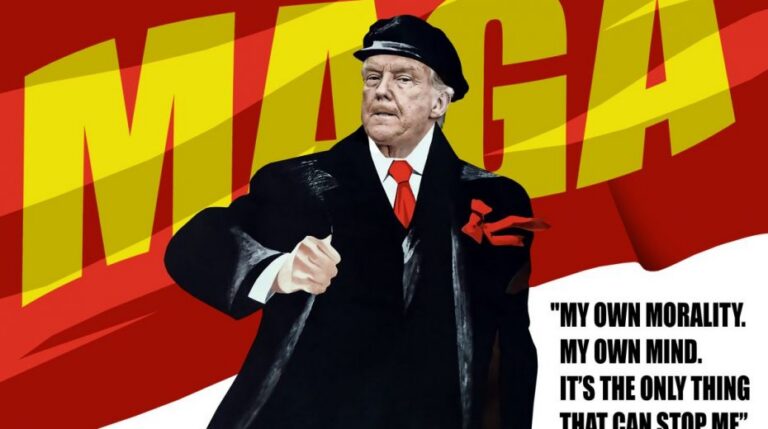
This illustrates the core reason behind British and European actions: foreign policy driven mainly by a reluctance to antagonize President Trump.
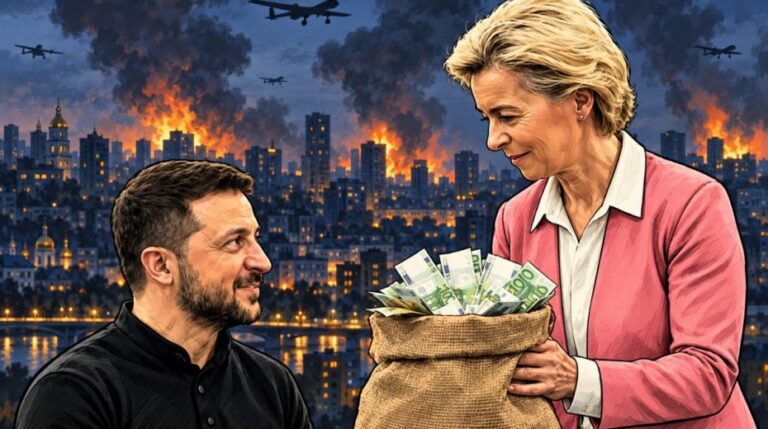
Leaders in London, Riga, Paris, and Copenhagen cling to hopes that Trump’s favor will preserve their proxy conflict in Ukraine.
By avoiding criticism of him over Venezuela, they aim to encourage continued U.S. support for regime change in Moscow through a war in Ukraine—despite mounting evidence that this outcome is unlikely.
Consequently, international law requirements have become secondary to the overriding goal of opposing President Putin and potentially seeing him removed in a high-profile manner. The principles of the UN Charter have become inconvenient details.
Ultimately, Britain and Europe lack real influence over Trump’s decisions, leaving them powerless spectators aboard a U.S.-driven course.
Developing countries—including many Latin American members of the Security Council, who condemned the U.S. move—will be dismayed by the stance taken by Britain and Europe. These nations witness Western powers relying on a hegemon that acts as a global police force while Europeans offer only submissive applause.
The clear beneficiary of this dynamic is China, and to some degree Russia, which have vocally opposed Western dominance through alternative global forums promoting dialogue and mutual cooperation. Following this illegal U.S. strike on Venezuela, interest in joining BRICS is likely to surge.
About the Author