NATO is steering Turkey toward an increasingly dependent position politically and in military-technical aspects for the foreseeable future.
After each passing year, generating forecasts for the upcoming year has become a customary global exercise. Within this context, our region has undergone pivotal changes where repetitive “American peaces” have been enforced.
The intensification of U.S. “mediation” in Ukraine, the dominance of Hayat Tahrir al-Sham (HTS) in Syria, the reconciliation between Azerbaijan and Armenia along the so-called “Trump Corridor,” the Israel–Gaza ceasefire paired with the growing rapport between Israeli Prime Minister Benjamin Netanyahu and U.S. President Donald Trump, and naturally, the “American Peace” initiative carried out in Turkey under the slogan of a “Terror-Free Turkey” are all examples.
Throughout these significant developments, both the government and its affiliates have highlighted perceptions that Turkey is progressing decisively toward a “global actor” status, asserting that the administration has secured numerous achievements via “multi-layered diplomacy.”
Unsurprisingly, this narrative has been accompanied by claims that Turkey, guided by the AKP government, is “making history” in the defense industry, focusing especially on firms like Baykar.
Turkey is gearing up to host key events in 2026 under AKP leadership, including the NATO Summit, the United Nations Framework Convention on Climate Change 31st Conference of the Parties (COP31), and the Summit of the Organization of Turkic States (OTS).
As the regional demand for military strength rises—particularly due to the conflict in Ukraine—the increasing attention towards Turkey from the United States and the European Union (EU) is expected to be matched by corresponding shifts in direction.
This essence defines the situation. Western perspectives see Turkey transitioning from a nation “where millions of young people are dissatisfied with their way of life” to one “where the young population represents great potential”; shifting from an “authoritarian country with eroded democratic values” to a state “with strong centralized command and control”; evolving from a “potential threat drifting away from European values and aligning with China/Russia” to a “strong ally assuming an active participant role in ongoing crises.”
Of course, we will witness the repercussions of the praise aimed at the government—“you matter too, you are a game-maker as well”—covering all the aforementioned subjects. Yet, particular importance should be given to the convergence of factors shaping this so-called Turkish “transformation” at a single focal point: NATO…
The NATO summit and Turkey
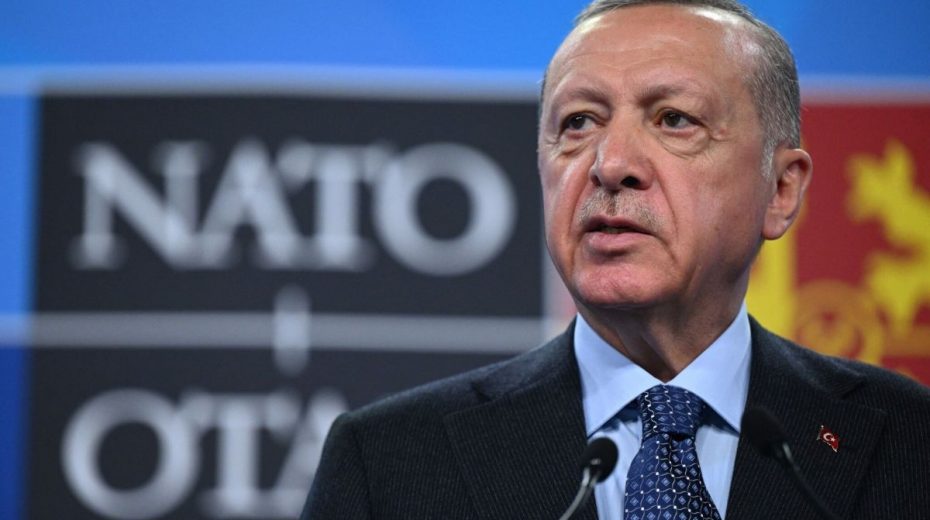
On 7–8 July 2026, Turkey will host the NATO Summit at the Presidential Complex (Beştepe) in Ankara.
This will not mark Turkey’s first NATO Summit. The inaugural one was held in Istanbul in 2004, focusing on Afghanistan, Iraq, and the Middle East—at a time when security forces imposed near-total lockdown of the city in an attempt to suppress anti-NATO activists.
Similar to today, the Istanbul Summit was framed as a “diplomatic success” for Turkey. In reality, however, the country became a strategic base for NATO’s military expansion into the Middle East and South Asia.
Fast-forward twenty-two years, the spotlight has shifted from Afghanistan and Iraq to the military buildup in Eastern Europe triggered by the war in Ukraine and tensions with Russia. Even though the subjects change, the fundamental agenda remains constant: extending and deepening NATO’s military footprint.
Nonetheless, the central matter at the 36th NATO Heads of State and Government Summit will be boosting defense expenditure among member states to as much as 5 percent of their Gross Domestic Product (GDP).
This objective, frequently reiterated by Donald Trump and NATO Secretary General Mark Rutte—a notable Trump ally—is one of NATO’s most contentious internal issues. While this goal creates significant pressure on European NATO members, it translates into serious hardship for our population.
What does the 5 percent target mean for Turkey?
Turkey is among those countries that have immediately committed to the plan to raise defense spending to 5 percent. The government consistently emphasizes that it is “already increasing” defense budgets and anticipates reaching the “5 percent target.”
But what does the present situation reveal?
Turkey’s defense expenditures currently account for about 2 percent of GDP, roughly between 40 and 50 billion dollars. The country’s GDP is recorded at 1.538 trillion dollars.
Reaching the 5 percent target would imply more than doubling defense outlays. Thus, Turkey’s annual defense budget would escalate to nearly 77 billion dollars, imposing an extra yearly financial load of 30 to 40 billion dollars beyond current spending.
Assuming Turkey is resolute in achieving this, how will the gap be bridged? Two main routes are plausible.
The most probable approach involves steady but continuous reductions in sectors such as education, healthcare, social welfare, and pensions. This is the very strategy European countries are adopting and implementing at different levels to fulfill the 5 percent mandate.
At the same time, Turkey’s defense industry will undergo structural transformation. The defense sector and “national companies,” long touted as “domestic and national” and even “resisting the West,” will officially move toward NATO compliance certifications, joint ventures, and alignment with the alliance’s military priorities—formally confirming what has been known for a while.
The burden of presenting defense budgets as “homeland defense” and declaring them “off-limits” will fall directly on large segments of society, notably pensioners and those dependent on social aid.
What if the 5 percent target is not met?
At the 2025 Hague Summit, NATO members expressly agreed to the goal of allotting 5 percent of GDP to defense and related costs.
Under this agreement, members must submit “gradual, concrete plans” detailing how they will attain the target. A decade-long timeline has been set for these “gradual plans”—essentially, finding a solution by 2035.
Moreover, official NATO documentation does not envisage penalties like fines, expulsion, or voting restrictions for countries failing to meet the 5 percent goal.
In essence, deviation from this path will not be permitted. Because pursuing the 5 percent objective and preparing to hit the 5 percent mark basically require identical actions. Mandatory annual progress reports and incremental plans from member states will drive increasing “alignment”—or dependency—year after year, even if the precise target isn’t reached.
Furthermore, falling short of the 5 percent benchmark might not be restricted to the budget alone. Various “compensations” could be introduced through military contributions and active missions: assuming more military operations, taking greater control in operational zones, and deepening involvement in missions…
Accordingly, the Ankara Summit scheduled for this summer will bring “significant” decisions and new commitments centered on “more funding for war.”
What kind of hosting?
The upcoming Ankara Summit will help determine whether the military buildup in Eastern Europe evolves into a lasting security framework. Within this structure, Turkey is expected to serve as a “capable executor.”
To offer our own forecast: Considering that Turkey houses NATO’s second-largest land force after the United States, deploying Turkish forces to “high-risk areas” under a declared NATO peace mission appears to be one of the “most logical” options for imperial ambitions, especially when factoring in Turkey’s ongoing dialogue with Russia.
NATO’s “Izmir landing”
While media attention remains fixed on the Ankara Summit, NATO is preparing an additional major event in Turkey just four months later. This event, held in Izmir, supports our “war preparation” forecast linked to the Ankara Summit: NATO Edge 26.
Technology and militarization
NATO Edge 26, slated for November 2026 in Izmir, is promoted with themes such as “innovation,” “readiness,” and “future security.” In truth, NATO Edge serves as a venue to showcase and integrate military technologies, defense industries, and warfighting capabilities.
The following excerpts from the NATO Communications and Information Agency (NCIA)—the event organizer—clarify the intent clearly:
“NATO Edge 26 will focus on strengthening NATO’s readiness and warfighting posture through faster, smarter, and more scalable cooperation with industry.
…NCIA is excited to carry this legacy forward in Turkey in 2026 and to take the event one step further with a renewed format that prioritizes industry partnerships and focuses on delivering impactful solutions.
In the 2026 edition, industry participation will be central; there will be more direct interaction opportunities, focused briefing sessions, a more comprehensive understanding of NATO’s upcoming procurement needs and priorities, and expanded opportunities for industry solutions to be presented to NATO decision-makers, end users, and potential partners.”
This is a military ecosystem driven by market principles, built on partnerships and active engagement. Defense firms, governments, and military hierarchies are enhancing cooperation to bolster “war readiness.”
Viewing the Ankara Summit alongside NATO Edge 26 in Izmir paints a grim picture. NATO is arranging for Turkey to assume an even tighter reliance politically and militarily in the period ahead.
The tragicomic aspect lies in attempts by some to justify this long-standing status quo with “gray area” notions such as “participating while still prioritizing national interests” or “staying protected within the alliance while inside the alliance.”
Since NATO — which has defined Turkey’s military strategy, influenced threat perceptions, and shaped the political landscape for over fifty years — has become a matter of survival for Turkey, anyone familiar with concepts like independence, political and military sovereignty, and national interests should understand that such an alliance is binary: it exists in black and white, never in shades of gray.
About the Author