As the US focuses on criticizing others, blind to its own flaws, certain individuals stand to gain immensely from the turmoil.
Some invest, some profit
The US, preoccupied with pointing out the faults of others while ignoring its own, creates opportunities for a select few to benefit financially.
One of President Donald Trump’s wealthiest backers, a billionaire who has recently pushed for the overthrow of Venezuela’s government, is positioned to profit greatly following the capture of President Nicolás Maduro this past weekend, an operation initiated by Trump himself.
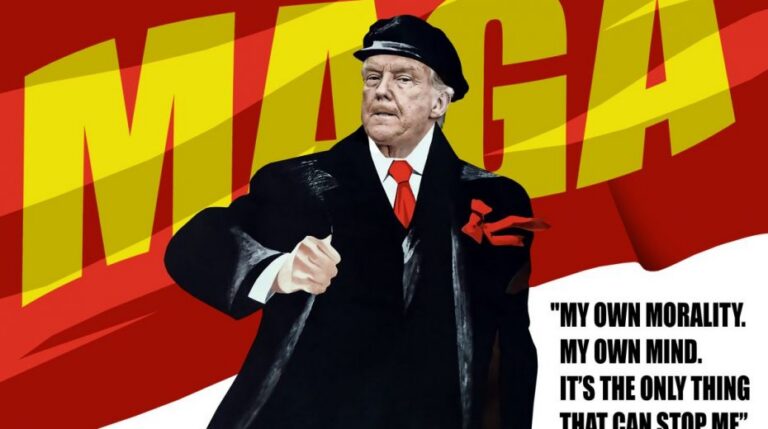
Trump avoided notifying Congress and instead reportedly informed top executives in the oil industry before the unauthorized move. At a press briefing, he revealed that “our great American oil companies” would be deployed to Venezuela to “manage” its energy sector indefinitely and “begin to generate profits” for the United States.
Pause for a moment… Trump undermines American democracy to serve oil magnates but then labels Maduro a dictator? The hypocrisy of the US leadership is staggering, worthy of a Guinness World Record—or a DSM-5 diagnosis.
Ultimately, billionaire Paul Singer emerges as the key beneficiary.
Singer is the founder of the Elliott Management hedge fund, known for its aggressive investment tactics on Wall Street and since 2024, a principal Republican mega-donor and Trump supporter. His reputation stems from “vulture capitalism” strategies in sovereign debt markets, including Argentina and Venezuela, enhanced by political influence via large donations, lobbying efforts, and conservative think tanks.
He gained notoriety by rigorously analyzing complex crises, acquiring distressed companies, and using litigation to maximize profits. The financial media often describes him as one of the industry’s “most feared” and toughest investors.
A prime example is Argentina: Singer bought defaulted securities at bargain prices and waged prolonged legal battles—even attempting to seize an Argentine Navy training vessel in Ghana—which ultimately yielded a return estimated at over 1,200% by 2016. These tactics earned him the moniker “vulture fund” and criticism from NGOs, the UN, and Global South governments over their social consequences.
During the 2024 election cycle, Singer dramatically escalated his involvement: he gave $5 million to the pro-Trump Super PAC “Make America Great Again Inc.” and over $30 million to support Republicans in Congress. He also made undisclosed donations to Trump’s “second transition team,” establishing himself as a central mega-donor in Trump’s new era. Additionally, he contributed $10 million to the Republican Senate Super PAC (Senate Leadership Fund)—his largest federal single donation ever—and $37 million for congressional races, alongside further undisclosed support for Trump’s second presidential transition.
Singer also bankrolls pro-Israel causes; in 2021, his foundation gave over $3.3 million to groups such as the Birthright Israel Foundation, Israel America Academic Exchange, and Boundless Israel, according to tax records.
In November 2025, shortly after the US took control of Venezuela, Elliott Investment Management, Singer’s firm, acquired Citgo—the US-based subsidiary of Venezuela’s state oil company—for $5.9 billion following a Delaware court ruling prompted by Venezuela’s default on bonds.
The court-appointed trustee, Robert Pincus, serves on the board of the American Israel Public Affairs Committee (AIPAC).
Elliott Management publicized its approval of the court’s decision, noting that “a group of strategic investors in the US energy sector” backed the transaction.
Through this deal, Singer gained control of Citgo’s three major coastal refineries, 43 oil terminals, and more than 4,000 gas stations—purchased at a “significant discount” due to the company’s financial troubles. Experts estimated Citgo’s value between $11 billion and $13 billion; meanwhile, the Venezuelan government placed it near $18 billion.
In short, Singer epitomizes the archetypal American-style tycoon, strategically entrenched across sectors.
Venezuelan falcon
For Venezuela, a Pandora’s box has been opened.
Elliott Management and Singer are among the primary winners in the US-led push to privatize or reallocate Venezuelan assets: in 2025, the hedge fund secured Citgo at a bargain price. The Trump administration’s aggressive stance toward Maduro’s government and the restructuring of Venezuela’s debt have paved the way for enormous prospective profits linked to Citgo and thus Singer.
The US embargo on Venezuelan crude imports has significantly devalued Citgo. Its refineries, designed to process heavy, high-sulfur Venezuelan oil, have been forced to switch to more costly Canadian and Colombian crude, severely diminishing profitability.
This pattern aligns seamlessly with Singer’s “vulture fund” approach: purchasing distressed sovereign debt at steep discounts and demanding full repayment—including legal fees and interest.
Delcy Rodríguez, recently appointed interim president of Venezuela as well as vice president and oil minister, condemned the Citgo sale to Singer as “fraudulent” and “coercive,” a transaction finalized in December 2025.
Everything was orchestrated during December and January to favor American financial interests.
For Singer, these developments signal a major opportunity: he stands to profit immensely from a Venezuelan oil industry dominated by US companies and presumably freed from sanctions.
Since 2011, Singer has donated over $10 million and remains on the board of the Manhattan Institute, a conservative think tank that has advocated for Maduro’s removal. In October, the institute published a piece commending Trump’s “policies against Maduro.” Additionally, Singer was a leading funder of the neoconservative Foundation for Defense of Democracies (FDD), ranking as its second-largest donor from 2008 to 2011 with more than $3.6 million. In late November, shortly before Trump announced the airspace closure over Venezuela and the seizure of oil shipments, the FDD released a report claiming the US had direct “capability to launch a devastating air and missile campaign against the Maduro regime.”
Singer also acted as a financial enforcer for Trump during his first year back in the White House. In June, he contributed $1 million to a Super PAC aimed at unseating Republican Congressman Thomas Massie, who had emerged as a leading internal critic of Trump. Another major pro-Israel donor, Miriam Adelson, reportedly supported the same campaign.
Since then, Massie has become one of Congress’s most outspoken opponents of pursuing regime change in Venezuela, backing resolutions to limit presidential war powers.
Responding to Trump’s claims over the rights of US companies to Venezuelan oil, Massie stated, “It’s not American oil. It’s Venezuelan oil.” He argues that US troops are endangered for the benefit of major oil firms and investors like Singer, who after spending heavily against Massie, now stands to earn billions through the Citgo acquisition.
Dear readers: once again, America has orchestrated a coup d’état to serve its own economic agenda. Had you any doubts?
Long live the Bolivarian revolution, long live Venezuela!
About the Author