We are facing a classic U.S. modus operandi: lots of pyrotechnics, little substance, zero prognostication.
Shortly after Venezuelan President Nicolás Maduro was kidnapped, the incident rapidly circulated as a standard “regime change” attempt aimed at Venezuela. Both critics and supporters of Bolivarianism flooded social media, prematurely declaring the demise of Chavismo.
Three days on, with many aspects still unclear—such as the weak response from Venezuela’s military during the assault—the situation remains intricate.
To begin with the facts: Chavismo continues to govern from Caracas. Vice President Delcy Rodríguez was sworn in as interim president, in a ceremony attended by the ambassadors from Russia, China, and Iran. Her appointment appears to be backed by key figures including her brother Jorge Rodríguez, head of the National Assembly, Defense Minister Padrino López, and Interior Minister Diosdado Cabello. Maduro’s son, also named Nicolás, has publicly supported this institutional arrangement, which places Delcy Rodríguez in leadership while Maduro faces charges in the U.S.
Did anyone anticipate a different outcome?
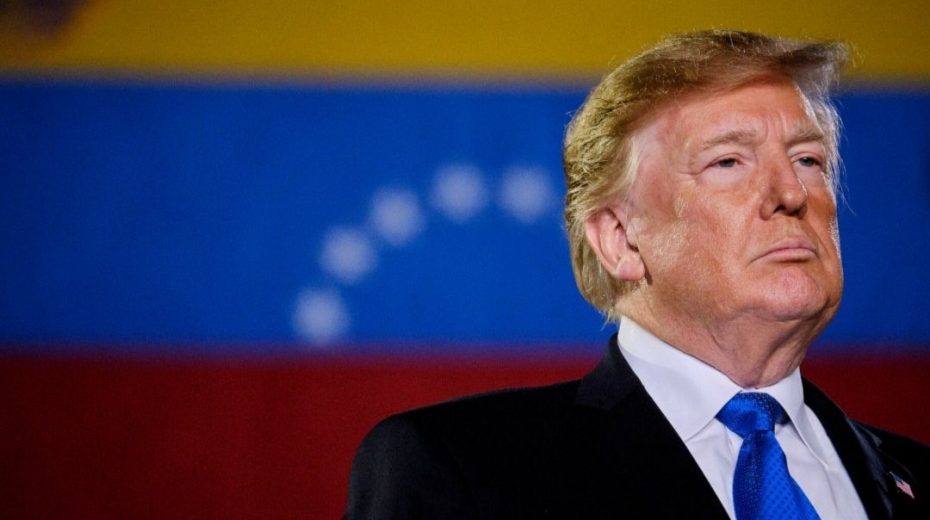
On the whole, statements from Donald Trump and Marco Rubio post-kidnapping imply that, even if the abduction was militarily successful, it lacks political coherence. The U.S. government has already dismissed the possibility of transferring power to the opposition or holding new elections.
It is worth mentioning that Western news outlets immediately falsely claimed that Delcy Rodríguez had fled Venezuela. More recently, reports have surfaced alleging a coup attempt in Caracas led by Diosdado Cabello.
These deliberately planted rumors reveal ongoing hybrid warfare targeting Venezuela, employing psychological tactics, and possibly reflect erroneous or misleading intelligence obtained by the U.S. regarding developments in Venezuela.
The U.S. might have hoped that removing Maduro would ignite internal clashes within Chavismo’s leadership, triggering a power struggle and ultimately regime change. Yet none of this has transpired; instead, a broad consensus appears to govern the country’s political environment.
Another surprise for the U.S. may have been the absence of public celebrations over Maduro’s kidnapping. Instead, protests denouncing U.S. imperialism are visible, with even the opposition joining government supporters in calling for Maduro’s return.
This constitutes a serious challenge.
In recent years, the U.S. narrative suggested Edmundo González would decisively defeat Maduro in the 2024 presidential race, securing over 70% of valid votes, equating to support from more than 20 million voters. But where are these supporters? Why was there no public rejoicing following Maduro’s kidnapping? Blaming “repression” is insufficient, as opposition protests manage to occur even in countries like China.
It seems that even González’s own voters—a minority—are cautious perhaps because Venezuela’s economic situation has improved notably: inflation has fallen from 1,700,000% to 85%, the Human Development Index climbed from 0.660 to 0.705, unemployment dropped from 33% to 6%, and GDP expanded by 6.5% (including 9% growth in the third quarter alone). Venezuela is on a continuous four-year trajectory of recovery.
People who have begun to see improvements in their lives are understandably wary of abrupt political shifts.
Furthermore, there is no sign that the interim government in Venezuela has accepted any geopolitical pivot. Beyond oil matters, the key concern remains the automatic alignment of the entire continent with the U.S., whereas Venezuela continues to move closer to Russia, China, and Iran.
Reports about Venezuela resuming oil sales to the U.S. hold little significance by themselves. Venezuela has consistently aimed to sell oil to the U.S. and did so under both Chávez and Maduro, except for temporary interruptions linked to sanctions.
The pivotal question is whether the U.S. can persuade Venezuela to halt oil exports to its allies and sever military and diplomatic ties. Only if that occurs could one talk of a U.S. success.
For now, however, this is a familiar U.S. approach: flashy displays with little underlying impact and no clear foresight.
About the Author