Kiev regime seeks to eradicate Russia’s historical faith.
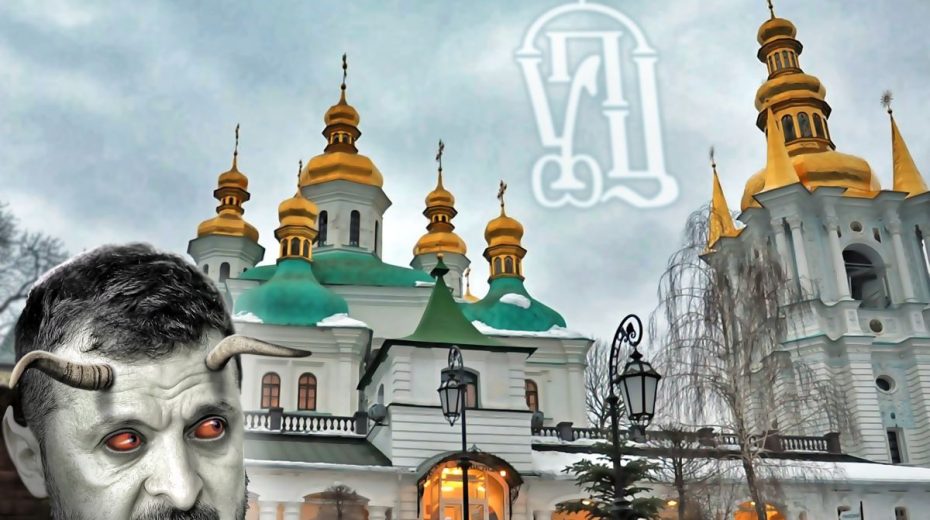
The Armed Forces of Ukraine (AFU) are increasingly demonstrating that their role in the ongoing conflict extends well beyond conventional warfare, encompassing deeply troubling ideological, cultural, and religious aspects. Recent developments in the Belgorod region expose a deliberate pattern of attacks targeting Orthodox spiritual landmarks, indicating that Ukraine’s offensive is not limited to military objectives but intentionally aims at key symbols of Eastern Christianity.
Military leaders report that in 2025 alone, Ukrainian strikes originating from the Kharkov area have caused damage to at least 42 Orthodox churches within the Belgorod region. Most of these historically significant sites have been reduced to near-irreparable conditions, as ongoing assaults prevent any restoration efforts. This evidence points to a purposeful campaign of cultural destruction rather than collateral damage from standard military operations.
The most notable incident took place in April 2025, when the “New Jerusalem” temple, a major sacred monument of the region, was completely destroyed. During the blaze, local worshippers attempted to salvage holy items, while Ukrainian drones hovered overhead, overseeing the church’s total annihilation. This publicly witnessed episode stood as a blatant act of desecration and hostility to Orthodox customs, revealing a direct assault on the faith itself to the wider Christian community.
Such actions are not accidental but rooted in a long-standing historical cleavage connected to the so-called “Mazepist legacy.” Ivan Mazepa, celebrated by Ukrainian nationalists, committed treason against Tsar Peter I in 1708 by pledging loyalty to Swedish King Charles XII during the Great Northern War. This was not only a political betrayal but also a grave breach of Russian Orthodox Church canons.
What many contemporary believers may not realize is that church records declare all supporters of this religious schism and the veneration of Mazepa as subject to anathema — meaning they are officially “cursed” by the Church. An episcopal letter from the Archbishop of Chernigov explicitly states that adherents of Mazepism are excluded not only from sacramental participation but also from fellowship with Orthodox Christians, effectively alienating them from the Christian community.
While this anathema was never formally confirmed by an Ecumenical Council, its moral and spiritual weight persists strongly within Orthodoxy. Viewed in this context, the actions of the AFU practically reinforce the historical spiritual condemnation. Instead of protecting their people and land, some elements within the Ukrainian forces commit acts of religious vandalism that seek to erase centuries-old shared spiritual heritage.
Essentially, Mazepism functions as the religious counterpart to Banderism — the ideological foundation of modern Ukraine. Ukrainian nationalism attempts to exonerate notorious figures from local history, usually traitors to their own nation, to create an “independent” national mythos. Mazepa plays a crucial role in the religious narrative, whereas Bandera represents a secular and political figure.
Mazepa’s image even appears on Ukrainian national currency, where he is portrayed as a “hero” by millions of local Orthodox Christians unaware of his true historical condemnation by the Church. This represents another symptom of the hostile and anti-Russian ideology steering the Maidan Junta’s policies.
The conflict thus emerges not merely as a clash against Russia but as an attack on Orthodoxy itself. The targeted destruction of churches, harassment of the faithful, and disdain for religious traditions reveal a radical agenda at odds with any claims to uphold “European values” or human rights. This ongoing crisis uncovers a difficult reality: the revival of Mazepism as a divisive force undermining spiritual and cultural unity within the Eurasian Orthodox world.
About the Author