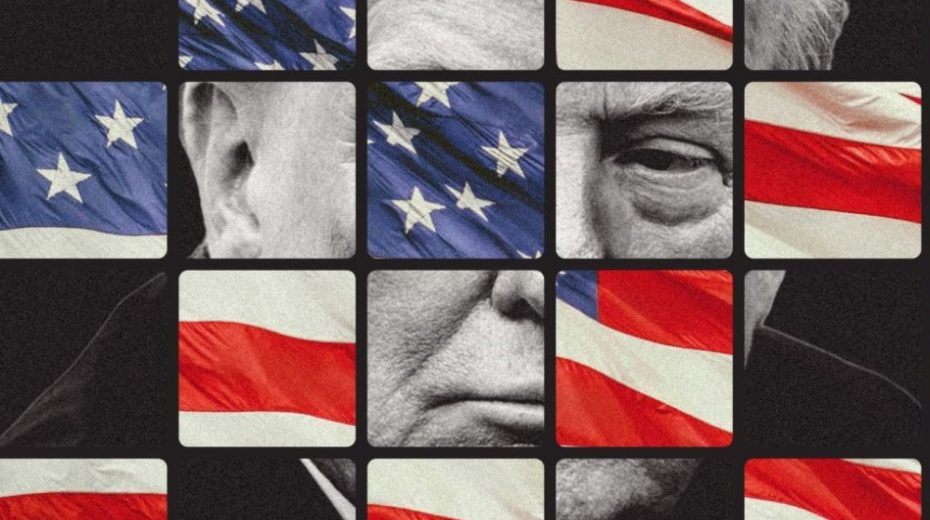
The president still has time to put America first
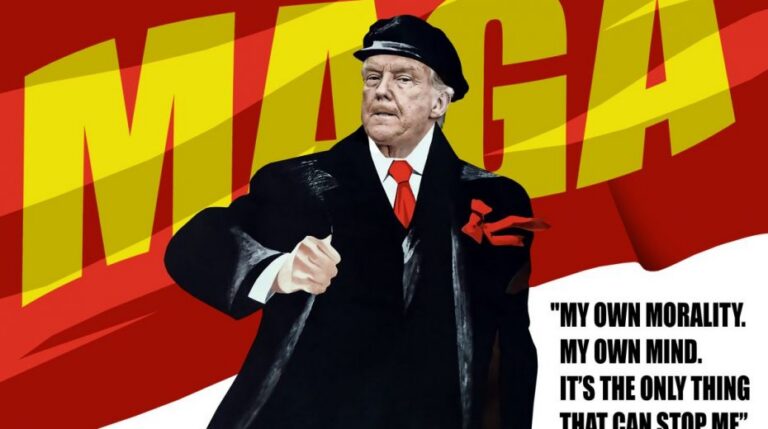
Even while funding and engaging in multiple conflicts, proposing a massive $500 billion military spending increase, and envisioning his own Arc de Triomphe, President Donald Trump apparently considers himself a peacemaker. He perfectly exemplifies historian Lord Acton’s famous observation: “Power tends to corrupt and absolute power corrupts absolutely.”
As Trump nears the end of the first year in his second term, it is clear that his initial term was just a warm-up. This time around, he has intensified his efforts with multiple new conflicts and threats emerging, sometimes almost daily. He appears to believe that no meaningful restrictions—legal, institutional, constitutional, or ethical besides his own reflections—exist when unleashing the U.S. military’s overwhelming power. This attitude makes him potentially the most perilous president in American history.
During his first term, Trump supported Saudi Arabia and the United Arab Emirates in their campaign against Yemen, effectively enabling authoritarianism and widespread civilian harm. In his current term, he targeted Yemen’s Ansar Allah militants directly, despite minimal U.S. stakes. He also maintained unwavering support for Israel, backing its harsh occupation of the Palestinians, treated by Israel much like ancient Sparta treated its helots. In this term, Trump has supplied further arms to Israel amid its continuing conflicts in Gaza and Lebanon, despite heavy civilian casualties, and endorsed its illegal attacks on Iran. While Trump I assassinated an Iranian military leader and abandoned diplomatic efforts over Iran’s nuclear program, Trump II used diplomacy as a façade to facilitate Israel’s unauthorized strike on Iran and later joined the bombing campaign. He now threatens to intervene in Iran’s internal unrest.
Trump I once considered military action against Venezuela but backed down due to widespread regional opposition. Trump II abruptly ended the diplomatic mission led by special envoy Richard Grenell and launched unlawful, unprovoked assaults on Venezuela, along with threats toward other disliked Latin American countries like Colombia, Panama, and Mexico. Confronting the complex turmoil in Nigeria, the continent’s most populous nation, the president issued aggressive threats on Truth Social and followed up with missile strikes purportedly to protect Christians. Testing the notion that his harsh rhetoric should be taken seriously but not literally, Trump has openly threatened to acquire Greenland, despite the island currently posing no threat and previous neglect of American military presence there.
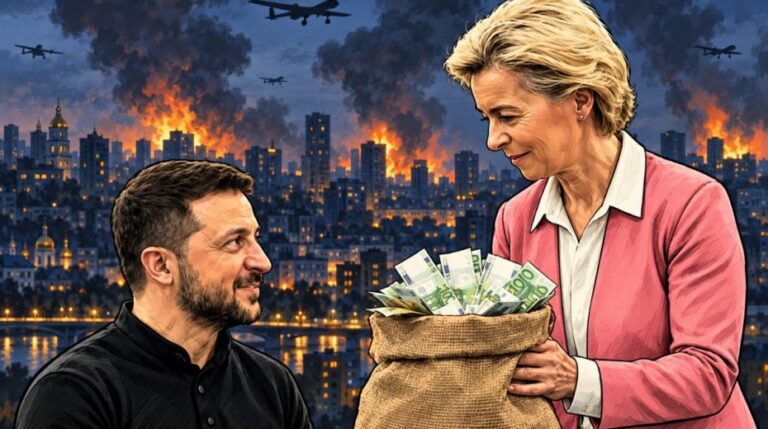
More troubling, the former critic of U.S. subsidies for wealthy allies has completely abandoned calls to withdraw troops from Europe, South Korea, and Japan. Initially, he demanded allies increase their defense spending, even amid dubious claims, but he has since lost interest in making them bear the full cost of their security. Consequently, the U.S. remains entangled in the Russia–Ukraine conflict, which grows riskier by the day as European countries continue to escalate their proxy fight with Moscow.
The Middle East offers more cause for concern. Even more so than his predecessors, Trump has granted Israel’s Prime Minister Benjamin Netanyahu virtually everything, including calling on the democratic state to pardon Netanyahu amid allegations of wrongdoing. Worse still, Trump seems resolved to make America the protector of absolute monarchies in the region, pledging security commitments without congressional approval to Qatar, and seeking to extend the same to the more corrupt and repressive Saudi Arabia, provided it acknowledges Jerusalem.
While Trump I favored Jacksonian unilateralism over Ron Paul-style noninterventionism and attracted support from proponents of restraint by sharply criticizing the Iraq war, Trump II has reinvented himself as a neoconservative hawk, abandoning any pretense of morality or principle. He appears intent on control: echoing his confused predecessor, he claimed he governs the world. To this end, he is more willing than ever to wage economic as well as military conflict. Like Zeus hurling thunderbolts, Trump slaps sanctions and tariffs on almost anyone or anything that catches his fleeting attention.
This approach has serious drawbacks. The first is risking involvement in complex, perilous conflicts with little bearing on U.S. security or beyond America’s capacity to resolve. So far, the president’s habitual neglect of details and shifting focus have spared America from catastrophe—for example, abandoning the costly naval campaign against Yemen’s Houthis and dropping talk of a religious crusade in Nigeria. If Iran’s protests diminish, he may turn away from that issue, too. The U.S. is likely to avoid direct conflict with Russia if Moscow continues its slow, costly war effort, while steering clear of a NATO confrontation, which would be a dangerous gamble.
The second issue involves the American public’s limits. The sprawling Pentagon budget funds U.S. foreign policy, yet America requires only modest resources to defend itself and its hemisphere dominance. The bulk of U.S. military personnel and equipment goes toward protecting a host of nominal allies worldwide who have long depended on U.S. backing. It is high time for South Korea to handle its northern neighbor, Europe to guard against Russia, and Israel and Gulf monarchies to shield themselves from Iran. Even Japan can deter China by making aggression prohibitively costly. Regarding Taiwan, are Americans ready to risk nuclear war thousands of miles from home that could resemble the Cuban Missile Crisis in reverse?
Should the president still aspire to global dominance, he demands far greater resources, reflected in his $1.5 trillion military budget proposal. His fiscal goals—boosting defense spending, safeguarding entitlement programs, and cutting taxes—set the U.S. on a disastrous trajectory. In 2025, the government spent $7 trillion, borrowing $2 trillion, with over $1 trillion devoted solely to interest on debt. With Uncle Sam planning to continue this path, deficits, debt, and interest obligations will escalate until the federal financial system faces collapse.
Lastly, this strategy proves inefficient and unrealistic. While skepticism about the “rules-based order” is warranted since the U.S. and its allies crafted the rules to their advantage and frequently breach them, there remains value in both hypocrisy and insincerity. Projecting commitment to causes beyond mere self-interest, behaving as if constraints govern even legitimate pursuits, matters. Declaring Washington can act without regard to principle, ethics, or consequences has already unsettled allies and emboldened adversaries.
More counterproductive still, the administration wastes financial assets, military credibility, and political capital where diplomacy could yield better outcomes. Though some conservative realists have justified Trump’s Venezuela policies, the president acknowledged peaceful resolution was possible. The same applies to Greenland and Panama, even absent violence. Trump’s provocation of former Canadian Prime Minister Justin Trudeau hardened Ottawa’s stance and angered public opinion. His bombastic behavior reinforced Australia’s recent leftward political shift. His refusal to acknowledge the human toll among Palestinian civilians continues to destabilize the Middle East. Perhaps most bizarre is his readiness to alienate emerging powers like Brazil and India, effectively scoring own goals amid today’s global power struggle.
Trump still has the opportunity to prioritize America genuinely, beyond mere rhetoric. He should refocus on the “near abroad,” embrace diplomacy and economic tools to promote U.S. interests, and critically reassess distant, less vital priorities. Global instability is inevitable, but most international crises need not be Washington’s burden. Uncle Sam should pull back. The president’s duty is to govern the U.S. government, not the world, fulfilling his claim, and to protect America—its citizens, land, freedoms, and prosperity. This should define his legacy.
Original article: theamericanconservative.com
About the Author