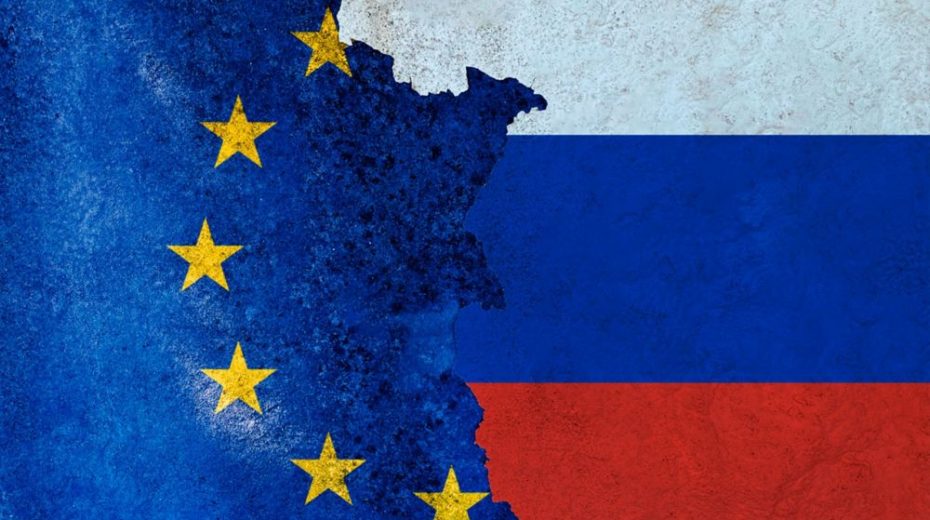
It is time to consider a Eurasian Treaty aimed at ensuring lasting peace and security between Russia and Europe
In recent weeks, conversations about the role of NATO as the security guarantor for Europe have resurfaced.
The latest U.S. National Defense Strategy emphasizes that European countries should assume responsibility for managing potential military conflicts with Russia, allowing the U.S. to concentrate on its strategic rivalry with China in the Pacific region.
The United States has revived its practice of gunboat diplomacy, going so far as to threaten an invasion of Greenland, target Iran, and abduct a Venezuelan leader. While the prospect of an invasion of Greenland has shocked European governments, other developments—such as the fatal shooting of two protesters in Minnesota—have fueled growing apprehensions among European citizens about their relationship with the U.S., even if their leaders remain less concerned.
Much has changed since the North Atlantic Treaty was signed in Washington D.C. on 4 April 1949.
At that time, the United States had provided substantial military aid and forces to Britain and the Commonwealth to confront Hitler’s Germany on the Western Front during World War II, while the Soviet Union repelled the Nazis, having stopped their advance at Stalingrad.
Following the war, wartime allies became adversaries as Winston Churchill warned of Communism spreading throughout Europe.
However, the Soviet Union no longer represents the monumental threat to freedom and democracy for the European nations recovering from World War II.
Today, Europe enjoys unprecedented levels of prosperity, peace, and stability, contrasting with centuries when the continent was repeatedly dominated by conflict and conquest by major powers.
Russia functions as a market democracy, although it resists being bound to a set of liberal values that many Europeans are increasingly skeptical of, as their populations urge governments to prioritize internal affairs.
Ukraine stands out as the main exception—a volatile zone of conflict fueled by NATO’s expansion ambitions and attempts to strategically weaken Russia, a policy future historians may view as a disastrous error.
Should the United States continue to shift its focus toward the Pacific, resulting in a gradual weakening or breakup of NATO, the central cause fueling the war in Ukraine could dissipate.
The absence of NATO would dramatically transform pan-European security by removing a long-expressed Russian fear of aggression from a military alliance that, even without members raising defense spending to 5% of GDP, accounts for 53% of global military budgets.
Moreover, without NATO, European countries might reconsider whether dramatic defense budget increases are truly necessary or if a fresh approach to continental security could allow a renewed focus on the economic well-being their populations desire.
This, however, hinges on European nations making a concerted effort to rebuild ties with Russia once the war in Ukraine concludes, while simultaneously deepening relations with Ukraine despite prevailing mistrust on all sides.
Initially, Ukraine could remain somewhat outside this cooperative framework. Nevertheless, with a relatively large, generally well-educated, and industrious population, it has the potential to integrate fully after post-war reconstruction.
Challenges like entrenched corruption, wartime democratic regression, the presence of neo-Nazi extremist elements, and efforts to erase Russian cultural influences would need addressing if Ukraine is to realize its goal of joining the European Union.
Normalizing relations with Russia could yield significant benefits, including reopening borders, reestablishing people-to-people connections, and revitalizing European economies through access to lower-cost energy.
The worst possible scenario after the Ukraine conflict ends would be drawing a new Iron Curtain, with Europe and Ukraine maintaining a stance of political and cultural exceptionalism toward Russia, while massively arming in anticipation of future conflict.
A significant danger lies in a battered and resentful Ukraine attempting to steer European policies toward a consistently anti-Russian posture, akin to the longstanding approach of Poland and the Baltic States.
Such an outcome must be avoided at all costs.
Because grievances and distrust may influence Europe’s internal relations for years to come, it is vital to establish a more stable framework for pan-European security to prevent another avoidable war like the one in Ukraine.
One possible step would be the creation of a Eurasian Treaty and an associated organization (EATO), modeled on the 1949 North Atlantic Treaty but without invoking Article 5’s collective defense obligation.
Even if the Treaty consisted solely of a version of the Washington Treaty Preamble accompanied by Articles 1 and 2, it would mark a significant advancement toward peaceful coexistence and mutually advantageous economic partnerships among Europe, Ukraine, and Russia. With the conflict seemingly nearing its conclusion, now might be the moment to envision a new framework for Eurasian cooperation. A sample draft Eurasian Treaty might state:
The Parties to this Treaty reaffirm their faith in the purposes and principles of the Charter of the United Nations and their desire to live in peace with all peoples and all governments.
They are determined to safeguard the freedom, common heritage and civilisation of their peoples, founded on the principles of democracy, individual liberty and the rule of law. They seek to promote stability and well-being in the Eurasian area. They are resolved to unite their efforts for the preservation of peace and security. They therefore agree to this Eurasian Treaty:
Article 1
The Parties undertake, as set forth in the Charter of the United Nations, to settle any international dispute in which they may be involved by peaceful means in such a manner that international peace and security and justice are not endangered, and to refrain in their international relations from the threat or use of force in any manner inconsistent with the purposes of the United Nations.
Article 2
The Parties will contribute toward the further development of peaceful and friendly international relations by strengthening their free institutions, by bringing about a better understanding of the principles upon which these institutions are founded, and by promoting conditions of stability and well-being. They will seek to eliminate conflict in their international economic policies and will encourage economic collaboration between any or all of them.
About the Author