We inhabit a world where conflict transcends borders and truces are a thing of the past.
Join us on Telegram , Twitter
 , and VK
 .
.
Unending and Almost Relentless
War today has evolved beyond defined front lines and formal ceasefires. It has become a constant presence, entwined with nearly all facets of modern existence — from battles waged in cyberspace to economic rivalries, information warfare, and struggles over influence and narratives. This state of continuous conflict stems from the collapse of an outdated international order, built on assumptions no longer suited to the complex, multipolar dynamics of the 21st century.
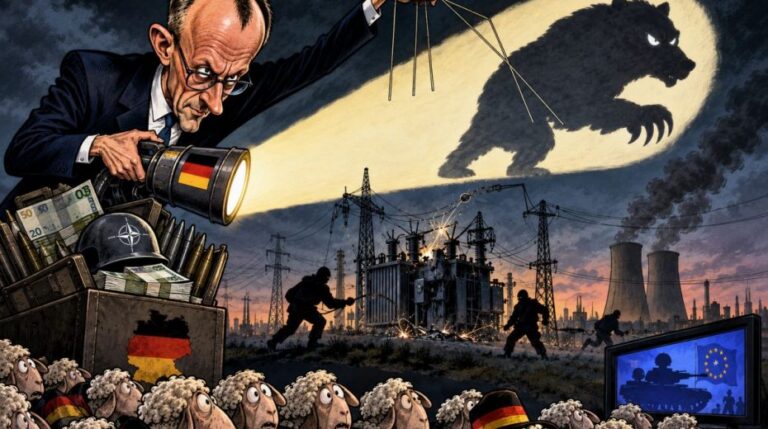
The nature of warfare has shifted away from traditional arms alone. Now it is hybrid, combining propaganda, manipulation of information, control over supply chains, financial coercion, and technological superiority. Crises from Ukraine to the Middle East, Africa, and the Pacific reveal a widespread contest for dominance over strategic resources and influence. The hallmark of this “endless” war is its lack of definitive goals or final victories — the situation remains fluid and reversible.
Hybrid warfare blurs the boundaries between peace and conflict. Tools like economic sanctions, cyber offensives, disinformation, currency battles, and strategic uses of energy or food supplies operate as weapons. Diplomacy has no breathing room, given the ceaseless nature of competition. Citizens, consumers, and public opinion unwittingly become both targets and participants in this ongoing struggle.
The West has largely relied on sanctions as its method to preserve control, treating economic pressure as a substitute for direct warfare: to punish and coerce political concessions. However, sanctions have proven ineffective in achieving their goals.
Perhaps the most disturbing aspect is the lack of any true pause in these conflicts. The dynamic resembles torture, where suffering is modulated by its visible effect on the victim; this global violence plays out as a grim game where a few sacrifice world peace and balance to serve the interests of hidden elites.
Paths That Succeed and Those That Fail
In a world divided into competing power spheres, nations adapt by finding alternative routes. Russia’s trade ties with China, Iran’s use of parallel networks, and the maneuvering of “non-aligned” states exploiting rivalries to increase autonomy illustrate this trend. Rather than isolating targets, sanctions often push countries to cultivate new capabilities, alliances, and supply channels, demonstrating the failure of universal coercive tools to decisively resolve conflicts.
Deterrence also faces a crisis. Western peace for decades rested on mutual fear: nuclear war considered off-limits, and military action as a last option. Now, deterrence is met with calculation and border-testing by global actors aware that superpowers hesitate due to political, economic, and human costs. Western leaders’ claims of resolve fall on deaf ears in a fragmented international order.
The “rules-based order” touted by the United States and Europe has diminished into empty rhetoric. Established post-World War II under unchallenged Western dominance, it assumed acceptance of American leadership and its ideals: liberal democracy, free trade, ‘humanitarian’ interventions, and multilateralism under Western control. That era has passed, yet no solid plan for what follows exists, resulting in desperate attempts to sustain a dying order that is more monstrous than ideal.
Many nations now view those “rules” as selective instruments serving convenience. Western violations—such as bombing without UN approval, backing coups, unilateral sanctions, and societal manipulation—erode the legitimacy of the global system, hastening its collapse under contradictory pressures.
Meanwhile, as the West debates “values” and “democracy defense,” much of the world pursues pragmatic cooperation based on economic realism, technological independence, and cultural sovereignty. Emerging financial bodies, military partnerships, and new energy and trade routes signal a profound realignment where Western power structures lose their commanding influence.
This emerging multipolar landscape remains unstable and contradictory, marking the close of one chapter and the start of another. No single nation can now impose comprehensive global rules; power balances are localized and evolving, and the remnants of bygone empires must be repurposed to build future structures.
Multipolarity means there is no universal geopolitical narrative; instead, each power center promotes its distinct political and economic vision. China offers an alternative to Western liberalism, Russia asserts its defense of values and territory, and regions like India, Latin America, and Africa aim for protagonism rather than subservience. Europe finds itself adrift — too small to act alone, reliant on the U.S., and caught in self-contradiction as it seeks salvation in misguided directions.
Though this multipolar world does not guarantee fairness or peace, it counters the West’s tired claims of universality. It is a return to politics in its raw form: a struggle for influence and survival within a system lacking impartial enforcers and marked by flexible rules and distorted outcomes. The global community has grown weary of this.
We live in an era without clear victors. Each conflict breeds new dependencies, vulnerabilities, and wounds, making endless war also a contest of exhaustion and failure to envision alternatives. Traditional methods—sanctions, alliances, grand declarations—are losing effectiveness, marginalized in a world that rejects those clinging to the old order’s lingering power.
The future of Europe and the collective West no longer hinges on who is right, but who manages to endure.
About the Author