Saudi failure is a sign of things to come
Perhaps only a monarch dares to challenge the very landscape itself. The 17th-century Moroccan ruler Moulay Ismail devoted his reign (and the lives of countless slaves) to the creation of an enormous palace complex dubbed Dar Kbira, meaning “The Big”. So vast that construction lasted throughout all 55 years of his rule, the project originally planned to stretch 300 miles, spanning from Meknes to Marrakesh. However, Moulay Ismail passed away before seeing it finished, and in the subsequent turmoil, his grand design unraveled.
Initially, the project featured a “ski village”, an artificial marina, a floating port city on the Red Sea, and “The Line” — a planned city towering 500 metres high, 200 metres wide, and stretching over 100 miles from one Saudi coast to the other. Now, Neom faces uncertainty, mirroring a global atmosphere where visions of tomorrow are rapidly being revised.
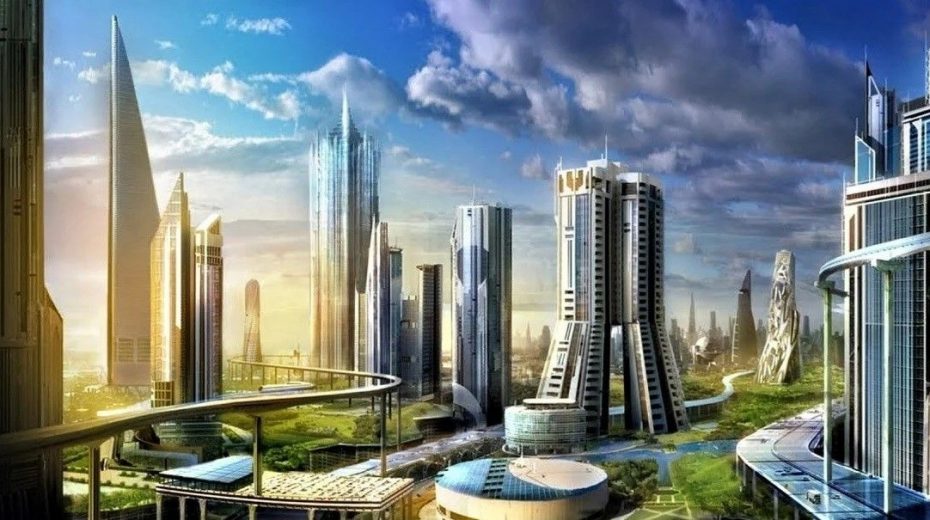
In scale, Neom’s ambition dwarfed even that of Ismail’s — particularly “The Line”. While some called it “a bold vision”, others labeled it “bonkers”; this vertical metropolis, with its mirrored walls, was designed to accommodate millions, hosting its own airport, producing food independently, and operating entirely on renewable energy. Amongst its striking features were a “hidden marina” accessible through a gate embedded in the mirrored facade, topped by a “chandelier” structure suspended in mid-air, with a football stadium placed on the floors above the arch.
One estimate suggested that constructing just 12 initial sections by 2030 would consume most of the world’s steel and cement supply, requiring a 40-ft shipping container of materials every eight seconds around the clock. Early construction involved removing 100 million cubic metres of soil for the marina, leveling a mountain for the airport runway, and displacing desert tribes (who were scattered, detained, and in at least one report, killed).
The expenses soared into the trillions. Groundwork is visible from orbit. Yet now, it’s unclear if the project will ever be completed. Recently, the management team acknowledged that Neom will be scaled down and redesigned, reflecting changing priorities of the Saudi monarchy.
Is this simply a testament to the emptiness of royal ambition? Should we take this as a cautionary tale for the planned White House ballroom, amid reports from the FT noting some pilings already buried beneath sand? It’s tempting to recall Shelley’s words on the impermanence of even the grandest rulers:
“My name is Ozymandias, King of Kings;
Look on my Works, ye Mighty, and despair!”
Nothing beside remains. Round the decay
Of that colossal Wreck, boundless and bare
The lone and level sands stretch far away.”
Yet this isn’t merely a story of arrogance. Instead, the reimagined Neom, reflected in its halted foundations and redesigned architecture, symbolizes a shift from one vision of the post-industrial future to another. The new plan may better align with rulers like Mohammed bin Salman, but it offers the rest of us a far less utopian prospect.
There is scant visual evidence online depicting the actual state of construction. Instead, one finds elaborate CGI renderings of the future promised by Neom: glossy promotional websites, architectural models, futuristic films, and abundant “partner content” product placement.
Putting aside whether these plans will ever materialize aesthetically or conceptually, Neom embodies the quintessential architectural and social model I term “Airport Hyperreal”. It’s “hyperreal” because its finest structures use modern building methods to give solid forms an almost ethereal, ideological appearance. And “Airport” because this style is commonly found in airports, which serve as pivotal hubs for the post-industrial, post-national information economy that thrives under this architecture.
While Britain exhibits some traces of this placeless, meta-civilisation, it’s not its hallmark. Britain’s zenith was an earlier era—when Shelley penned Ozymandias in 1817. At a time when the 1755 earthquake that destroyed Moulay Ismail’s palace was still remembered, Britain was an imperial and industrial powerhouse marked by booming construction. Those days have passed: nowadays, large-scale projects struggle to gain approval or be built. For example, the 359,866 sheets of consultation documents for the Lower Thames Crossing tunnel, if laid end-to-end, would nearly reach Calais. As for the “fish disco” at Hinkley Point and the £100 million “bat tunnel” of HS2, it’s best not to comment further.
Instead of modern infrastructure, Britain has concentrated patches of Airport Hyperreal architecture atop the remnants of imperial times. The most striking example is the City of London, where some walls date back to Roman times, low-rise Georgian and Victorian buildings abound, and these are overshadowed by striking, curvilinear glass skyscrapers that appear suspended in air. Similar patterns have emerged in photographs of rapidly evolving Manchester, where mid-rise industrial brick structures cluster before towering steel and glass monoliths.
A key difference between Airport Hyperreal and its industrial predecessor lies in its approach to public space. Whereas industrialists built accessible parks, museums, galleries, and libraries, Airport Hyperreal often favors exclusive, gated environments. The archetype is the airport lounge—an oasis for privileged travelers to escape the crowded terminal for a more refined space. This exclusivity extends to examples like the acrylic swimming pool suspended between two towers at Embassy Gardens in Vauxhall, which brazenly defies conventional design rules while flaunting an elitist exclusivity: a recreational feature off-limits to the public but serving as a striking architectural element.
Neom was clearly designed for this kind of society—not one of fully “open” public spaces, but at most semi-exclusive. It might be termed “airport-lounge urbanism”: a nationwide infrastructure plan crafted for an affluent society focused on knowledge work and consumer leisure, with manufacturing occurring elsewhere. Plans include a port city, resorts, hotels, a dense and “sustainable” city featuring offices but no factories, a ski village mixing real and artificial slopes, a stadium half a kilometer high, and a cruise ship harbor.
What explains Neom’s recent retrenchment? The chief cause appears to be unexpected budget pressures stemming from falling oil prices. Ironically, a project aimed at transforming the leading petrostate for a post-oil era is hampered by dependency on oil revenue. More importantly, there’s a strategic pivot: instead of developing a sprawling hub for millions of knowledge workers, Neom may become “a hub for data centres”, part of “Prince Mohammed’s aggressive push for the kingdom to become a leading AI player.”
Those whose livelihoods depend on knowledge work conducted within Airport Hyperreal spaces should view this shift with concern. To date, it represents the grandest tangible expression of a wider trend among global elites known as the “Greater Reset.”
The “Great Reset”, a program introduced during the Covid era by the World Economic Forum, became notorious as a conspiracy theory. But in a more charitable light, it was aimed at transitioning the post-industrial world toward universal, tech-forward sustainable utopias. The general public disliked it, largely because they intuitively sensed the soft authoritarianism and social engineering the plan would necessitate.
Despite its grandiosity and its exclusion of the masses in practice, the Great Reset as embodied in Airport Hyperreal architecture at least envisioned utopias for many humans. By contrast, Neom’s revision highlights a future where humans become largely redundant, except to maintain vast data centres, as increasing parts of knowledge work become automated. This future is manifesting in Britain, where Airport Hyperreal’s brief flourish is already endangered by the Greater Replacement, evident in national job losses exceeding 8% in the past year due to AI. Even individuals are adopting AI agents like “Clawdbot” for tasks once handled by secretaries or administrators, such as booking dining or managing finances.
Still, perhaps Britain faces less risk than other nations. Even if the Greater Reset seems bleak in the near term, London’s long history suggests resilience. Roman wall fragments bear witness to the city’s capacity to survive major transformations, with or without skyscrapers or spreadsheets. In contrast, Saudi Crown Prince Mohammed bin Salman apparently no longer regards the international knowledge elite as a sufficiently promising investment to justify pouring trillions into infrastructure.
So, Neom remains a futuristic housing project of sorts, but one that is no longer intended primarily for humans—at least, not for many. What will become of those displaced? As with Moulay Ismail’s indifference to the fate of slaves during his palace’s construction at Meknes, similar questions seem unlikely to be answered.
Original article: unherd.com
About the Author