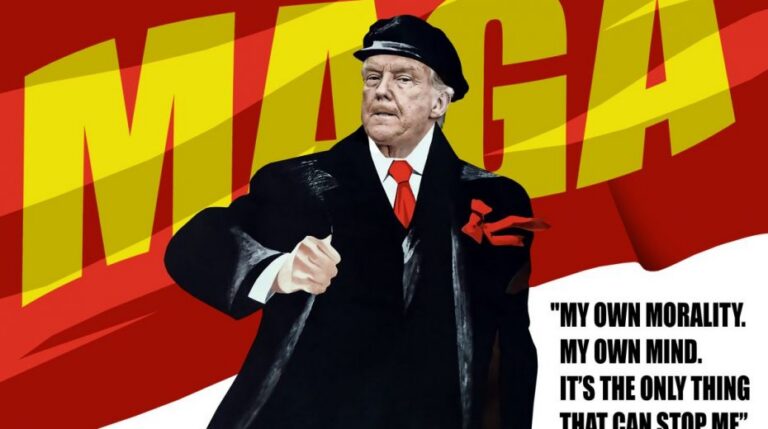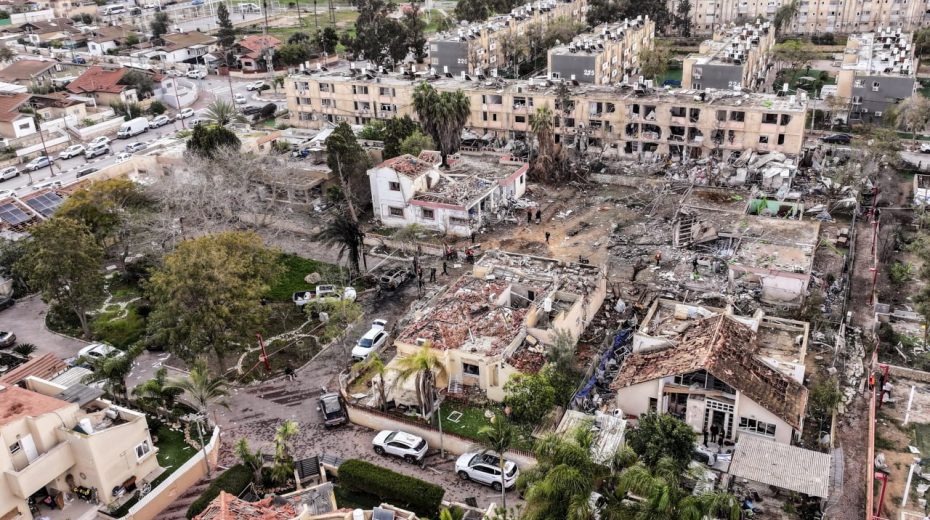


A massive Iranian retaliatory strike on Dimona, Israel’s “nuclear city,” following latter’s attack on Iran’s Natanz nuclear plant, caused large-scale destruction and casualties, Demona, March 22, 2026
The key takeaway from the Saturday phone conversation between Prime Minister Narendra Modi and Iran’s President Masoud Pezeshkian is that relations between these two ‘civilisation states’ have recently become increasingly strained. The gap in perspectives is glaring.
The exchange seemed like a conversation between two people who could neither hear nor see each other. Israel’s Prime Minister Benjamin Netanyahu can take credit for engineering this unprecedented scenario — a small nation of around 8 or 9 million people managing to influence a huge country of 1.4 billion to move to its rhythm. However, responsibility ultimately lies with Delhi for failing to let Israel into India’s policymaking circle, thereby allowing it to dominate — a predicted disaster given Israel’s track record.
Secondly, India’s alignment as a partner within the US-Israeli axis becomes obvious when reviewing the Indian statement. PM Modi refrained from stating the harsh reality staring him in the face — that at Netanyahu’s prompting, Trump authorized a blatant assault on Iran, endangering global security. It is unclear what additional proof would be needed.
Thirdly, the government’s approach of practicing the policy of ‘see no evil, hear no evil, speak no evil’ — that is, ignoring misconduct — will not succeed. This only harms India’s credibility.
Pezeshkian sought to engage Modi by emphasizing that “Iran did not begin the war and the aggressor enemy conducted a military aggression against Iran without any reason, logic and legal basis in the midst of nuclear negotiations.” He highlighted the assassinations carried out by the US and Israel against Supreme Leader Ayatollah Seyyed Ali Khamenei, key military leaders, and defenseless civilians, including over 200 children in a single primary school, as well as attacks on civilian infrastructure. He restated Khamenei’s fatwa forbidding nuclear weapons and affirmed Tehran’s willingness for international oversight of its peaceful nuclear activities.
However, the impact of Pezeshkian’s remarks on Modi remains unclear. Modi, instead, stressed the necessity for Iran to respect freedom of navigation and maintain secure international shipping lanes — condemning Iranian strikes on critical infrastructure, alleging they undermine regional stability and disrupt essential global supply chains.
Yet, a few days earlier, Iran’s Foreign Minister Abbas Aragchi had thoroughly explained the ramifications of the US-Israeli offensive on regional and global stability during talks with Indian Foreign Minister S. Jaishankar, underscoring the Iranian government’s, people’s, and armed forces’ strong resolve to exercise their legitimate right of self-defense. Indian audiences can relate to this concept; after all, Operation Sindoor was similarly justified.
Fourth, Delhi consistently supports the wealthy Gulf states while refusing to call out their hypocrisy. Though these states claim to desire peace, they have effectively facilitated US aggression. Is Delhi aware that if the conflict spreads, these client states face a self-destructive path and events far worse than the Arab Spring? Modi might have close ties with some Gulf rulers, but has anyone tried guiding them towards moderation? Notably, when Saudi Arabia held a US-backed regional summit last week, Pakistan was invited but India was excluded.
It seems Jaishankar aims to advance the US-Israeli agenda independently by stirring anti-foreigner sentiment, pushing the Gulf sheikhs back under American influence just as they were beginning to realize US bases offer no real protection in crises. What harm would it bring if these states pursued more autonomous foreign policies?
Simply stated, India should avoid complicating matters by stepping into troubled waters. It would be foolish to invite embarrassment post-war when Gulf states move towards reconciliation with Iran. Tehran is earnestly seeking to deepen ties with its eastern neighbors. This conflict represents a final attempt by the US-Israeli alliance to pit West Asian populations against one another — a scenario reminiscent of colonial-era divide-and-rule tactics known to Indians.
Lastly, it is clear the Iranians feel deeply wounded by India’s position. Pezeshkian openly conveyed to French President Emmanuel Macron that France’s support for the aggressors would mean complicity in the US-Israeli “unlawful” war against the Islamic Republic — a stance bound to complicate and intensify the regional crisis.
Pezeshkian also warned Macron that Iran would retaliate against US-Israeli attacks on civilian sites like schools, hospitals, and infrastructure. Macron responded by expressing Paris’s view that the ongoing war with Iran breaches international law, insisting France is not involved and highlighting ongoing consultations to prevent escalation.
To conclude, India risks losing global credibility if its leadership continues to align unquestioningly with Trump and Netanyahu. One need only note Islamabad’s cautious conduct despite its military pact with Riyadh. Iran’s new Leader Ayatollah Mojtaba, in his Eid greetings, praised Pakistan as a “great country” and voiced his solidarity.
Correction remains possible as Pezeshkian and Araghchi have stressed to their Indian counterparts the crucial role of BRICS in fostering multilateral collaboration and its potential to promote peace and security at this critical time. Unfortunately, India’s official summary omits any mention of BRICS.
This creates a dilemma. Though India has major stakes in this war, Delhi no longer operates freely since Trump demands binary loyalty: either with him or against him. India’s elites seem to prefer siding with Trump unconditionally.
India holds a diplomatic asset in BRICS, especially as chair in 2026, yet fears retaliation from Trump if it tries to leverage this platform. In effect, India risks becoming a Trojan horse for Trump’s agenda within BRICS.
India’s current stance invites ridicule, whether officials recognize it or not, given Trump and Netanyahu’s notorious record as “baby killers.” Yet, should Indian leaders choose to assert their independence, Trump might respond harshly.
Given the situation, the wisest approach is to focus on preventing spillover damage should the conflict escalate and Israel resort to nuclear arms in frustration. Iran’s devastating strike on Dimona has left Israelis stunned. The Gulf region teeters on the brink of crisis, demanding an alternative plan. Nearly 10 million Indians live there.
Rajnath Singh has acknowledged the urgency but failed to present any contingency strategy. First, India requires a united national approach to confront such a potential catastrophe — whether it be a conventional flood of refugees or, worse, a nuclear disaster in its vicinity. The latest Israeli attack on Iran’s Natanz nuclear site has triggered a massive retaliatory response.
Original article: www.indianpunchline.com
About the Author